Atlantic Stargazer
Uranoscopus scaber
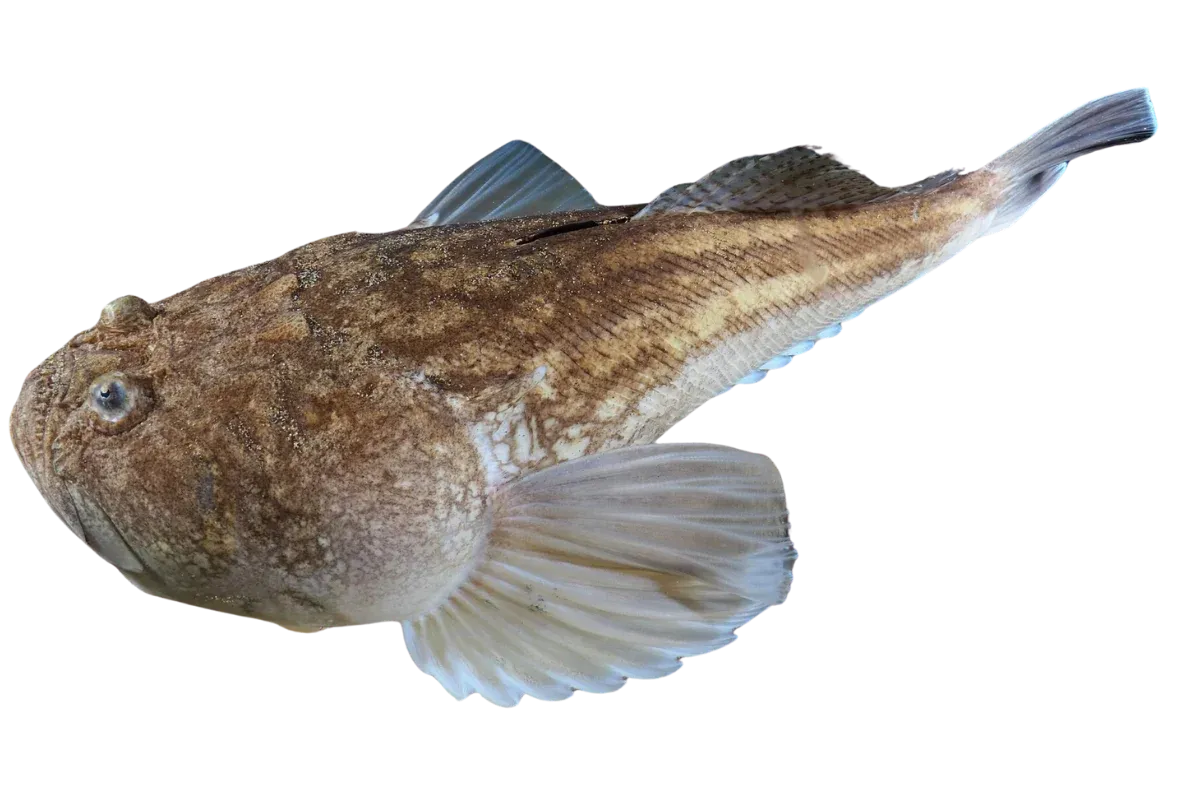
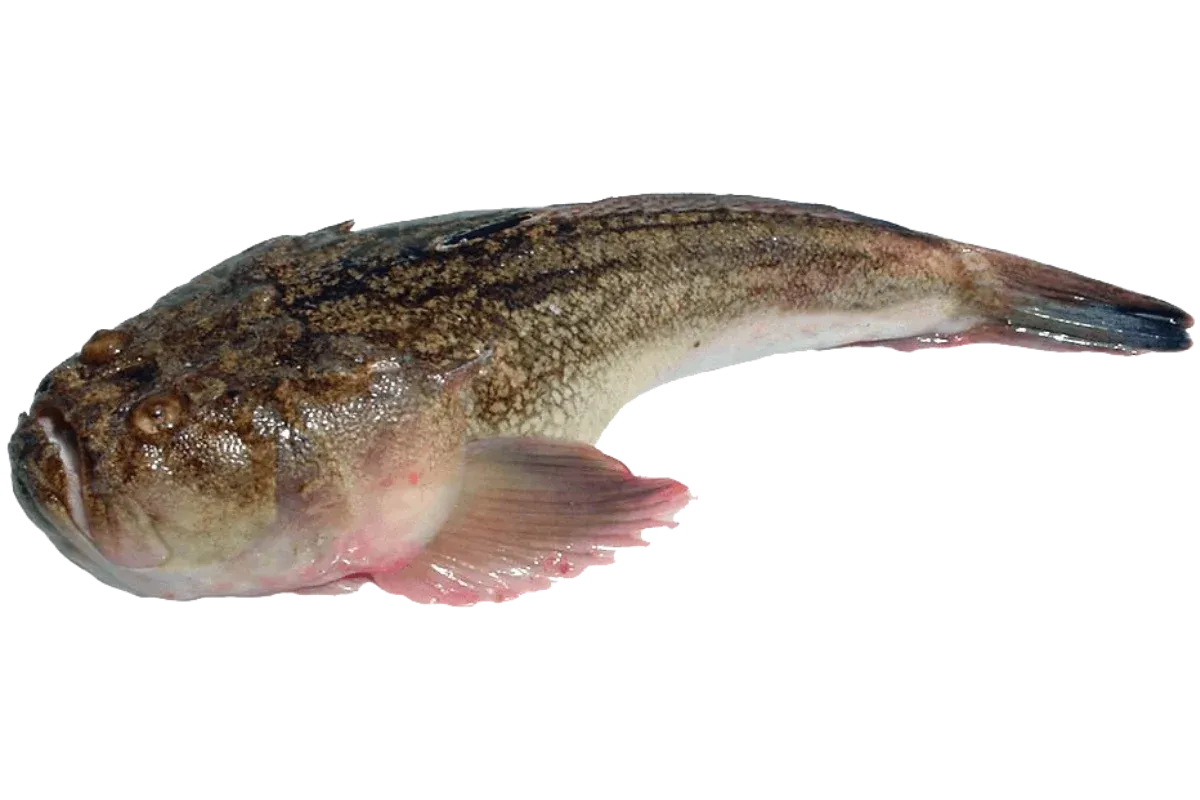
The Atlantic Stargazer is a benthic fish with a unique and intimidating appearance that resembles a monster of the deep. It belongs to the Uranoscopidae family, which is a name that perfectly describes its most distinctive feature. Its eyes are located on top of its large, square head, looking permanently upward. The mouth is massive and vertical, forming a trap that opens towards the top.
The body is conical and thick at the front, tapering towards the tail, with a brown-grey colour that provides perfect camouflage in the sand. Inside its mouth, it hides a secret weapon: a small, red, fleshy protrusion or filament that resembles a worm. The fish moves this lure rhythmically to attract its prey directly above its lethal mouth.
Habitat
It lives exclusively on sandy and muddy seabeds, where it spends almost its entire life buried while leaving only its eyes and mouth exposed. It is found at depths ranging from 15 to 400 metres, although it is more common on the continental shelf between 30 and 100 metres.
Diet
The animal is an extremely patient ambush predator. It does not hunt actively but waits buried for prey to approach. It feeds mainly on small benthic fish such as gobies and goatfish, as well as crustaceans. When the prey approaches the lure, the stargazer opens its mouth and creates a powerful suction current that pulls the victim in within a fraction of a second.
Reproduction
The reproduction of the stargazer takes place during the warm months of the year, mainly from March to September. Its eggs and larvae are pelagic and carried by currents to the sea surface before eventually settling on the bottom.
Fisheries
It is not targeted specifically but represents a frequent bycatch in bottom trawls, nets, and longlines. Due to the danger involved in its handling, many fishers throw it back into the sea. However, those who know how to clean it by carefully removing the spines appreciate it greatly. The meat is white, firm, and extremely delicious, while many consider it one of the best choices for traditional fish soup.
Research
The International Union for Conservation of Nature classifies the Atlantic Stargazer as a species of Least Concern in the Mediterranean. Scientific studies have focused on its electric organs, which evolved from modified eye muscles known as sonic muscles, which is a rare occurrence in fish. Research has shown that it uses electric discharges, or bioelectrogenesis, for both defence and to stun its prey before an attack. Furthermore, it has been found to produce acoustic sounds, or vocalisations, during reproduction or when disturbed.