Dogtooth Grouper
Epinephelus caninus
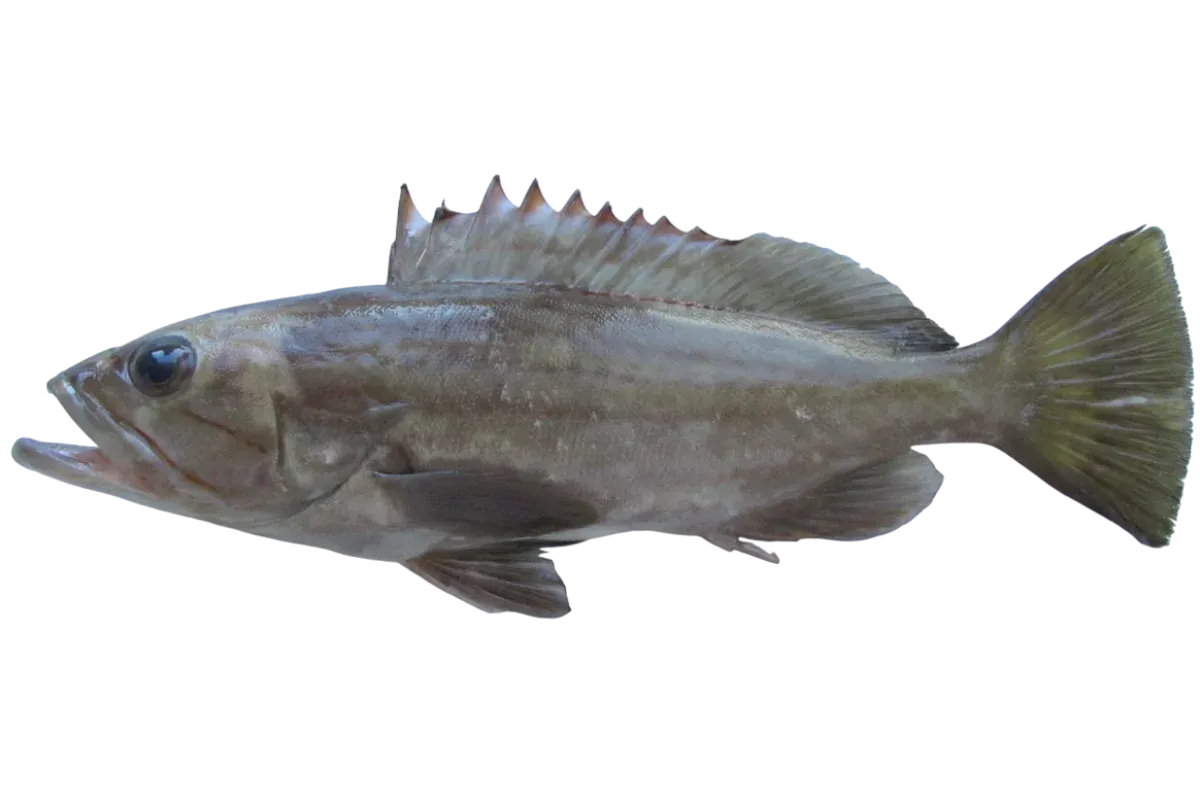
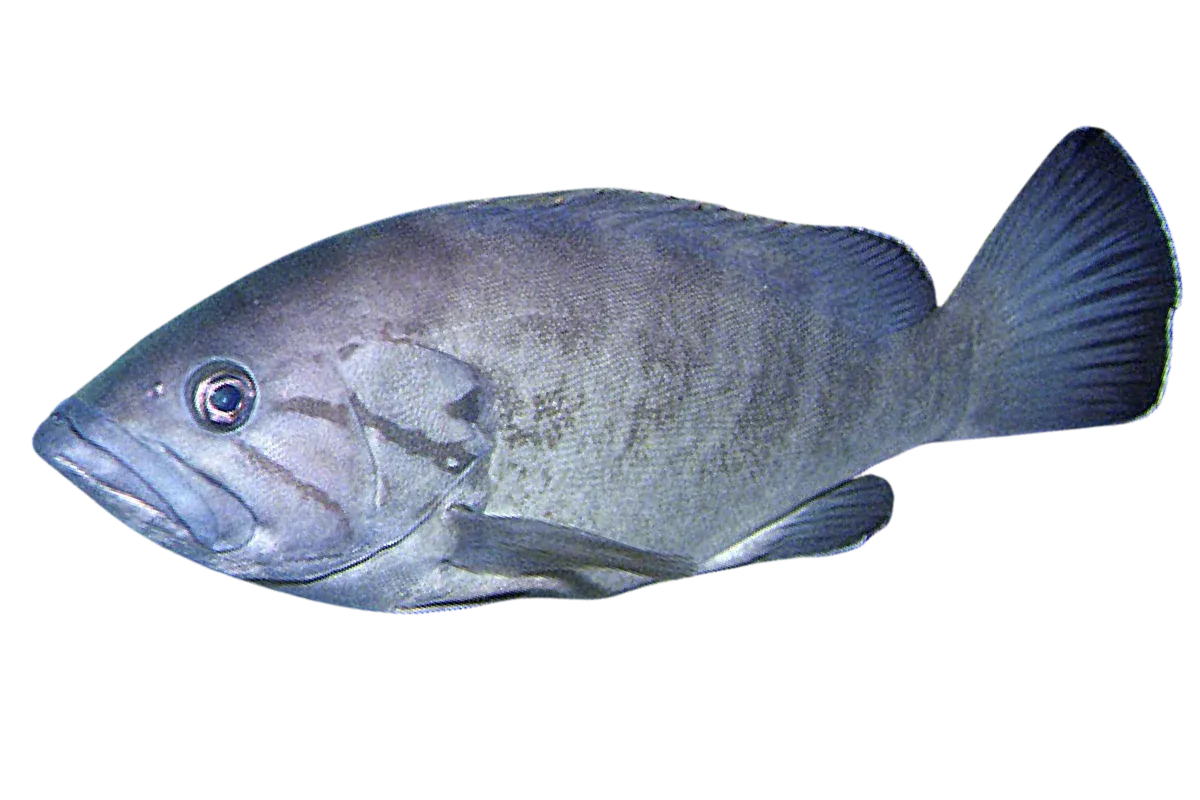
The Dogtooth Grouper is one of the most imposing and largest representatives of the grouper family in the Mediterranean. Its scientific name translates to "canine," given its characteristic, very strong teeth that protrude from the front of its mouth. The body is robust and massive, with a huge mouth capable of swallowing large prey. Its colouration is usually a uniform brown to grey or violet, and it lacks the distinct spots found on related species. In very large and old individuals, the colour fades to a more whitish hue. A significant distinguishing feature is the presence of two or three dark lines that begin behind the eye and extend toward the gills.
It is frequently confused with the White Grouper, but there are key differences. The White Grouper is lighter in colour and typically has characteristic white lines on its head, and it lives in shallower waters with mixed seabeds. In contrast, the Dogtooth Grouper is darker and more uniform in colour and prefers deep muddy environments.
Habitat
This is a fish that loves deep waters and soft seabeds. It lives almost exclusively in areas with mud or sand, at depths ranging from 30 to 400 metres. Unlike other groupers that hide among rocks, this species dominates the deep, open stretches of the continental shelf.
Diet
As an apex predator, it feeds on anything that fits in its mouth. Its diet primarily includes other benthic fish, cephalopods such as squid and cuttlefish, and large crustaceans such as crabs and shrimp. It mainly hunts by ambush, suctioning its prey with a sudden movement of its massive mouth.
Reproduction
The species is a protogynous hermaphrodite. This means that all individuals are born as females and reach sexual maturity at approximately 5 to 7 years of age. Later in life, when they reach a large size and age, they change sex and become males. Reproduction takes place during the warm months and usually from July to September.
Fisheries
Because of its depth, it is primarily caught by professional fishermen using heavy bottom longlines and specialised deep-sea handlines. Its meat is white and firm, considered of exceptional quality, and has very high commercial value, often superior even to that of the Dusky Grouper.
Research
The International Union for Conservation of Nature currently lists the fish as Data Deficient due to the difficulty of studying the species at great depths. However, scientists emphasise that it is biologically extremely vulnerable to overfishing. Because the largest individuals are all male, selective fishing for large specimens removes males from the population, leading to reproductive failure. Research has shown that its growth rate is slow and that it can live for many decades, making population recovery difficult.