Dragonet
Callionymus lyra / Callionymus maculatus
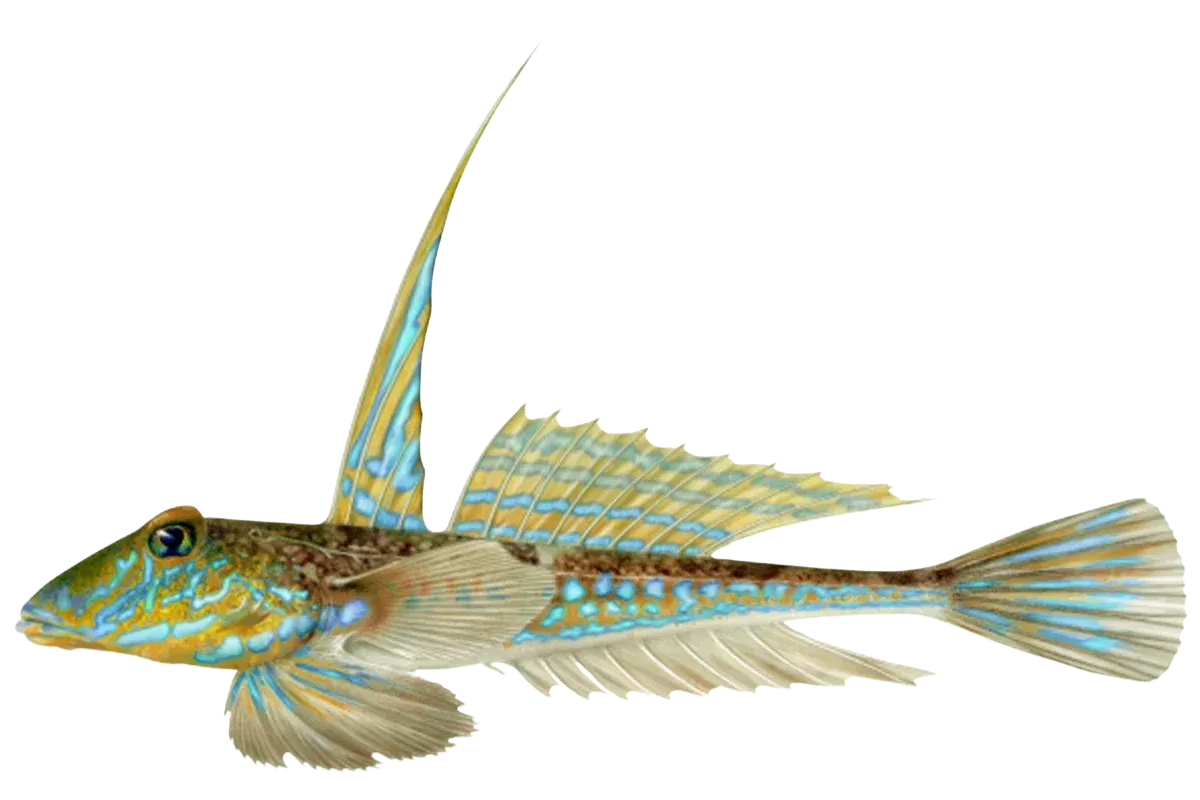
The Dragonet is a small benthic fish with an impressive appearance that resembles an exotic species. It belongs to the family Callionymidae, and its name translates to "beautiful name". The body is elongated, and the head is broad and triangular with eyes positioned high on the top. It does not have scales, and the skin is covered by a slimy substance.
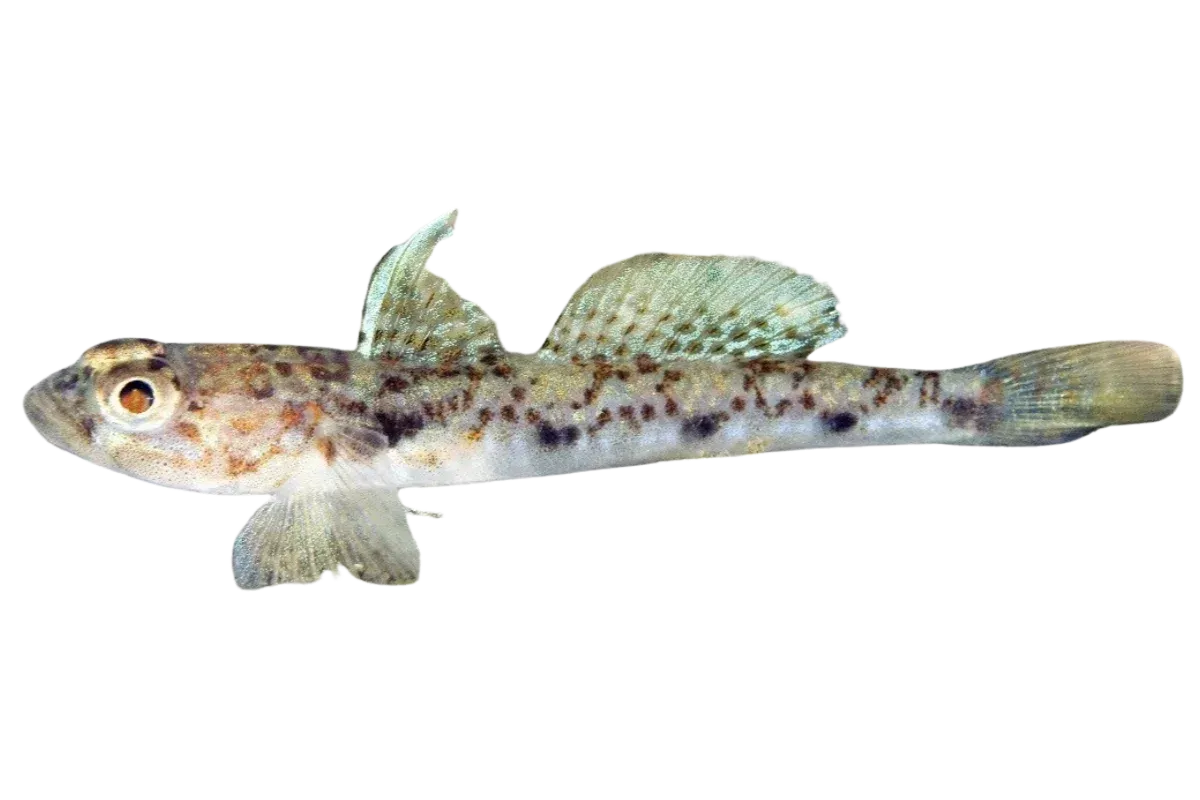
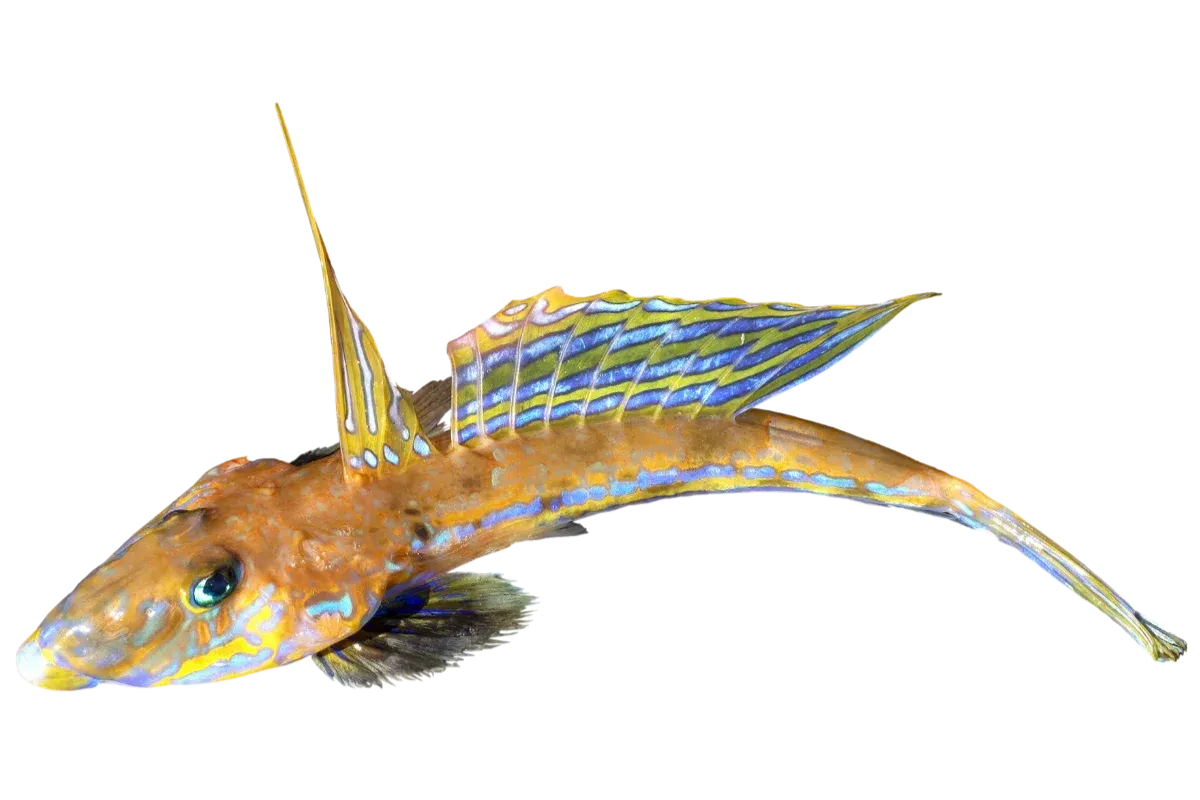
The most striking characteristic is the intense sexual dimorphism, with significant differences in appearance between the sexes. Males are larger and colourful with bold blue, yellow, and green stripes, especially on the head. The first dorsal fin of the male is massive and looks like a sail or a fan, which it opens to impress females. Females are smaller and have simpler colours, tones of brown and beige, with spots that provide perfect camouflage on the sand. In the Mediterranean, two main species are encountered, which are the Common Dragonet and the Spotted Dragonet.
⚠️ Safety warning
The Dragonet has a very hard, sharp spine on the side of its head, located on the gill cover. Although it is not venomous like the weever fish, it can cause a painful puncture wound if handled carelessly.
Habitat
This species lives exclusively on the seabed, usually in areas with sand, mud, or fine gravel, where it can partially bury itself. The Common Dragonet prefers shallow waters from 5 to 50 metres, while the Spotted Dragonet lives at greater depths, starting from 45 metres and reaching down to 650 metres.
Diet
The fish is a meticulous hunter of the seabed. It feeds by sucking small invertebrates from the sand with its small, protractible mouth. Its diet includes primarily worms such as polychaetes along with small crustaceans like amphipods and tiny crabs and molluscs.
Reproduction
The reproduction of the Dragonet is spectacular and occurs during the spring and summer. It involves a complex mating dance where the male displays its impressive fins to the female. If the male is accepted, the pair rises vertically toward the surface while swimming belly-to-belly, and they simultaneously release eggs and sperm into the water. The eggs are pelagic and float at the surface.
Fisheries
It has no significant commercial value and is rarely sold in fish markets. It is caught mainly as bycatch by bottom trawlers and occasionally by recreational anglers using handlines. It is usually discarded or used in traditional fish soups along with other small fish for added flavour. It is also sometimes used as bait.
Research
The International Union for Conservation of Nature classifies the Dragonet as a species of Least Concern. Scientific studies have shown that males are highly territorial and aggressive toward one another during the breeding season. Research into its diet has confirmed that the fish plays an important role in controlling the populations of small benthic organisms.