Dusky Grouper
Epinephelus marginatus
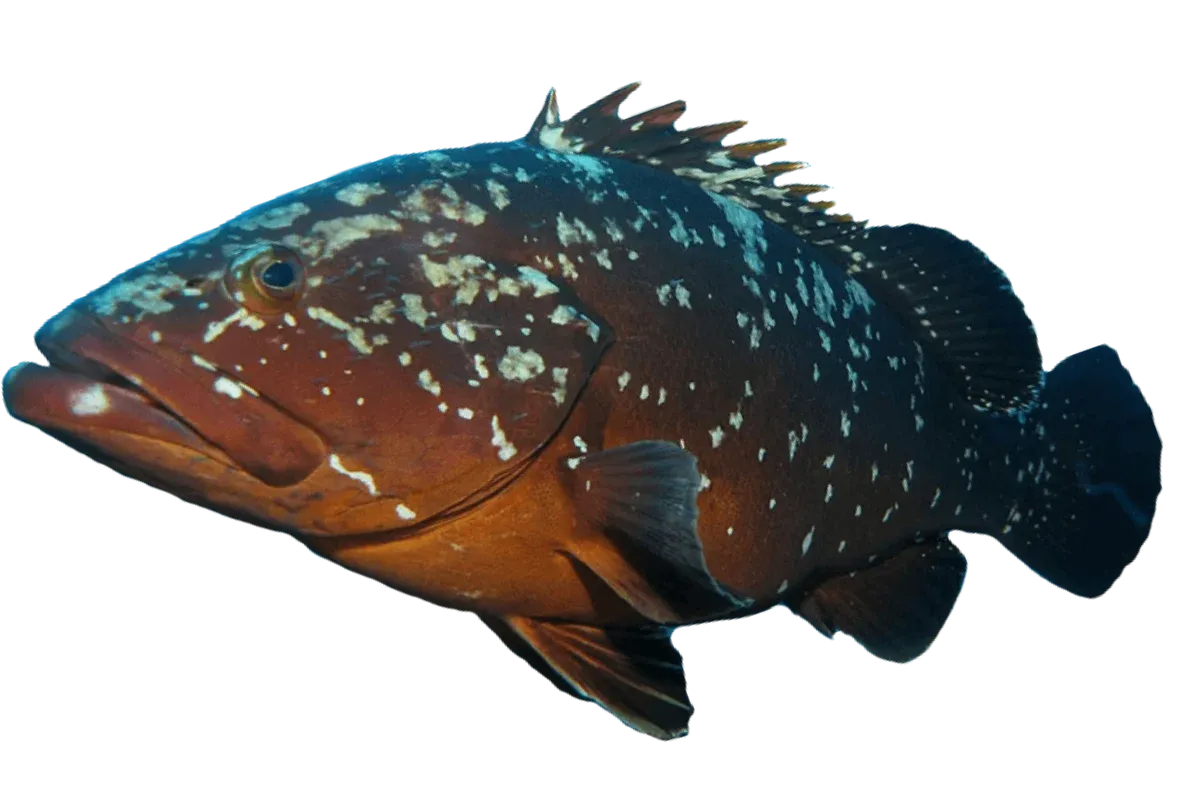
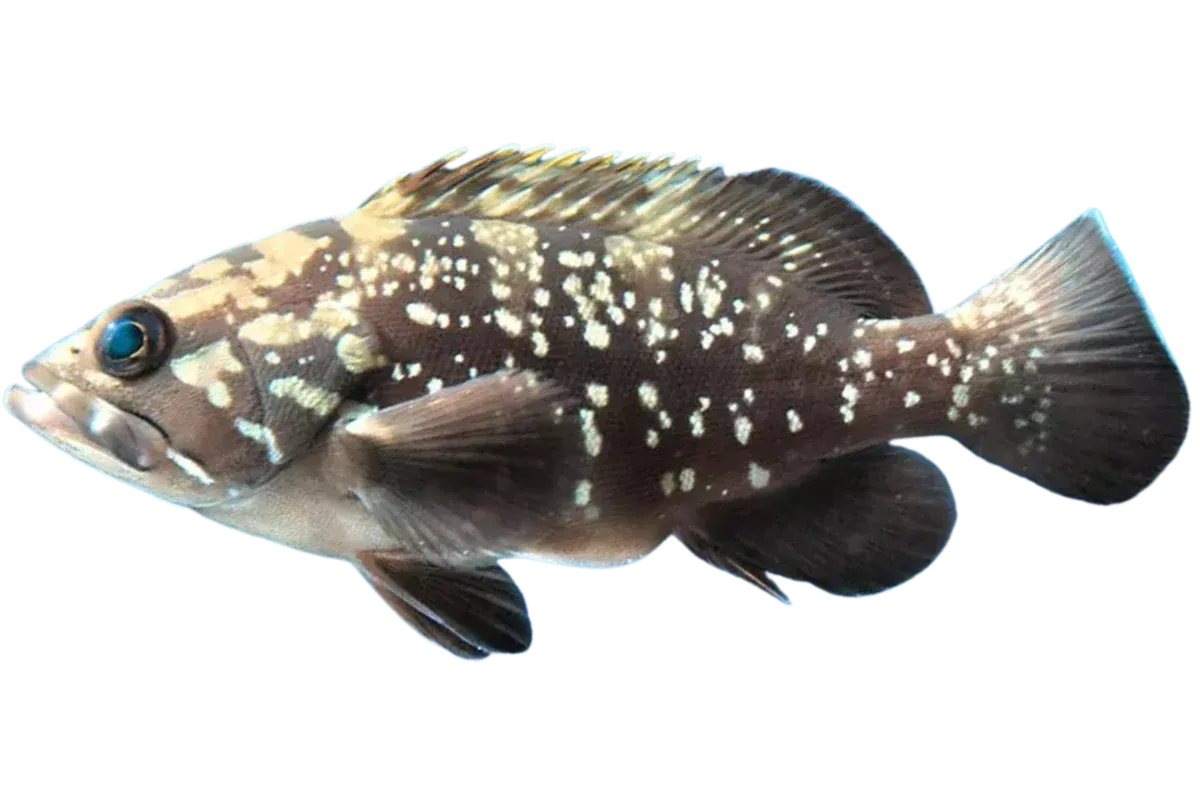
The Dusky Grouper which is also frequently referred to as the Yellowbelly Grouper or the Squaretail Grouper is the undisputed king of the rocky Mediterranean seabeds and the most iconic member of the Serranidae family. It is a fish with an imposing presence and a bulky and heavy body along with a huge head with fleshy lips. The colour is usually dark brown or grey with characteristic light spots that resemble marble and offer perfect camouflage among the rocks.
The most reliable feature to distinguish it from its relatives involves its tail or caudal fin. The tail of the Dusky Grouper is rounded at its back part and has a characteristic white margin from which its scientific name is derived.
Habitat
It is a purely benthic, territorial species that lives exclusively on rocky bottoms. It carefully chooses a permanent home, usually a spacious cave or crevice among the rocks with many escape routes. The fish rarely moves away from its home, which it defends with passion. It is encountered at depths from 10 to 50 metres, although large individuals can descend as far as 200 metres.
Diet
The animal is the top predator of its ecosystem. It hunts mainly by ambush, waiting motionless and camouflaged outside its home. Its favourite food consists of cephalopods, particularly octopuses, which constitute its basic prey. It also feeds on fish and large crustaceans such as crabs and lobsters.
Reproduction
The Dusky Grouper is a protogynous hermaphrodite species. All fish are born and mature initially as females, usually at the age of 5 years, when they reach about 3 kilograms. They live as females for many years while laying eggs every summer. At an advanced age, usually after 12 to 15 years, when they exceed 9 to 10 kilograms, they change sex and become males. Reproduction takes place in the summer months, primarily during July and August.
Fisheries
It possesses enormous commercial and gastronomic value. The meat is considered among the best, with rich flavour and texture, and is ideal for soup or grilling. It is caught professionally using thick, long lines and nets. For recreational fishers, especially underwater spearfishers, it represents the ultimate trophy. Unfortunately, targeted fishing of large, all-male individuals has led to a decline in their populations.
Research
The International Union for Conservation of Nature classifies the Dusky Grouper as Vulnerable in the Mediterranean, while it is considered Endangered globally. Scientific studies in marine parks where fishing is prohibited have shown that the Dusky Grouper recovers spectacularly fast when protected and actually becomes very friendly and familiar with divers. Research also showed that the presence of large males is critical for the species' successful reproduction. For its protection, the minimum permitted catch size in the Mediterranean is 45 centimetres.