Anchovy
Engraulis encrasicolus
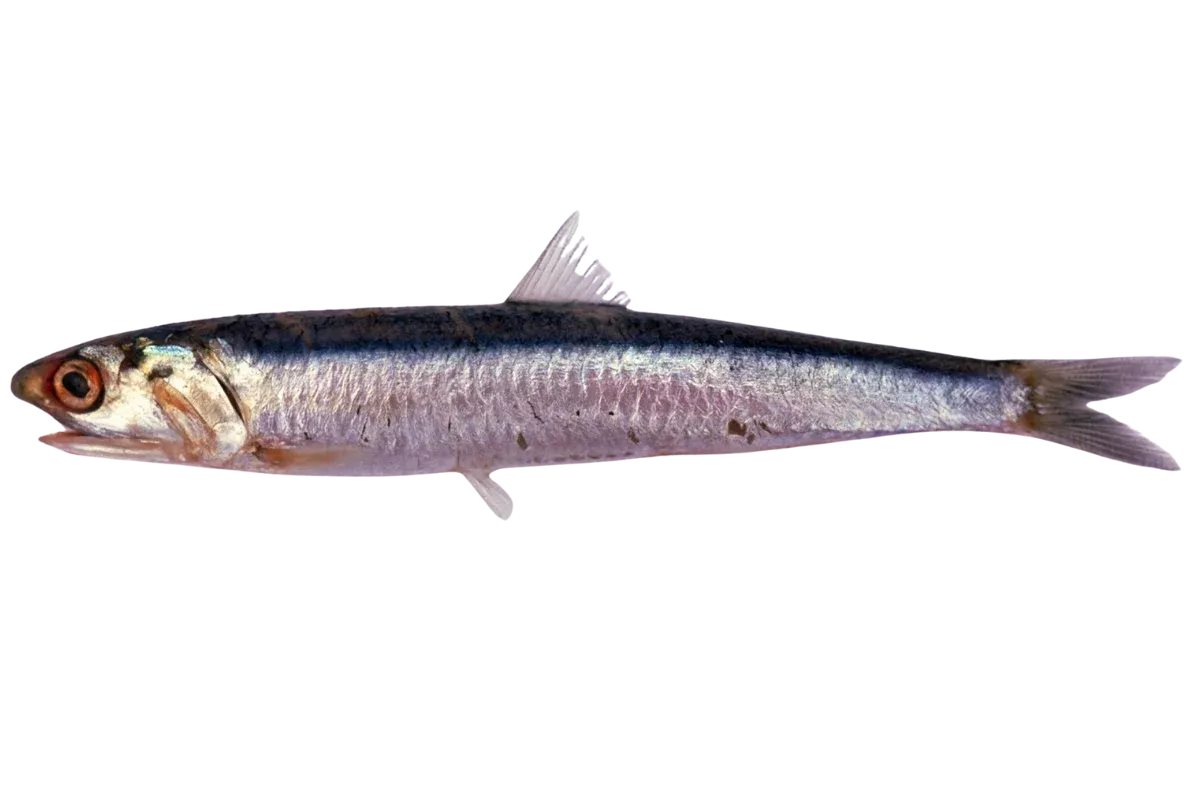
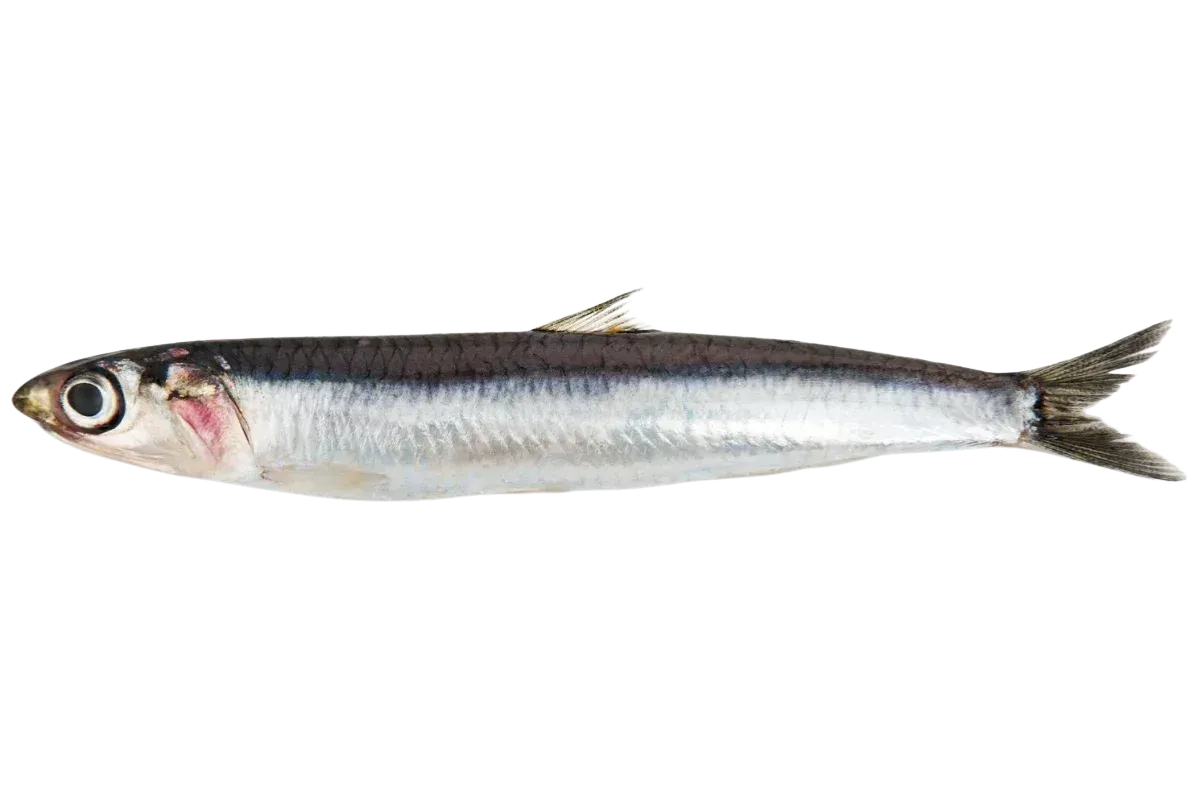
The European Anchovy is the most abundant and popular small fish in the region, and it forms the basis of the marine food chain. The body is elongated and round, and it features a brilliant blue-green colour on the back with a silver lateral band that shines intensely. Its most distinctive feature is the head, which has a snout that protrudes over the mouth, similar to a shark's. The mouth is unusually large and extends far behind the eyes. It is a social species that lives in massive, dense schools that move in perfect synchrony to protect themselves from predators.
In the market, there is often confusion about the sardine, but the two fish differ in basic ways. The anchovy has a huge mouth that reaches behind the eye and a round body, while the sardine has a small mouth that stops before the eye and a flatter body. It is also known internationally as anchovy when salted or preserved.
Habitat
This is a purely pelagic fish that lives in the open sea. During the summer months, it moves near the surface at depths from zero to fifty metres, while in winter, it descends to great depths, reaching up to four hundred metres, to find a stable temperature. It is a species that can withstand large changes in salinity, and this is why it often approaches river estuaries and lagoons.
Diet
The fish feeds by filtering the water as it swims with its mouth open. Its diet consists mainly of zooplankton, such as microscopic crustaceans like copepods, and it also feeds on the eggs of other fish.
Reproduction
Reproduction is prolonged, occurring from April to October, with a peak in the summer. The females lay thousands of pelagic eggs that float in the water, and these eggs have a characteristic elliptical shape.
Fisheries
It is the second most important catch in the region, after sardine. It is caught in massive quantities using purse seines at night and with trawls. Although it is low in price due to its abundance, it is rich in Omega-3 fatty acids and has enormous nutritional value. In the kitchen, it is extremely versatile because it can be eaten fried, grilled, or marinated with vinegar or salted.
Research
According to the International Union for Conservation of Nature, the anchovy is classified as a species of Least Concern both globally and in the Mediterranean. However, scientific research shows that its populations exhibit intense fluctuations that depend on environmental conditions such as water temperature and plankton availability. It has also been observed that there is a phenomenon of alternating dominance between the sardine and other species, where if the population of one species increases, the other tends to decrease because they compete for the same food source.