Conger
Conger conger
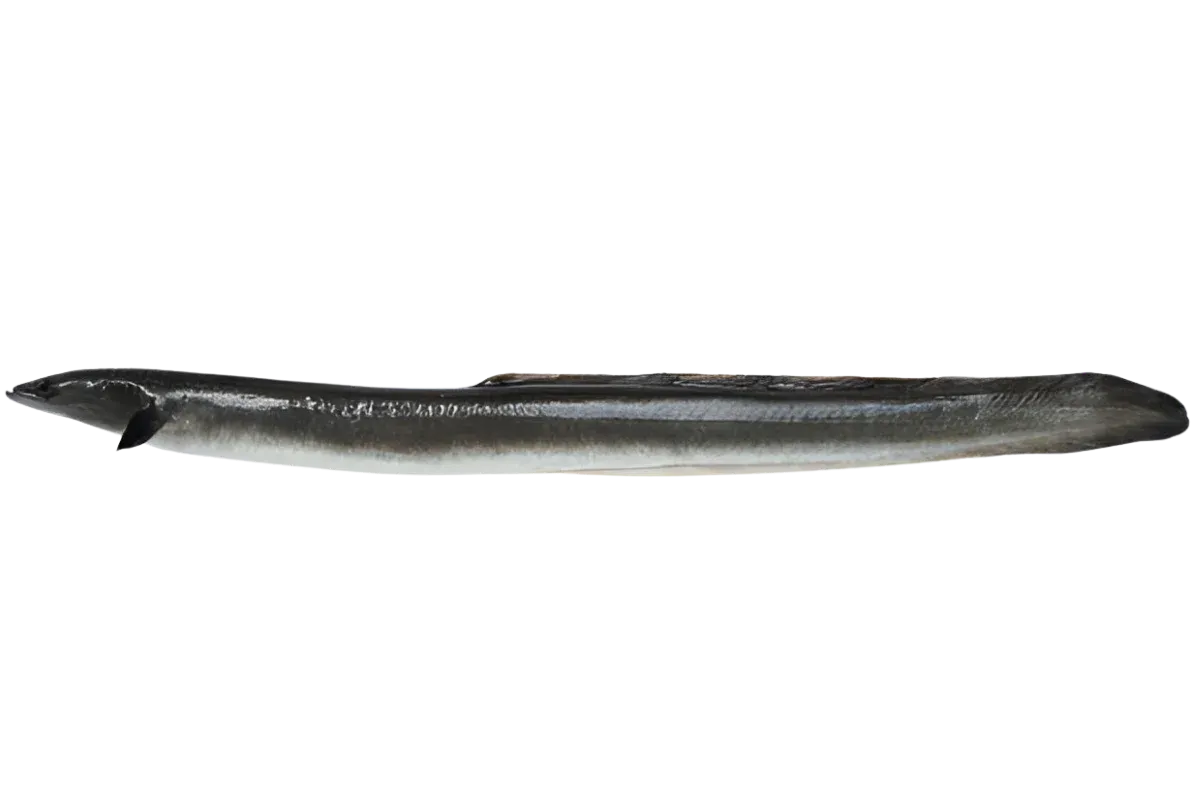
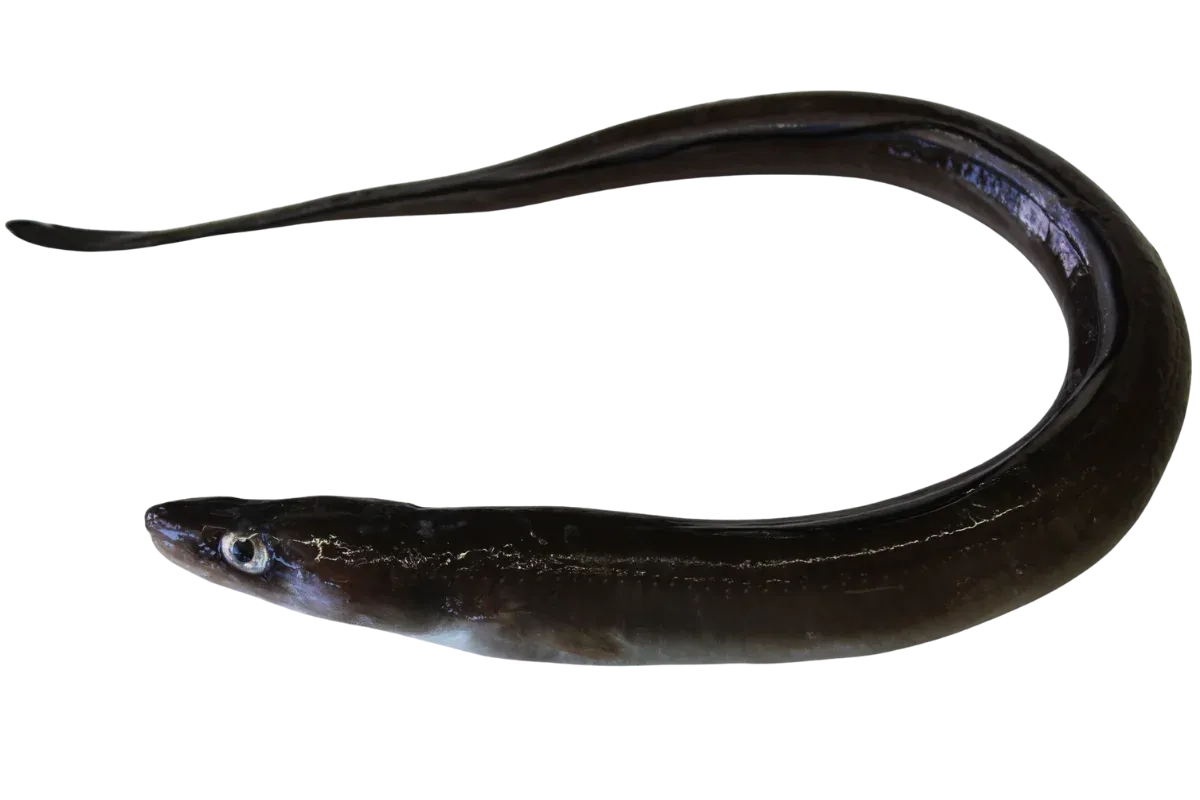
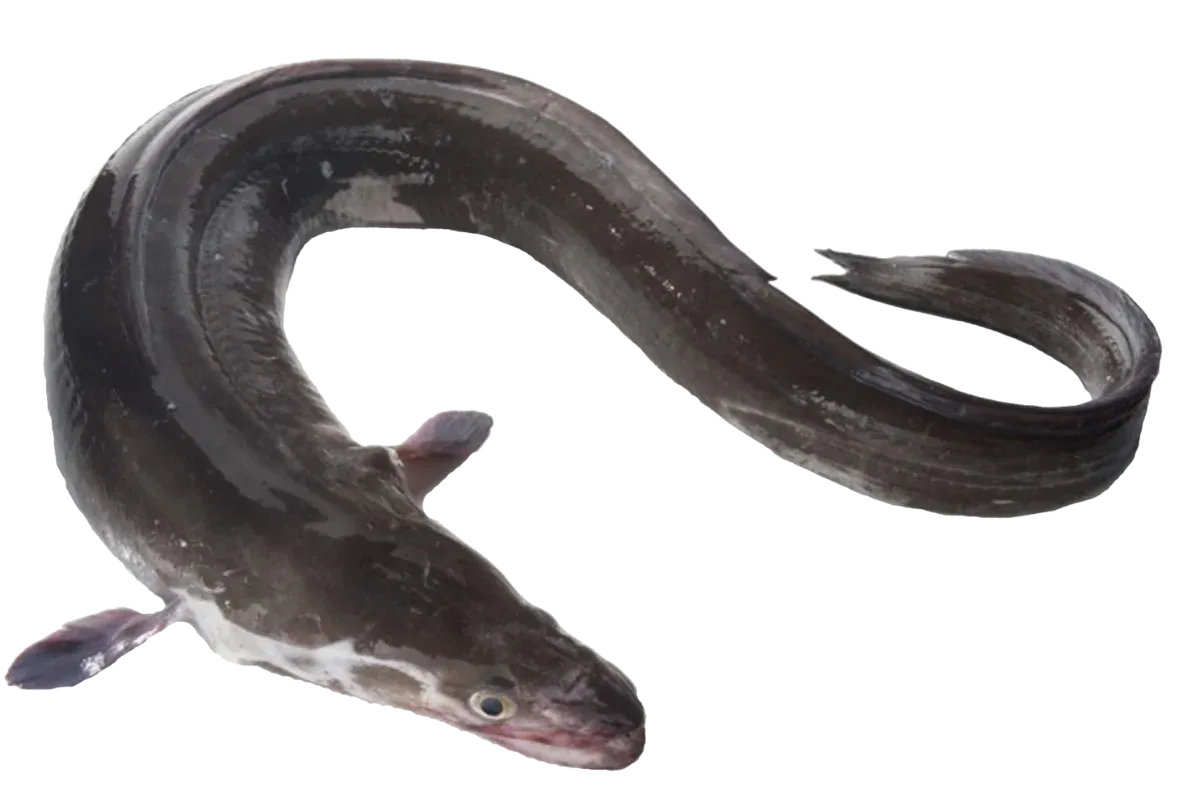
The European Conger is one of the most imposing and powerful fish in the regional seas, with a body resembling a snake. It belongs to the Congridae family and is known for its muscular strength and nocturnal lifestyle. The skin is smooth and lacks scales, and it is covered with a thick layer of mucus, making it extremely slimy. The colour is usually dark grey or black on the back and light on the belly.
It is often confused with the European Eel, but there are basic differences between them. The most significant difference involves the position of the dorsal fin: in the conger, it starts immediately behind the head and the pectoral fins, while in the eel, it starts much further back, around the middle of the body. Furthermore, the conger is an exclusively marine species, whereas the eel lives in freshwater and descends to the sea only to spawn.
Habitat
This is a benthic species that lives on rocky bottoms, inside holes and crevices, and on shipwrecks. Young individuals live in shallow coastal waters, while they move to greater depths, reaching 1000 metres as they grow. It is a strictly nocturnal fish. During the day, it remains hidden in its nest, often with other congers, and it ventures out only at night to hunt.
Diet
The animal is a top ambush predator. It feeds primarily on fish such as cod and scorpionfish, along with cephalopods like octopus and cuttlefish, and large crustaceans like crabs and lobsters. It hunts by using its excellent sense of smell to locate prey in the dark.
Reproduction
The reproduction of the European Conger is a dramatic event that happens only once in its life as it is a semelparous species. The fish reach sexual maturity at 5 to 15 years of age. At that point, they stop eating, their digestive systems atrophy, and their teeth fall out as they migrate to depths of 2000 to 4000 metres. They travel to specific areas of the Mediterranean, such as near Sardinia or the Atlantic, to lay millions of eggs. After spawning, they die from exhaustion from the journey and the effort.
Fisheries
It is caught mainly with heavy bottom longlines and set nets. Although it has low commercial value due to its appearance and the difficult processing required for skinning the meat, it is of exceptional quality. It is white and oily, with few bones except in the tail area, making it ideal for soup or grilling.
Research
The International Union for Conservation of Nature classifies the European Conger as a species of Least Concern. Scientific studies in the Ionian Sea have shown that its deep-water diet consists mainly of fish, while crustaceans play a secondary role. Research also confirmed that its larvae, known as leptocephalus, are shaped like a tree leaf and drift with currents for up to 2 years before transforming into small congers, which helps in the species' wide dispersal.