Squid
Loligo vulgaris
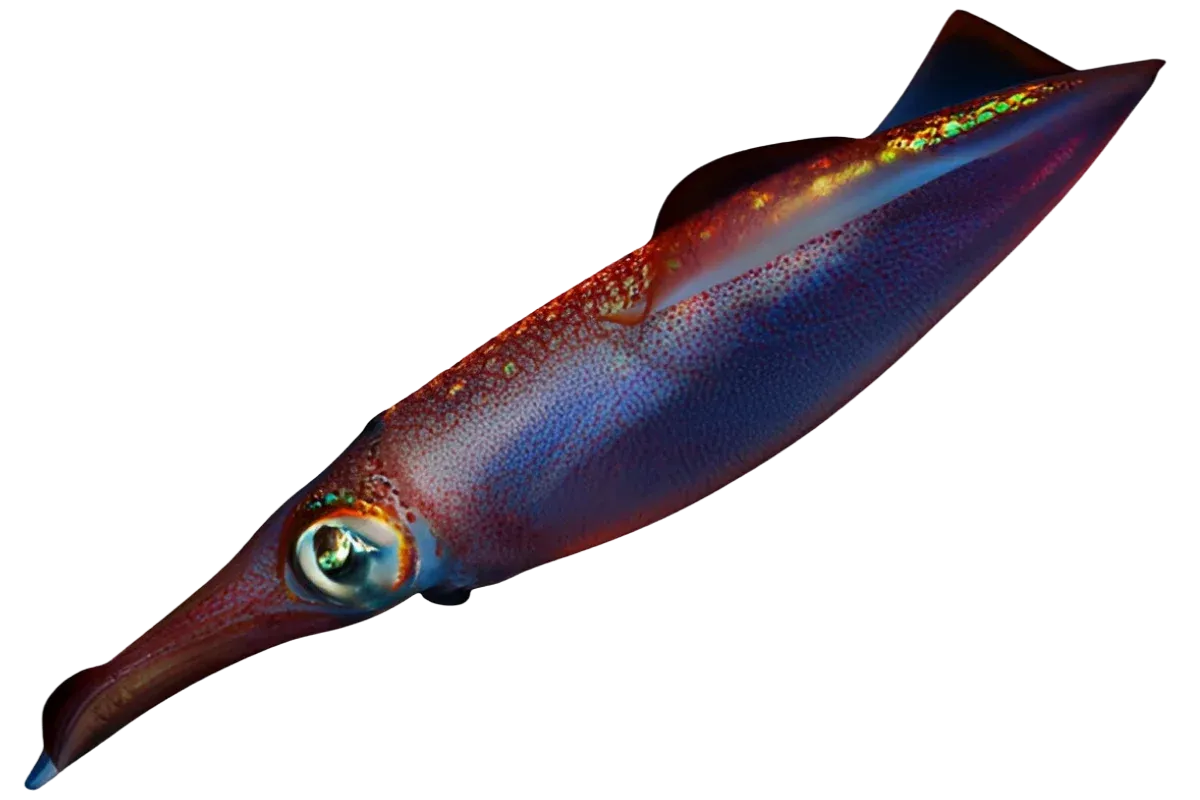
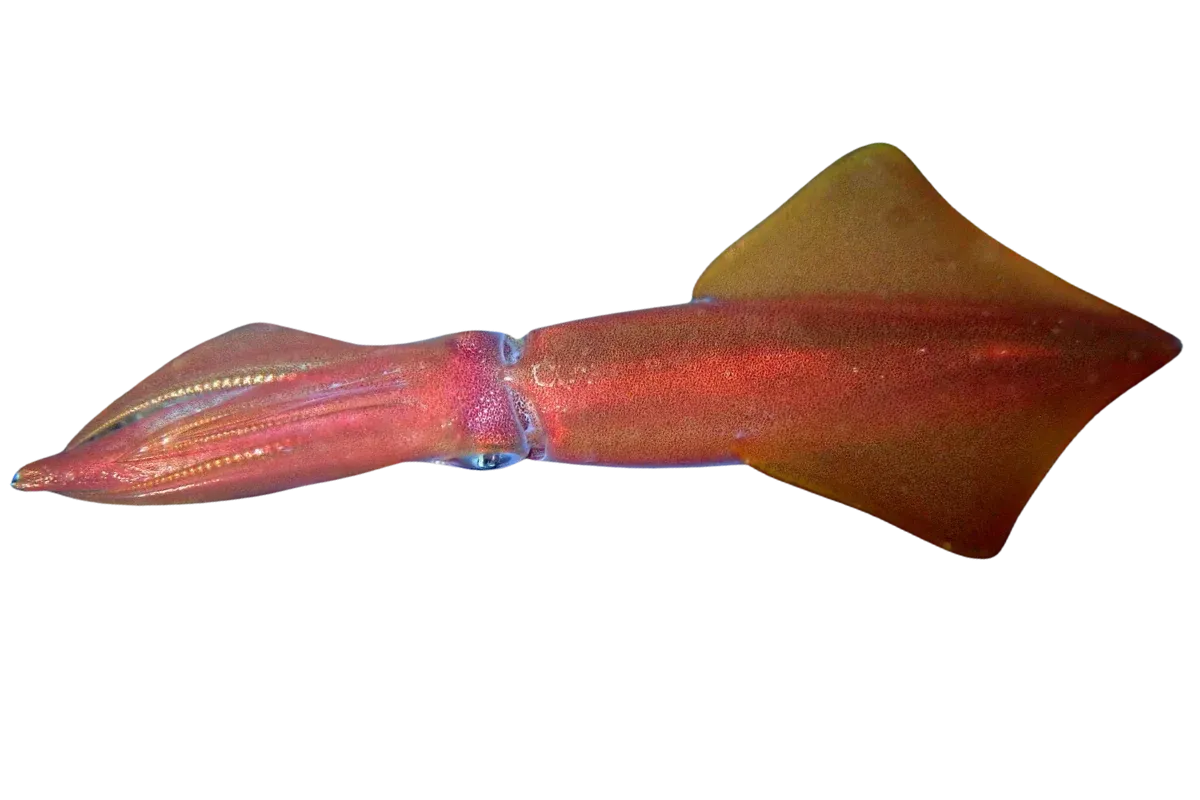
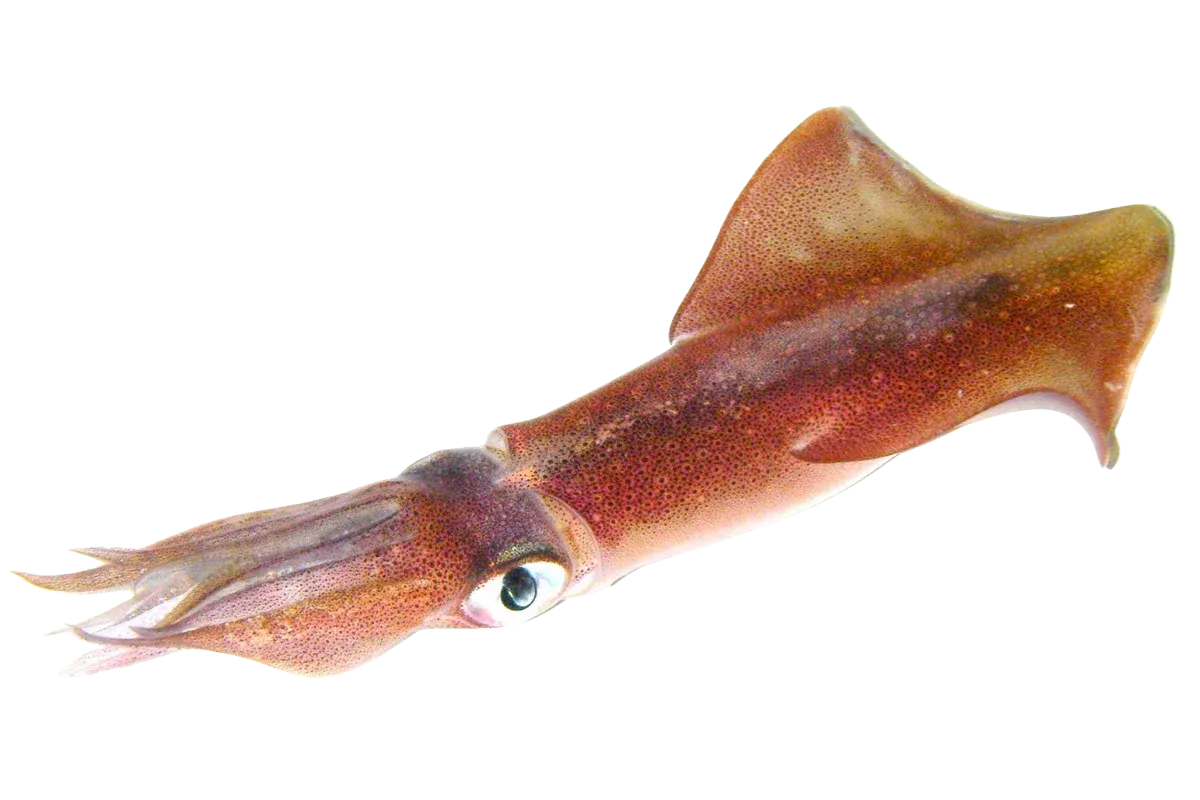
The European Squid is the most famous and commercially significant cephalopod in the region, and it is known globally for the exceptional quality of its meat. It belongs to the Loliginidae family. The body is elongated and cylindrical, with two large lateral fins that begin at the middle of the mantle and extend to the tail, forming a rhombus. This is the fundamental difference from the Broadtail Shortfin Squid because the fins of that species are small and triangular and located only at the tip of the tail. It possesses eight small tentacles and two significantly longer hunting tentacles for capturing prey.
The skin is covered with chromatophore cells that allow it to change colour instantly from almost transparent to deep red or brown depending on its mood and surroundings. Inside its body is a transparent, flexible internal structure known as a pen or gladius.
Habitat
It lives mainly near the coast as a neritic species on sandy and muddy seabeds as well as within Posidonia seagrass meadows. During the day, it remains near the bottom at depths from 10 to 100 metres, although it can reach 500 metres. At night, it rises toward the surface to hunt.
Diet
The animal is a fast and silent hunter. It feeds mainly on fish, shrimp, and crabs, as well as other smaller cephalopods. Young individuals feed primarily on copepods and other small planktonic crustaceans.
Reproduction
Reproduction occurs throughout the year, but with two main peaks in early spring and autumn. The females lay thousands of eggs, which are enclosed within long gelatinous tubes often referred to as fingers or bouquets. They attach these to stable objects on the seabed, such as rocks or stones, or even submerged ropes.
Fisheries
It is one of the most expensive and sought-after catches in the market. It is caught professionally with trawls and nets, but it is also a favourite target for recreational fishers. The most popular method is fishing with squid jigs, which are artificial lures with needles, from a boat or the shore, especially during dusk and at night. The meat is soft and sweet and much superior in quality to that of the broadtail shortfin squid.
Research
The International Union for Conservation of Nature has classified the species as Data Deficient, but populations in the Mediterranean are considered stable despite intensive fishing, owing to its rapid life cycle. Scientific studies using acoustic telemetry have shown that these animals are very mobile and perform extensive movements along the coastline. Furthermore, research on the statoliths, which are small bones in the ear that help with balance, revealed that they have a short lifespan of usually one to two years and die after reproduction.