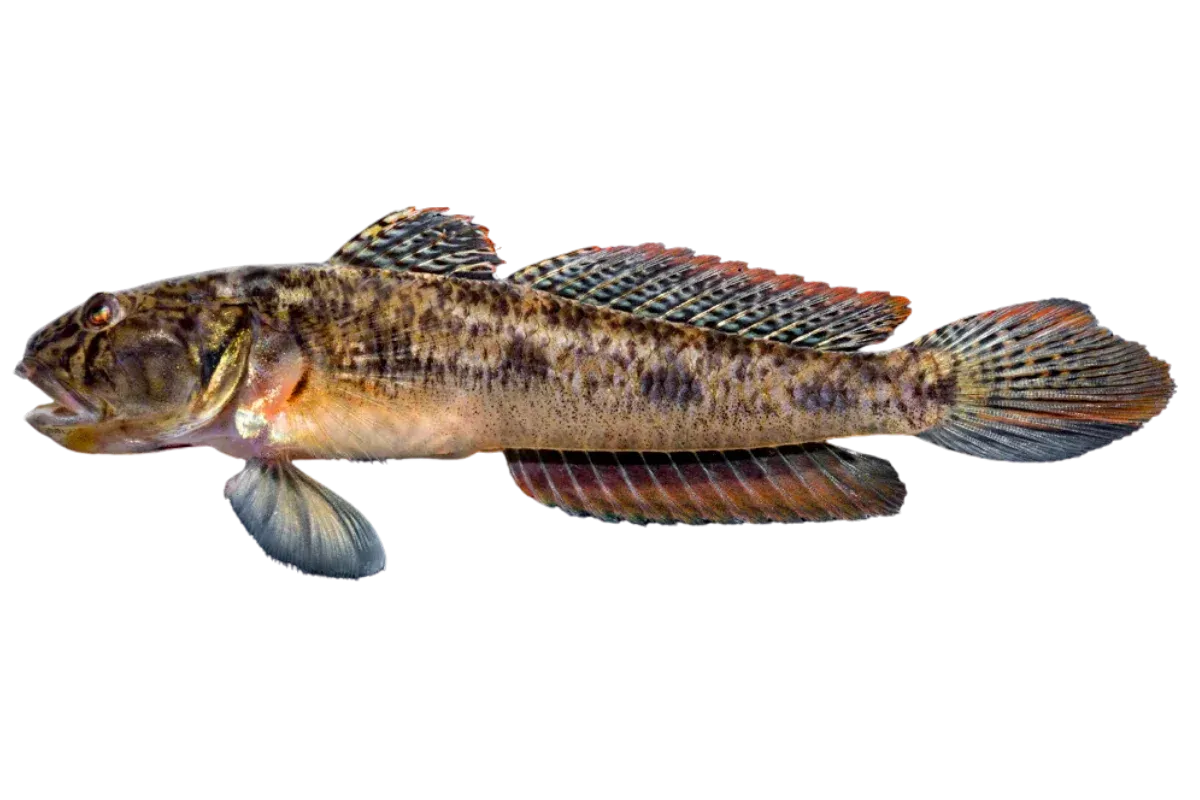
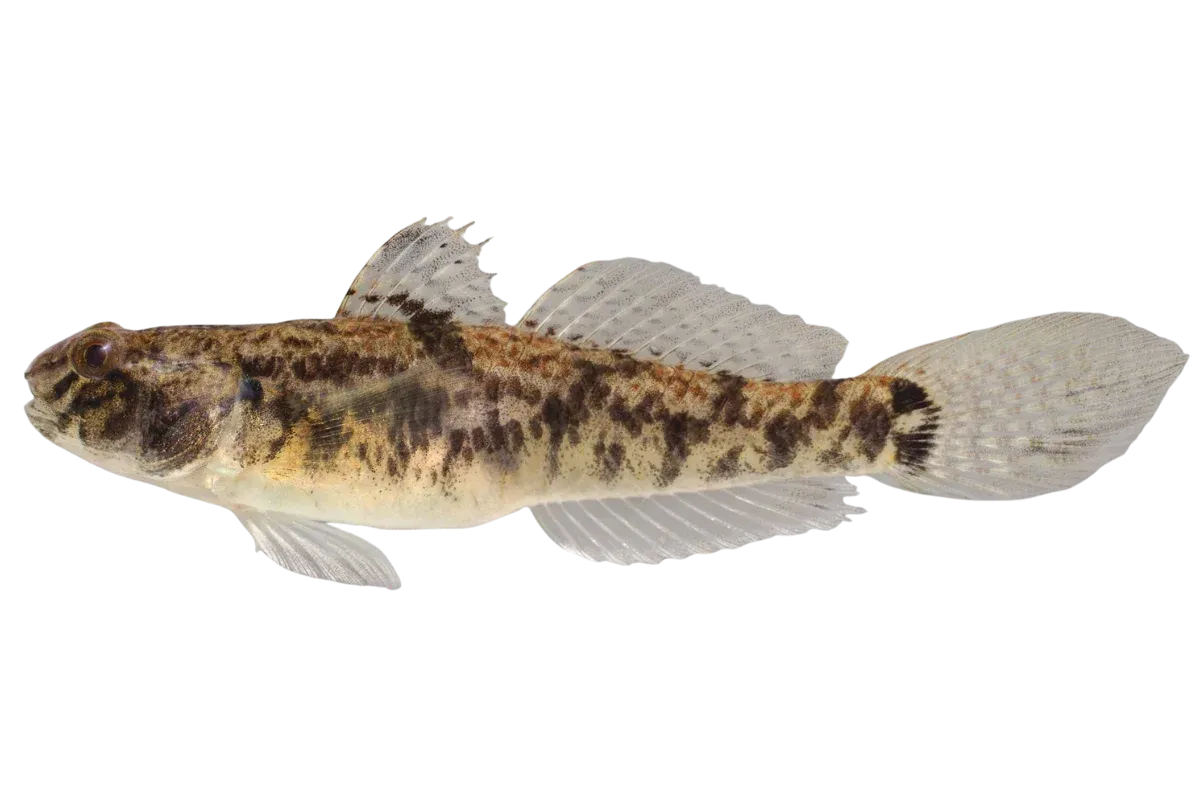
Goby
Family Gobiidae
The Goby is not a single species but a massive family of small, bottom-dwelling fish known as Gobiidae. Although there are hundreds of species, they all share a unique, defining characteristic: their two pelvic fins are joined to form a suction cup. This adaptation allows them to attach firmly to rocks and stones, resisting marine currents. The body is usually small and cylindrical, with a large head, puffy cheeks, and eyes positioned high to monitor the surrounding area.
In the Mediterranean, several species are distinguished. The Black Goby is the largest species, reaching 15 centimetres, and is dark in colour; it lives in mud or sand. The Rock Goby lives among shallow rocks and the tide pools of the coastline. Sand Gobies are tiny and transparent species that live exclusively on sandy substrates.
Habitat
These are fish that dominate every type of seabed in the coastal zone. They are found everywhere, including rocky shores and sandy beaches, Posidonia seagrass meadows, and brackish waters such as lagoons and river estuaries. They usually live in very shallow waters from a few centimetres down to depths of 70 or 100 metres.
Diet
They are carnivorous fish that feed on anything small they find on the seabed. Their diet includes small crustaceans such as shrimp and crabs, along with worms, molluscs, and the larvae of other fish. Despite their small size, they are voracious and aggressive when they eat.
Reproduction
Reproduction takes place in the spring and summer, and it is of particular interest due to the level of parental care. The male finds a suitable nest under a stone or inside an empty shell and attracts the female to spawn. Once the female deposits the eggs, which stick to the nest's ceiling, she leaves, and the male takes over exclusive care. He guards the nest with self-sacrifice while chasing away every intruder and fanning the eggs with his fins until they hatch.
Fisheries
They have very low commercial value and are rarely sold in markets except for some areas where they are fried. They are easily caught from the shore with a rod, a handline, or a landing net. However, they are valuable to recreational anglers as they are among the best and most resilient live baits for catching large predators such as sea bass.
Research
The International Union for Conservation of Nature classifies most species of this family as Least Concern because their populations are large and stable. Scientific studies have shown that they play a critical role in coastal ecosystems by transferring energy from small bottom organisms to larger fish. Furthermore, research in lagoons has shown that they have a short life cycle of 1 to 3 years and reproduce quickly, allowing them to replenish their populations immediately.