Goldband Goatfish
Upeneus moluccensis
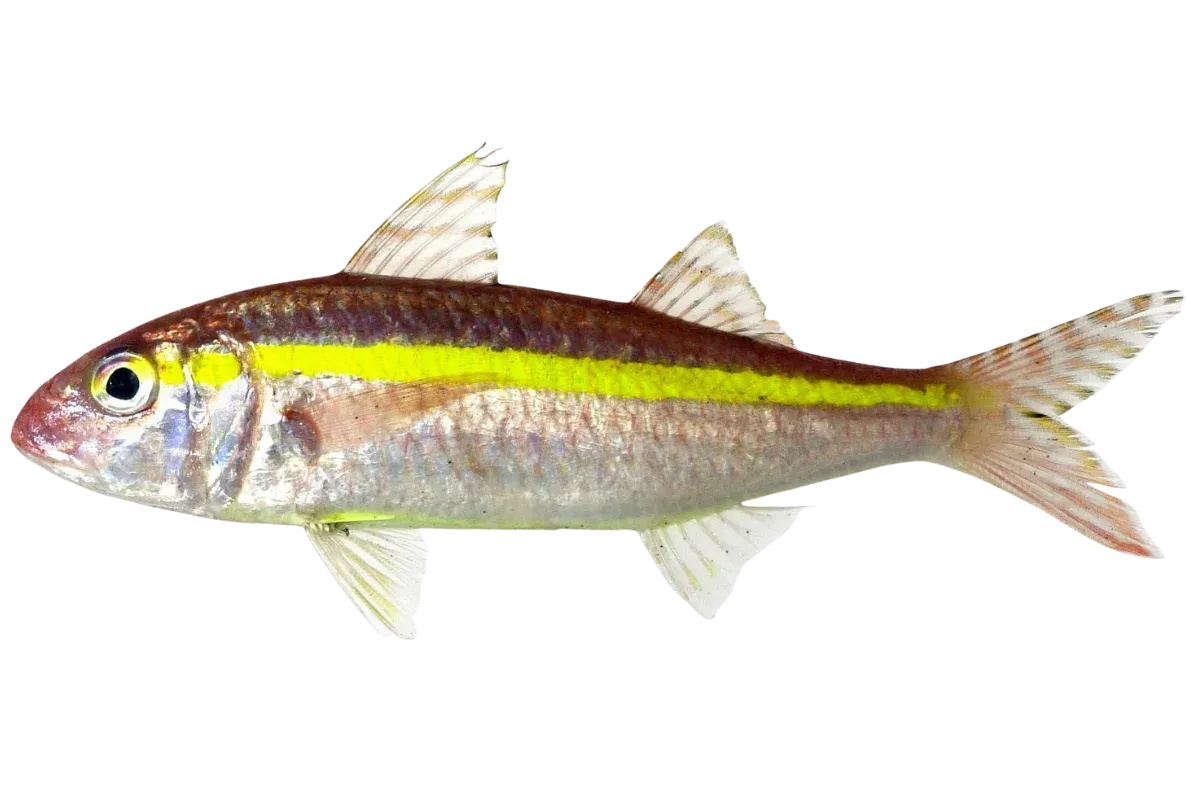
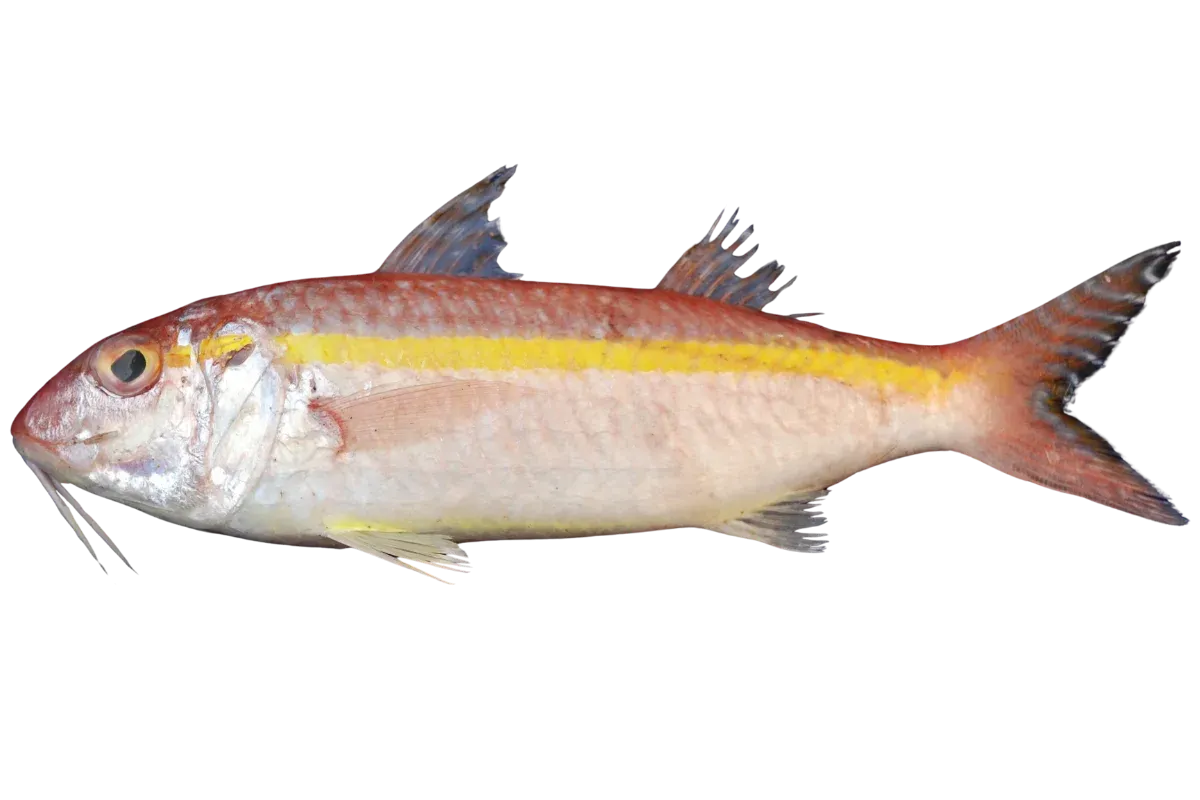
The Goldband Goatfish is a relatively new visitor to regional seas. It is a Lessepsian migrant, meaning it is a species that migrated into the Mediterranean from the Red Sea via the Suez Canal. It belongs to the same family as the red mullet and the striped red mullet, but it is easily distinguished from them thanks to the impressive and bright yellow stripe that runs horizontally across its body from the eye to the tail.
Additionally, its tail or caudal fin has characteristic oblique yellowish stripes, which are absent in native species. Like all members of its family, it possesses two long barbels under the jaw, filled with taste and touch sensors, to locate food.
Habitat
This species lives near the seabed, usually in areas with mud or sand, where it can use its barbels. As a warm-water species, it has settled mainly in the Eastern Mediterranean and prefers shallow to medium depths, usually from 10 to 80 metres, although it can descend as far as 120 metres.
Diet
The animal is a carnivorous fish that feeds by stirring the seabed. Its diet mainly consists of small shrimp and other benthic crustaceans, along with worms and small fish. It competes directly with native goatfish species for food.
Reproduction
Reproduction of the Goldband Goatfish takes place during the warm months from May to July or August. It is a species that reaches sexual maturity very quickly within the first year of its life, which allows it to rapidly increase its population and spread to new areas.
Fisheries
It is caught in large quantities by bottom trawlers and with set nets. Initially, fishers and consumers were sceptical, but it has now become established in the market. The meat is extremely tasty, with a flavour that strongly resembles that of striped red mullet, and it has acquired significant commercial value, especially on the islands where it is abundant.
Research
The International Union for Conservation of Nature classifies the species as Least Concern. Scientific studies focus on its role as an invasive species. Research has shown that its rapid spread has caused declines in the populations of native red mullet in some areas because the two species compete for the same food. However, it seems to have found a balance with the striped red mullet because they tend to live at slightly different depths.