Greater Amberjack
Seriola dumerili
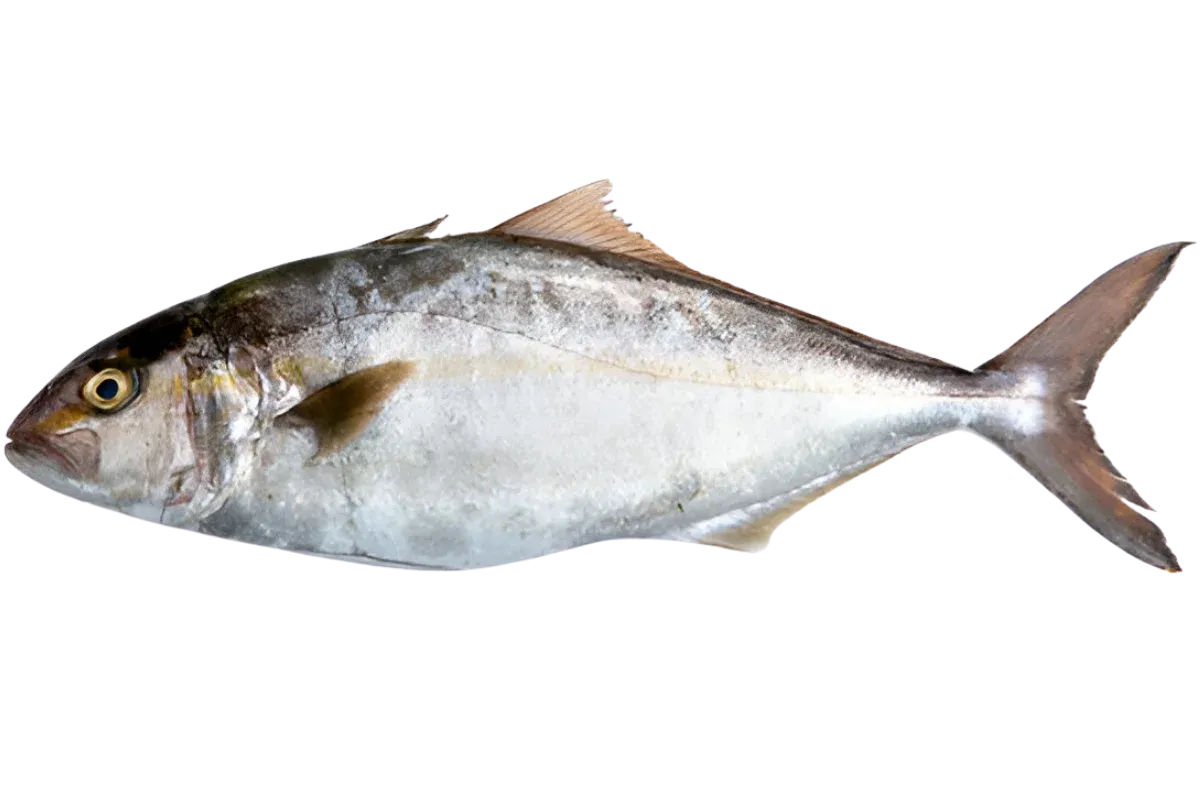
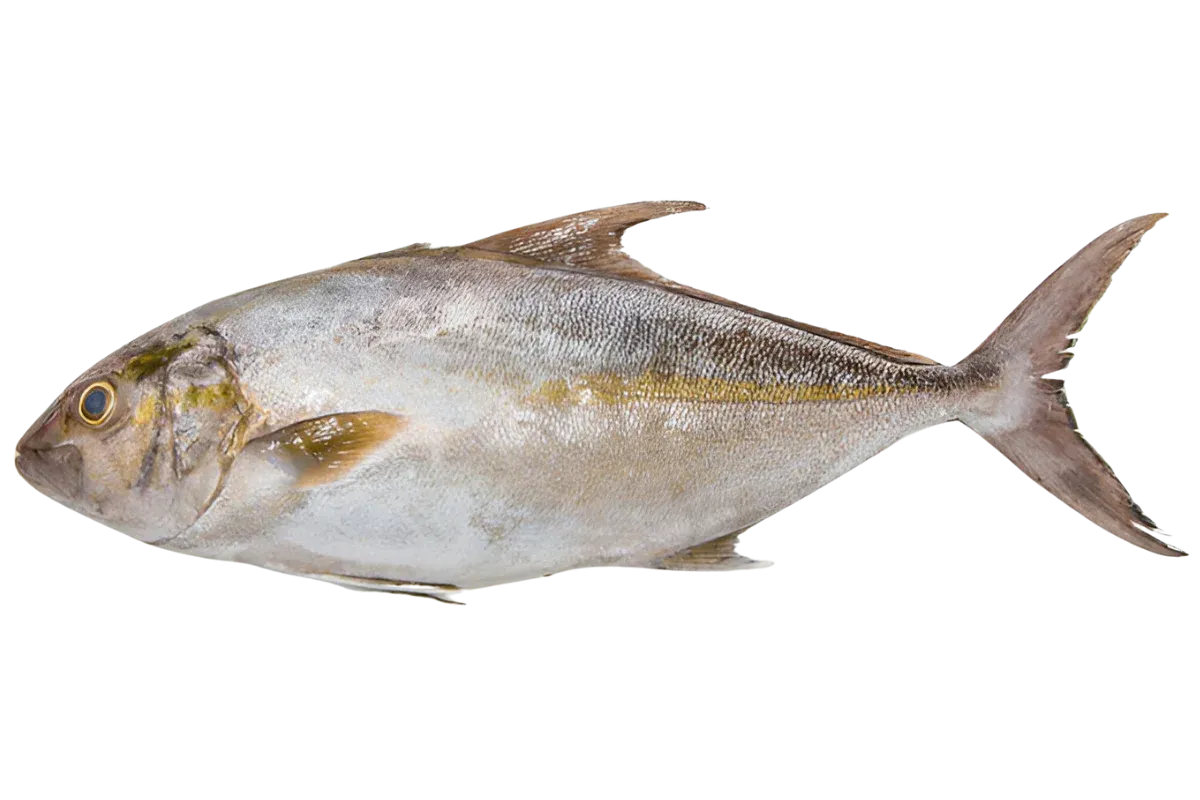
The Greater Amberjack is undoubtedly the dominant predator of the rocky Mediterranean seabeds and belongs to the Carangidae family. Its name originates from the month of May, when large adult fish approach the shores in mass to reproduce. The body is robust and hydrodynamic, with a torpedo-shaped design for high speed and power. The colour on the back is silver with blue or purple reflections, while the sides often feature a characteristic golden or amber hue, and the belly is white.
Its most recognisable feature is the slanted dark stripe resembling a mask that starts at the snout, passes through the eye, and fades toward the dorsal fin. This mask is more intense when the fish is hunting or stressed. Young individuals have a completely different appearance with a bright yellow colour and vertical dark stripes that help them hide. It is frequently confused with the Leerfish, but it is easily distinguished because the Greater Amberjack has a rounder body and its lateral line is smooth.
Habitat
The species is benthopelagic, living near the seabed while also moving in midwater layers. Adults prefer deep waters from 20 to 70 metres, although they have been recorded at depths exceeding 300 metres. They love rocky bottoms with intense relief, drop-offs, reefs, and shipwrecks where they find abundant food. Young individuals exhibit pelagic behaviour and often follow floating objects, including jellyfish, for protection.
Diet
It is an apex and voracious predator. It feeds mainly on schooling fish such as bogue, chub mackerel, horse mackerel, and small sea breams. It has a particular preference for cephalopods and specifically for squid and cuttlefish, which it hunts with fury. It hunts both solo and in small groups, using its speed to surprise its prey.
Reproduction
Reproduction of the Greater Amberjack takes place during the warm months. It starts gradually in May and peaks in June and July, and concludes in September. During this period, the fish gather at specific spawning points, usually on shallow reefs and headlands.
Fisheries
It is considered the ultimate trophy for recreational fishers due to the incredible strength it exerts when caught on a hook. It is caught using techniques such as jigging, deep trolling with live bait, and spearfishing. Its commercial value is very high because the meat is of exceptional quality, with a firm texture and rich flavour, and is ideal for grilling or raw consumption as sashimi. Unfortunately, its habit of gathering in schools for reproduction made it vulnerable to illegal dynamite fishing in the past.
Research
The International Union for Conservation of Nature classifies the Greater Amberjack as a species of Least Concern globally. Scientific studies have shown that it grows rapidly, reaching 1 kilogram in the first year of life and 5 to 6 kilograms by the third year. It has also been established that it undergoes seasonal migrations, moving to deeper waters in winter to avoid the cold and returning to the shallows in spring.