Gurnard
Chelidonichthys lucerna / Trigloporus lastoviza
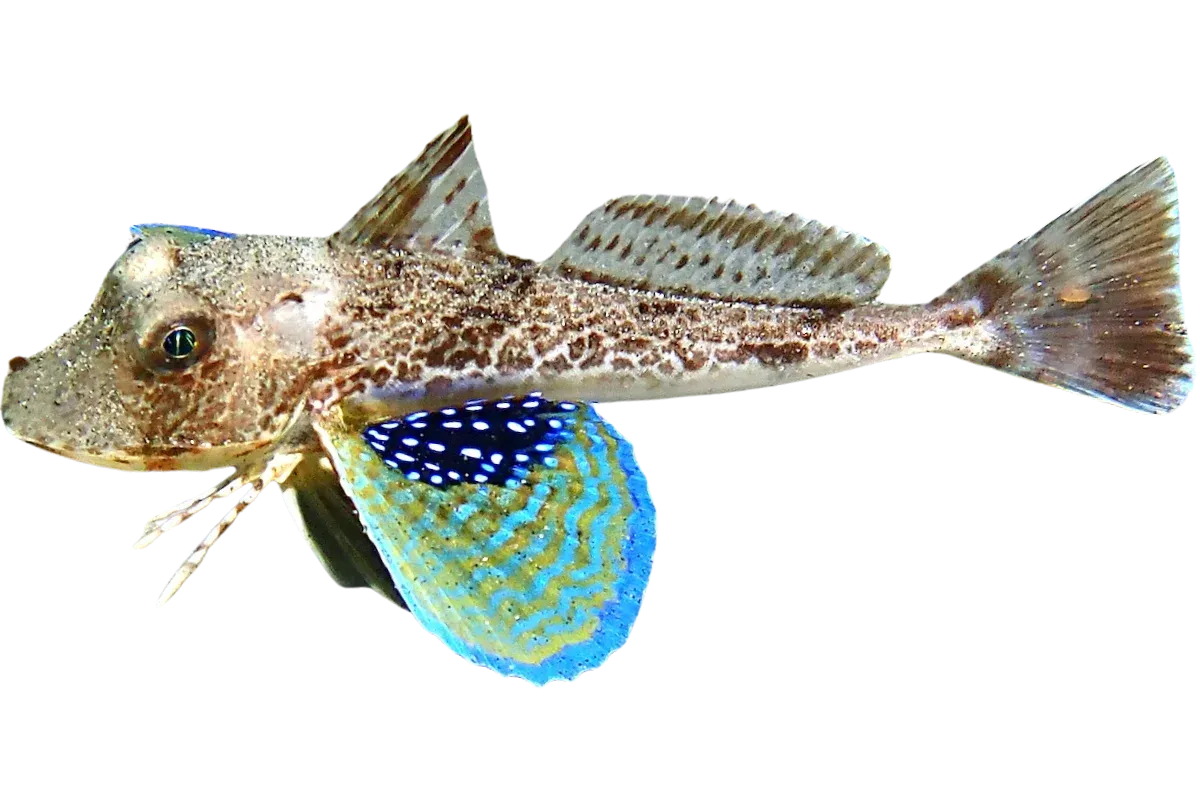
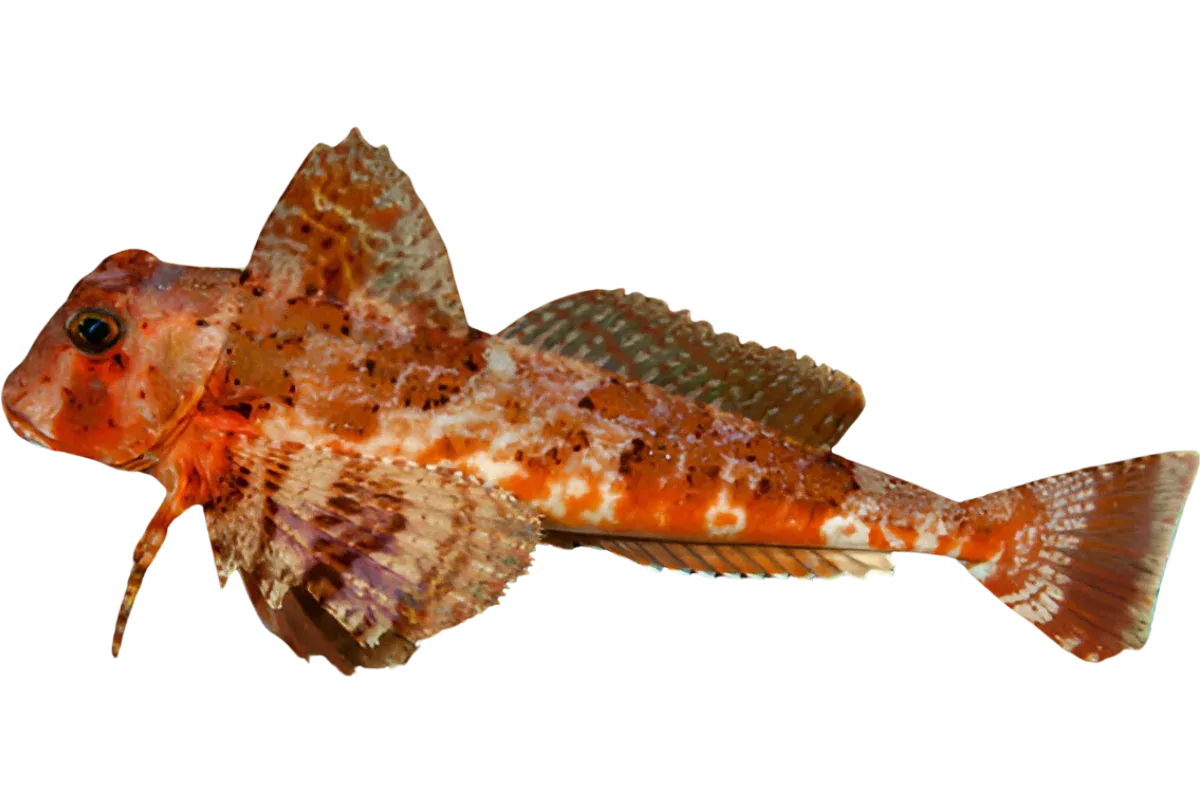
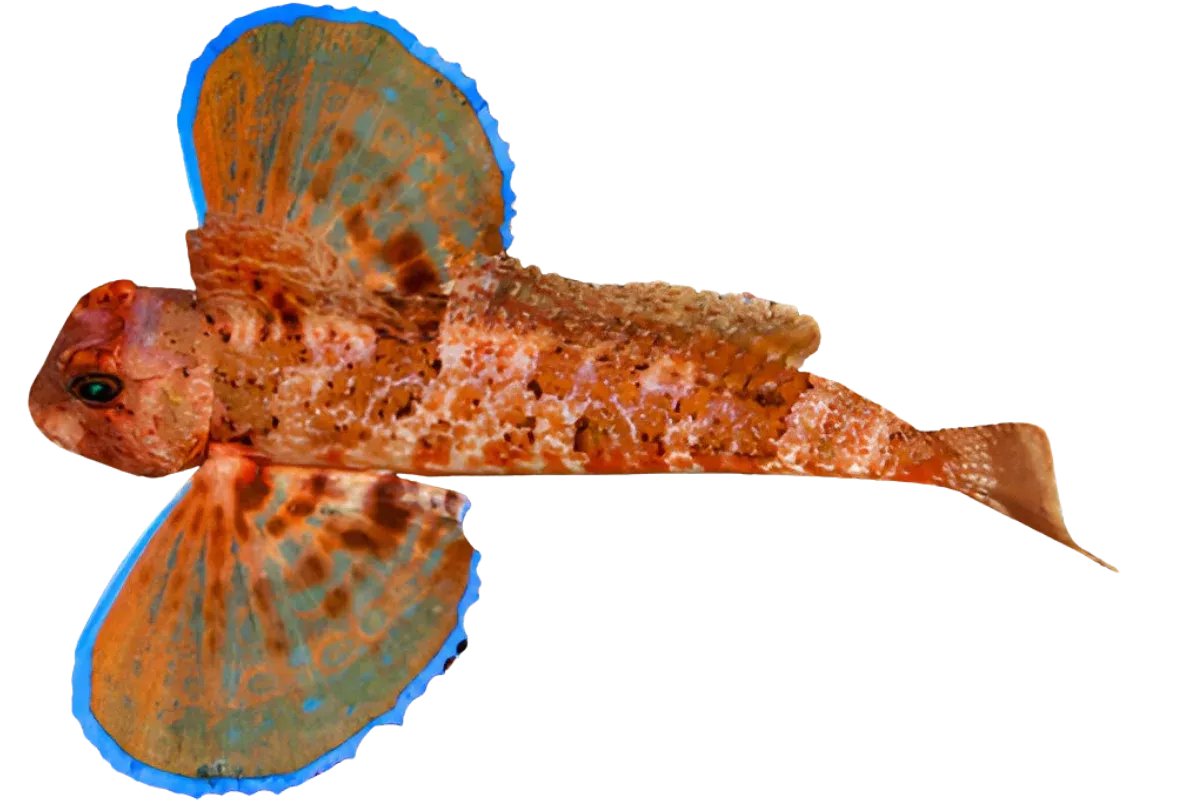
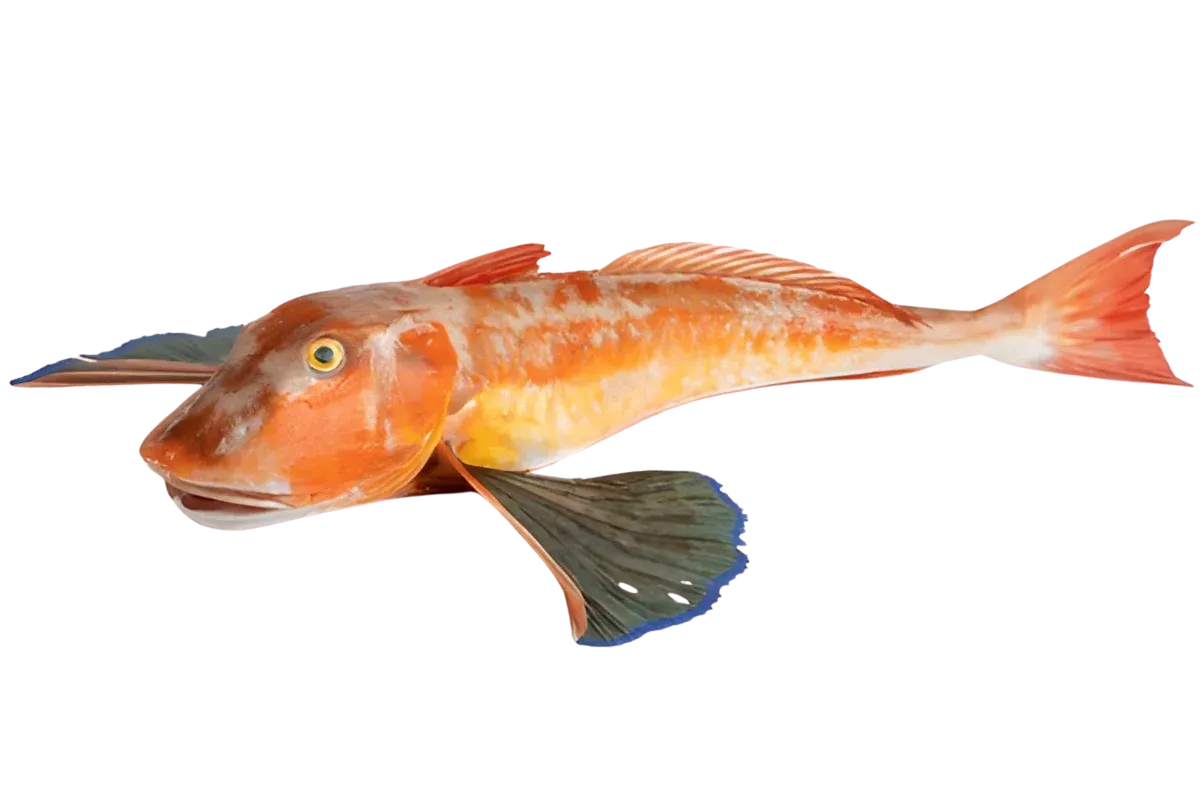
The Gurnard is one of the most unusual and distinctive fish of the seabed, belonging to the Triglidae family. In the region, we primarily find the Tub Gurnard and the Streaked Gurnard. The body is conical and capped by a hard, bony head that resembles a helmet. Its most impressive feature is the massive pectoral fins, which look like wings and often display vibrant colours, such as bright blue and green, when opened. Additionally, the first three rays of these fins are free and function like legs, allowing the fish to literally walk along the seabed. It is also known for producing a characteristic grunting sound with its swim bladder when it feels threatened.
Habitat
This species lives exclusively on the seabed, usually in areas with sand, mud, or fine gravel. The Tub Gurnard prefers depths from 20 to 300 metres, while the Streaked Gurnard frequents shallower waters. During the summer months, they tend to move toward the coast, while in winter, they descend to deeper waters.
Diet
It is a carnivorous fish that uses its modified fin legs for both movement and hunting. It feeds primarily on crustaceans such as crabs and shrimp, along with small benthic fish like gobies and worms. It stirs the sand with its snout and legs to uncover its prey.
Reproduction
The timing of reproduction varies between species. The Tub Gurnard reproduces mainly in winter and spring, from January to May. In contrast, the Streaked Gurnard reproduces during the warmer summer months, usually from June to August. Their eggs are pelagic and float in the water until they hatch.
Fisheries
It is caught mainly as bycatch by bottom trawlers and sometimes with longlines or nets. Although its commercial value is moderate, the meat is considered of exceptional quality. The flesh is white, firm, and very tasty, making it ideal for fish soup because the head and bones contain a lot of gelatin that gives the broth a rich texture.
Research
The International Union for Conservation of Nature classifies most gurnard species in the Mediterranean as Least Concern. Scientific research has revealed that the free, wing-like fins are not only locomotive organs but also organs of taste. They are filled with chemoreceptors that allow the fish to taste the sand and locate hidden food without seeing it, which is an adaptation that makes it an extremely effective predator in murky waters.