Horse Mackerel
Trachurus trachurus / Trachurus mediterraneus
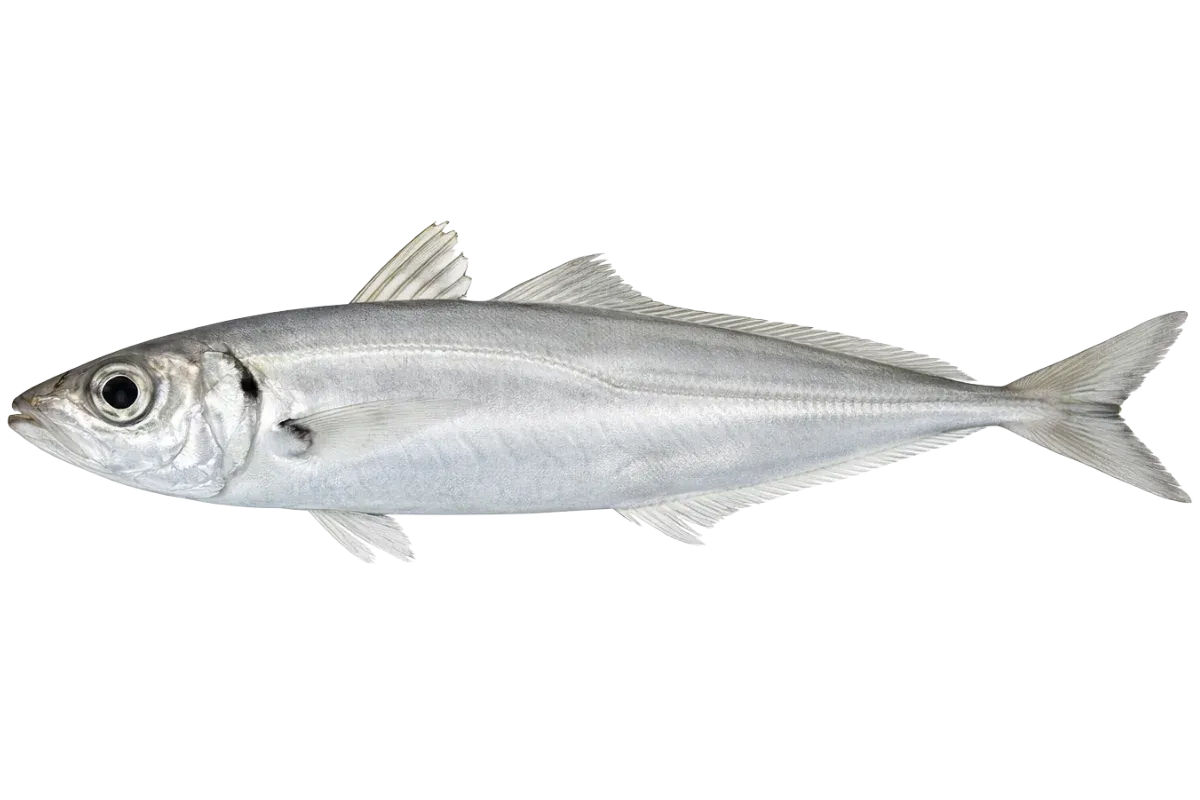
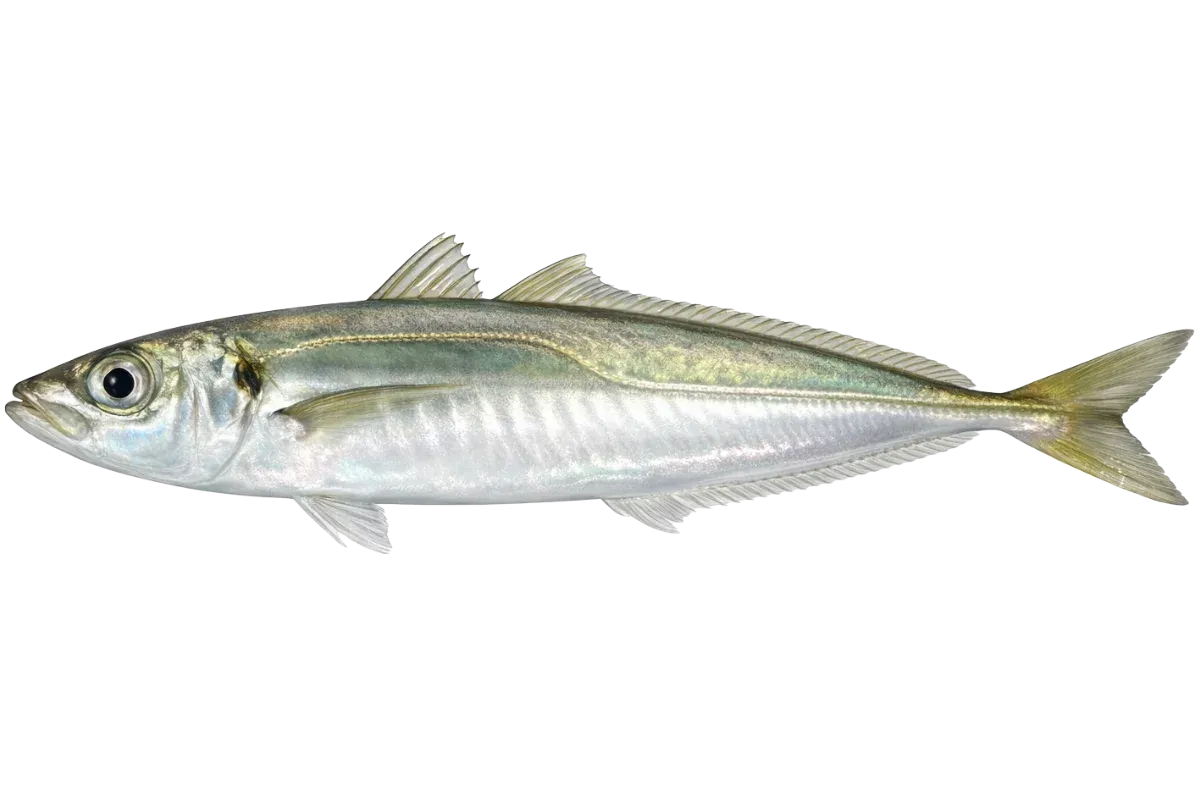
The Horse Mackerel, which is also widely known as the Scad or the Jack Mackerel, is one of the most abundant, common, and commercial fish of the Mediterranean. It is a small pelagic species known for the hard, bony plates on its tail, as well as its high nutritional value and very affordable price. The body is muscular and torpedo-shaped, silver in colour, turning blue-grey on the back.
The most recognisable feature of the genus involves its lateral line. In contrast to most fish, this line is fully armoured with a series of large, hard, bony plates that resemble scales and are called scutes. These plates become larger and sharper as they approach the tail, providing protection and hydrodynamic stability. Because of this feature, it is often confused with the Blue Runner, which belongs to the same family but possesses less prominent scutes.
In the Mediterranean, we encounter two main species that are distinguished by the length of the secondary lateral line. The Atlantic Horse Mackerel or Grey Horse Mackerel has a long secondary line that reaches beyond the start of the first dorsal fin. The Mediterranean Horse Mackerel or White Horse Mackerel has a short secondary line that stops before the start of the first dorsal fin.
Habitat
This is a common small pelagic species that lives in large and populous schools. It exhibits strong seasonal vertical migration behaviour. In the summer, the schools move into shallower, coastal waters, usually from the surface to 100 metres, to feed. During the winter, they migrate to very deep waters, reaching up to 500 metres, where they remain near the bottom.
Diet
The animal is a voracious predator of the open sea. It feeds mainly on zooplankton and small fish such as anchovies and silversides, as well as crustaceans like shrimp and cephalopods. It hunts in schools and often cooperates with other pelagic species, such as chub mackerel.
Reproduction
Reproduction takes place in the open sea during the spring and early summer. The eggs are pelagic and drift in the currents. Young individuals often find shelter under the umbrellas of large jellyfish to protect themselves from predators.
Fisheries
It represents one of the most important catches by volume for the regional fishing industry. It is caught in bulk by bottom trawlers and purse seines. It is also very popular among recreational fishers who catch it with sabiki rigs, handlines, or fine-surface trolling. Although the meat is considered of moderate quality and has low commercial value, it is extremely tasty and healthy when absolutely fresh. It is rich in Omega-3 fatty acids and is usually cooked, fried, grilled, or marinated. According to legislation, the minimum catch size is 15 centimetres.
Research
The International Union for Conservation of Nature classifies the Horse Mackerel as a species of Least Concern. Scientific studies have highlighted its pivotal role in the marine ecosystem as a link between plankton and large predators such as dolphins and tunas. Furthermore, research has shown that stocks in the Mediterranean exhibit fluctuations due not only to fishing but also to climatic factors that affect plankton production.