Little Tunny
Euthynnus alletteratus
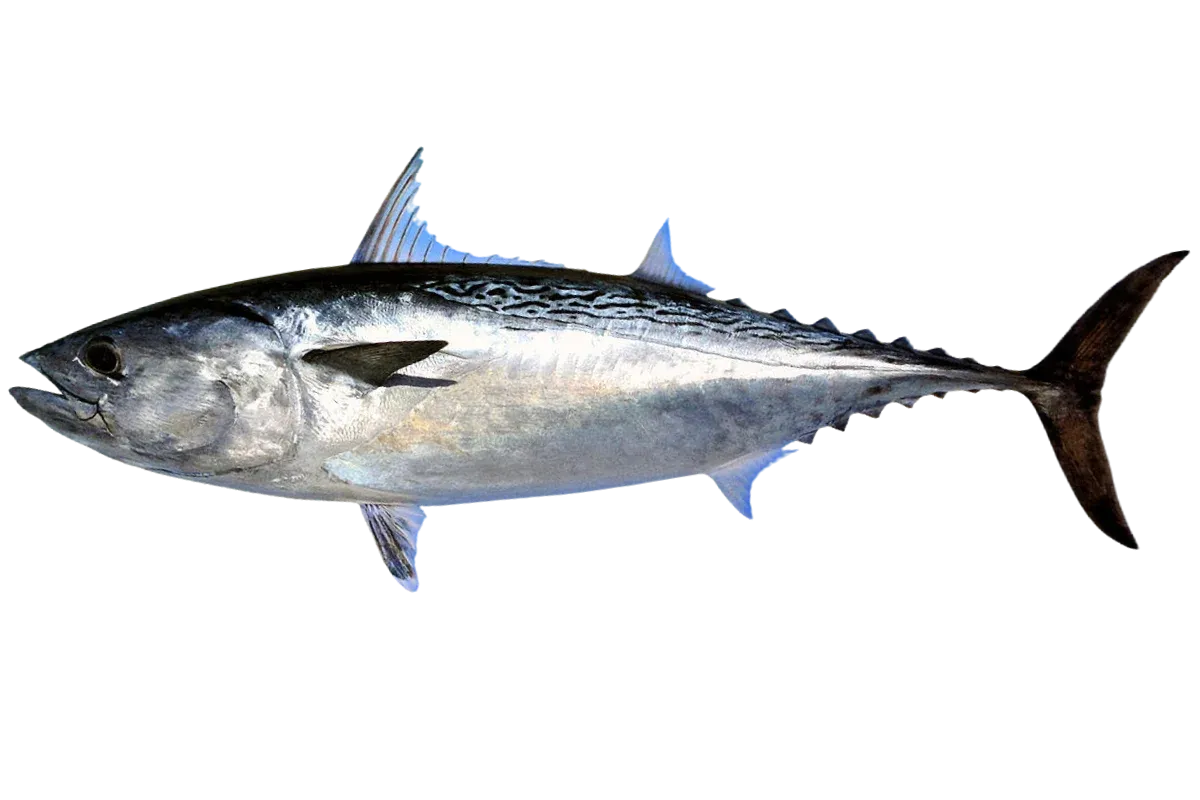
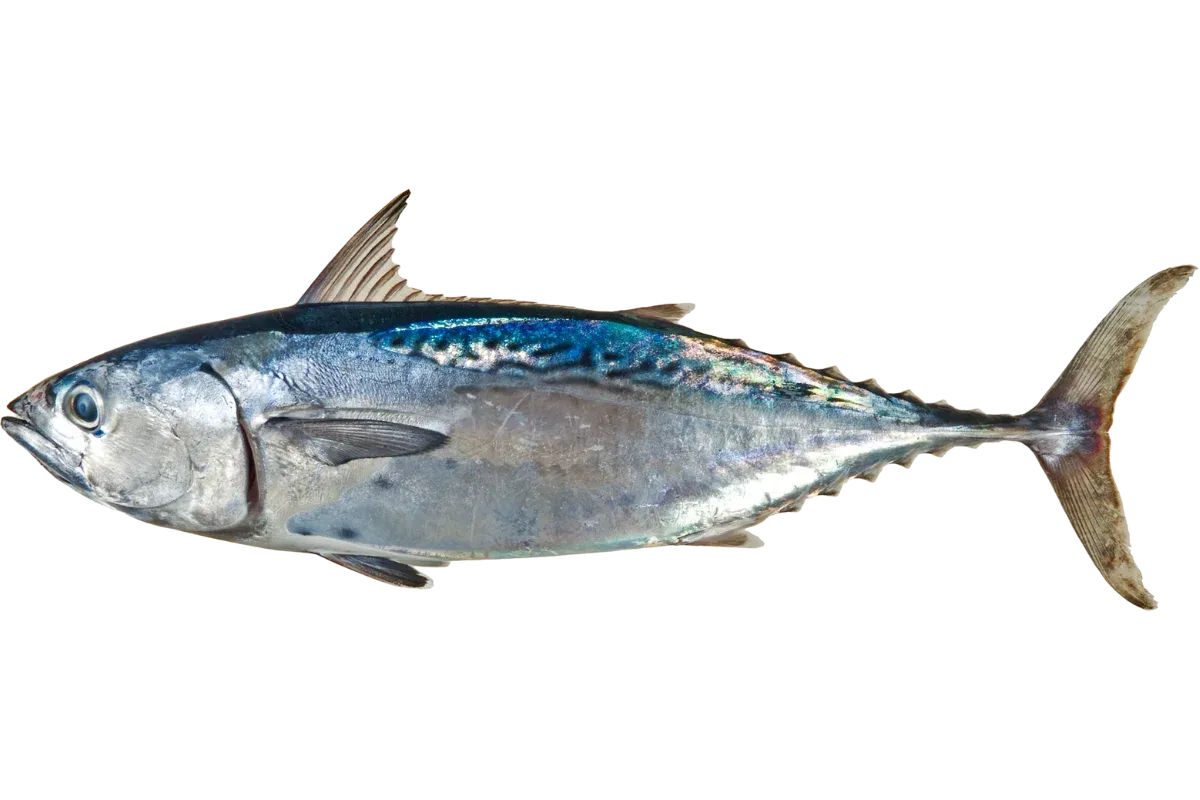
The Little Tunny is a powerful and fast pelagic fish belonging to the Scombridae family. It is the most common tuna species in the Mediterranean coastal waters and is frequently confused with the Atlantic Bonito or the Albacore. However, it possesses unique characteristics that make it instantly recognisable.
The body is robust and hydrodynamic with a dark blue or metallic colour on the back and silver on the belly. The primary identification feature is located on the back, where there is a complex pattern of dark wavy lines resembling a labyrinth or worms. These markings never extend forward past the middle of the first dorsal fin. Additionally, the fish almost always has between three and seven black spots on the belly between the pectoral and pelvic fins, which look like fingerprints. Unlike the bonito, it lacks teeth on the roof of its mouth.
Habitat
This is an epipelagic species that prefers warm and temperate waters. It lives mainly in coastal regions of the neritic zone but also in the open sea, where it forms large, very compact schools, often alongside other tuna species. It is extremely mobile and performs extensive migrations while following warm currents and its food. It frequently approaches the coast, especially around headlands and in areas with strong currents, where it hunts for surface fish.
Diet
The animal is a voracious and opportunistic predator. It feeds primarily on schools of small pelagic fish such as sardines and anchovies, as well as round sardinella and sand smelts. It also consumes cephalopods such as squid and crustaceans. When schools of these fish attack small prey, the water literally boils from the intensity of the hunt, often attracting seabirds that feed on the remains.
Reproduction
Breeding in the Mediterranean takes place during the warm months and usually from late spring to the end of summer, between May and September, with a peak in July. The females release their eggs in several batches in the open sea. Both the eggs and the larvae are pelagic.
Fisheries
For recreational anglers, the Little Tunny is one of the strongest opponents, weight-for-weight. It is caught mainly using spinning, heavy casting, and surface trolling with fast-moving artificial lures. Professionally, it is caught with purse seine nets and other nets.
Its commercial value is lower than that of other tuna species. The meat is very dark red, firm, and has a strong, heavy, or bloody flavour. Many consider it inferior, but if it is bled correctly immediately after capture and cooked properly as salted fish or in a sauce, it is delicious and nutritious.
Research
The International Union for Conservation of Nature classifies the Little Tunny as a species of Least Concern, as it is abundant and has a wide distribution. Scientific studies have shown that it grows very quickly and has a relatively short lifespan, usually reaching up to 10 years. Research in the Mediterranean indicated that young individuals feed mainly on the larvae of other fish while they turn to larger prey as they grow. It has also been observed that the species is very sensitive to low temperatures and vanishes from surface waters during the winter.