Longspine Snipefish
Macroramphosus scolopax
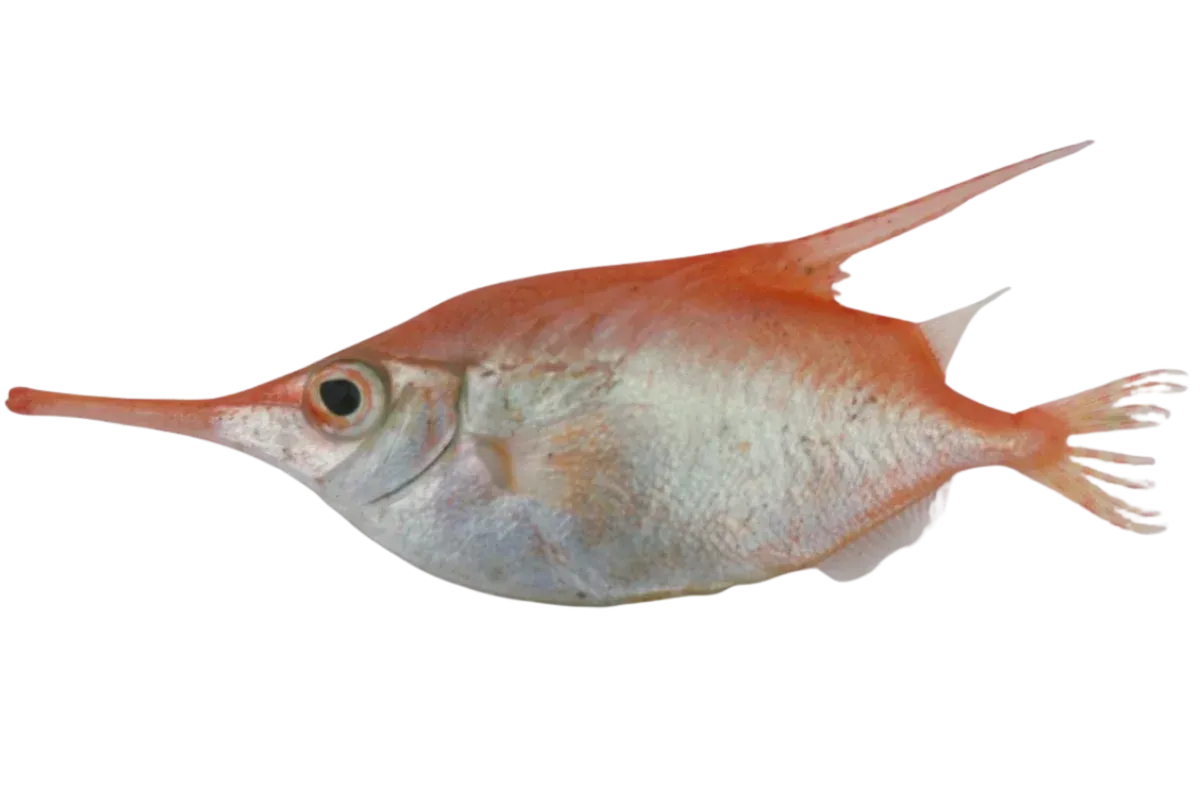
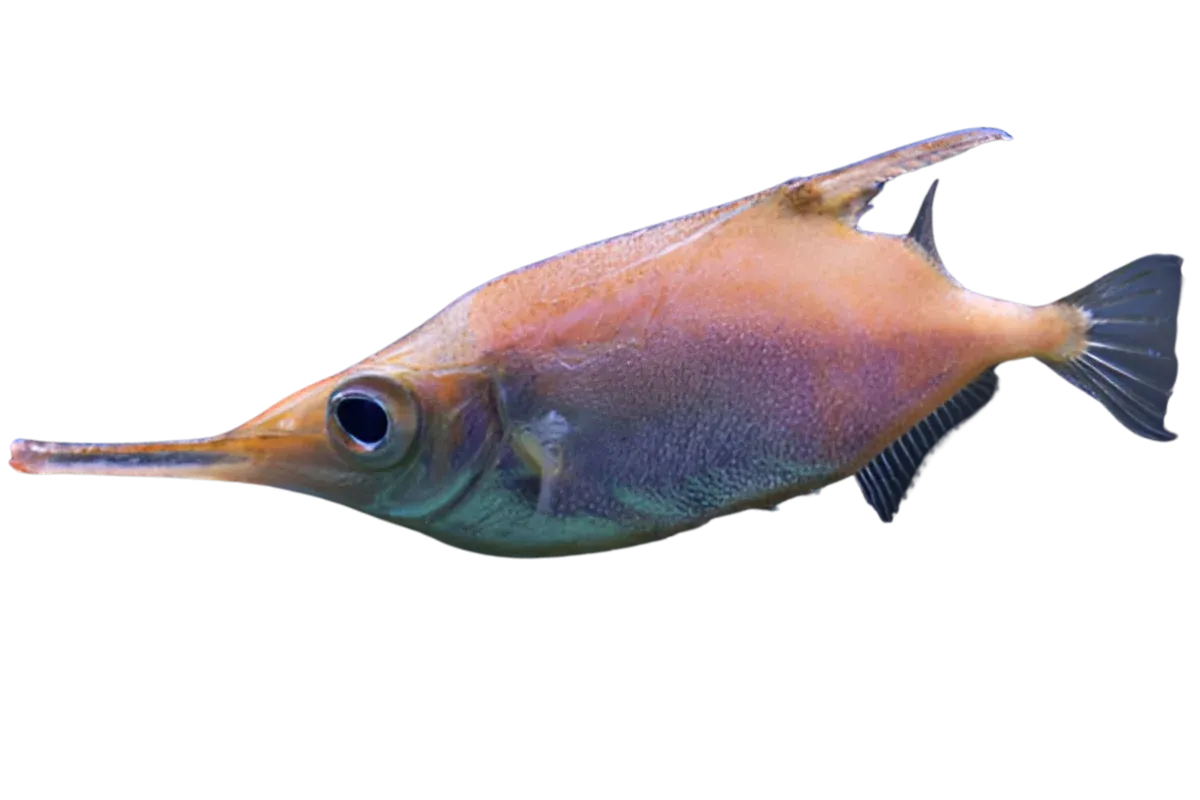
The Longspine Snipefish, which is also commonly referred to as the Snipefish, the Slender Snipefish, or the Trumpetfish, is a small and strange fish that is abundant in the deep waters of the Mediterranean. The body is laterally compressed and relatively high, with a colour that varies from intense pink or reddish on the back to silver on the belly. Its most characteristic feature consists of the unusually long and tubular snout, which looks like a pipette or the beak of a bird, while featuring a tiny mouth at the very tip.
In addition to the snout, it is distinguished by the second spine of its dorsal fin, which is highly developed, thick, and serrated on its back part. It also exhibits unique swimming behaviour, often moving in a vertical or diagonal stance, head pointed towards the seabed, while scanning for food.
⚠️ Safety warning
The Longspine Snipefish carries an exceptionally large, hard, and serrated spine on its second dorsal fin. Although many people mistakenly believe it is poisonous, it is actually very sharp and can cause deep, painful wounds to the hands if one is not careful.
Habitat
This species lives both near the bottom and in open water, forming massive, dense schools. It lives primarily at the edge of the continental shelf and the slope above muddy or sandy bottoms. The depth where it is encountered usually ranges from 50 to 350 metres, although it has been recorded as deep as 600 metres. Young individuals exhibit more pelagic behaviour and live closer to the surface, while adults prefer the seabed.
Diet
The animal is a specialised predator of microscopic organisms. It uses its long snout like a vacuum cleaner to suck in its prey. It feeds mainly on tiny benthic invertebrates such as polychaete worms and small crustaceans like shrimp and copepods that it finds on the bottom or swimming just above it.
Reproduction
Reproduction of the Longspine Snipefish takes place during the winter months, usually from January to February or March. The eggs and larvae are pelagic, and the young fish initially have a silver colour with a blue back before they acquire the pink hue of adults and descend to the seabed.
Fisheries
It has no commercial value and is not consumed by humans, mainly due to its small size, numerous bones, and tough texture. However, it is caught in huge quantities as unwanted bycatch by bottom trawlers. It is usually discarded dead into the sea, where it provides food for seabirds and other fish.
Research
The International Union for Conservation of Nature classifies the Longspine Snipefish as a species of Least Concern due to its great abundance and wide distribution. Scientific studies have highlighted its important ecological role as food for many commercial fish species such as hake and John Dory. Furthermore, research has shown that its schools are so dense that they often clog trawlers' nets, making fishing for other species difficult.