Pearly Razorfish
Xyrichtys novacula
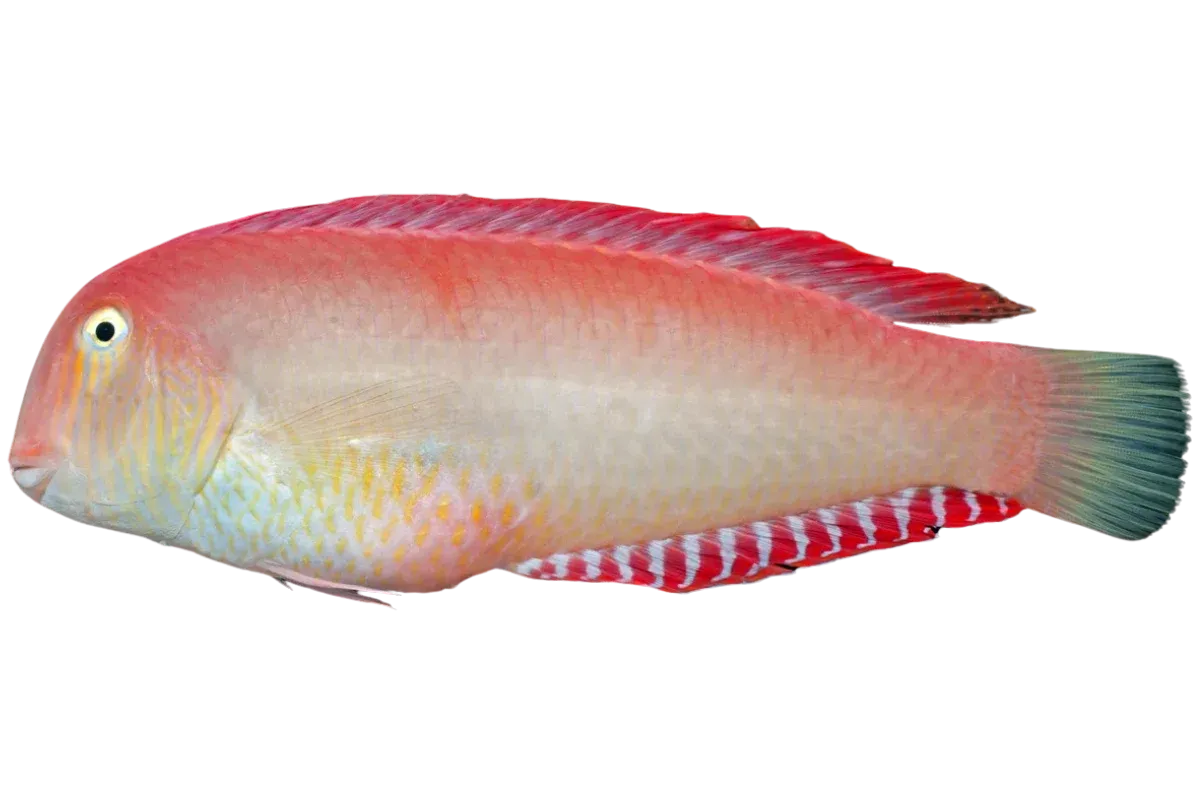
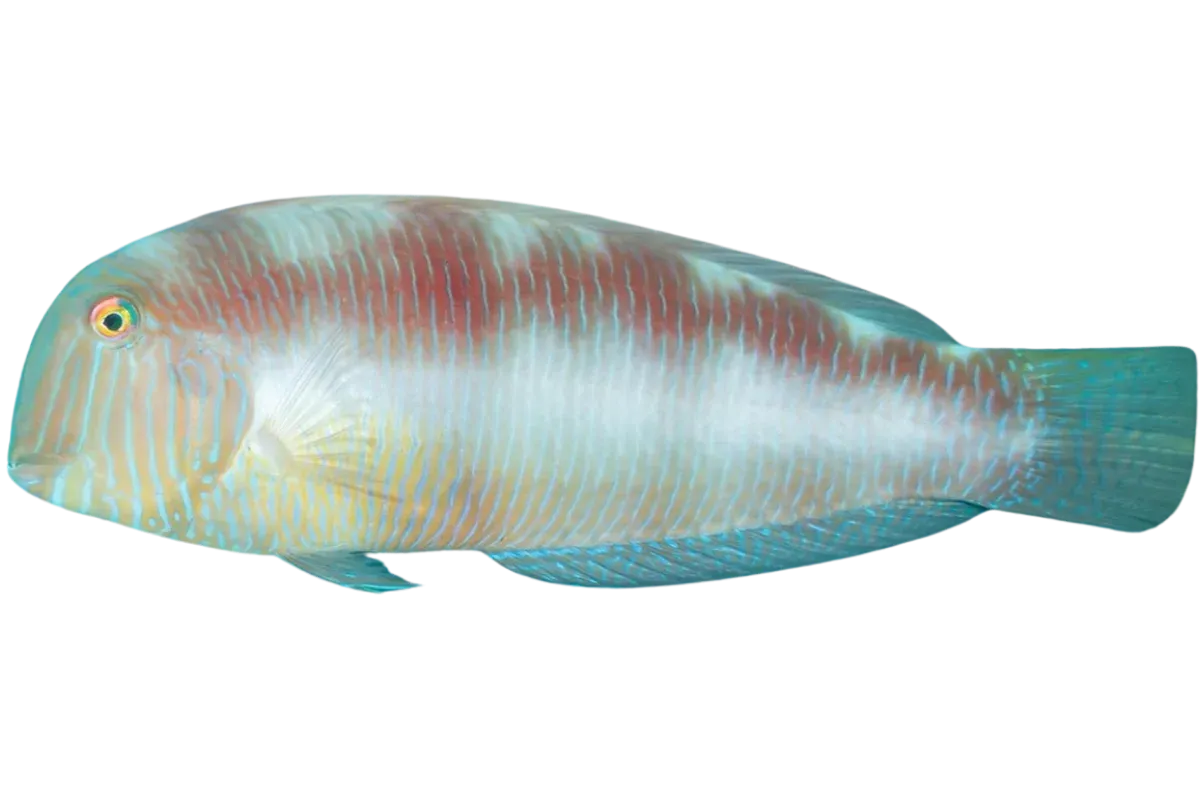
The Pearly Razorfish, also known as the Cleaver Wrasse or Razorfish, is one of the most unusual and fascinating fish in coastal waters. It belongs to the Labridae family and is a close relative of the rainbow wrasse. Its name reflects that its body is extremely thin and compressed on the sides, like a blade. The head has a very steep, vertical profile that ends in a sharp edge, allowing it to cut through water and sand with minimal resistance.
The species exhibits strong sexual dimorphism. Females and young individuals have a soft pinkish-orange or salmon colour with silvery reflections that resemble pearls. Males are completely different, with a colour that ranges from light green to grey-blue, and they bear characteristic thin vertical lines on the head and body.
Habitat
This is a benthic species that lives exclusively on clean sandy or muddy bottoms while often staying near the edges of Posidonia meadows, where it finds shelter. It is encountered in shallow waters, usually at depths from one to 50 metres. The most famous characteristic of its behaviour involves its reaction to danger. When it feels threatened, the fish does not swim away; instead, it dives headfirst into the sand and disappears completely. It can move and swim within the sand for long distances without coming to the surface.
Diet
The species is a carnivorous fish that is active during the day. It feeds mainly on benthic invertebrates found on or inside the sand. Its diet includes small molluscs such as clams, shrimp, and crabs, as well as echinoderms. It possesses strong canine-like teeth, which it uses to break the shells of its prey.
Reproduction
The Pearly Razorfish is a protogynous hermaphrodite species. All fish are born as females and reach sexual maturity at approximately two years of age. Later in their lives, the largest and most dominant females change sex, becoming males. Their social structure is haremic, where a dominant male controls and protects an area with several females. Reproduction takes place in the summer months, primarily during July and August.
Fisheries
Although it is not caught in large quantities, the fish is considered a choice delicacy by connoisseurs. It is caught mainly by recreational fishers using handlines and longlines, but it is difficult to catch because it can cut fishing lines with its teeth or bury itself in the sand once hooked. The meat is white, tender, and extremely delicious when fried, and it commands a high price and strong demand in certain regions.
Research
The International Union for Conservation of Nature classifies the Pearly Razorfish as a species of Least Concern. Scientific studies have focused on its unique ability to dive into the sand while revealing that the speed at which it buries itself is so great that the sediment behaves like a fluid around its body. Furthermore, research showed that in winter it migrates to deeper waters, reaching depths of 90 to 150 metres, where it probably remains buried in hibernation for long periods.