Red Mullet
Mullus barbatus
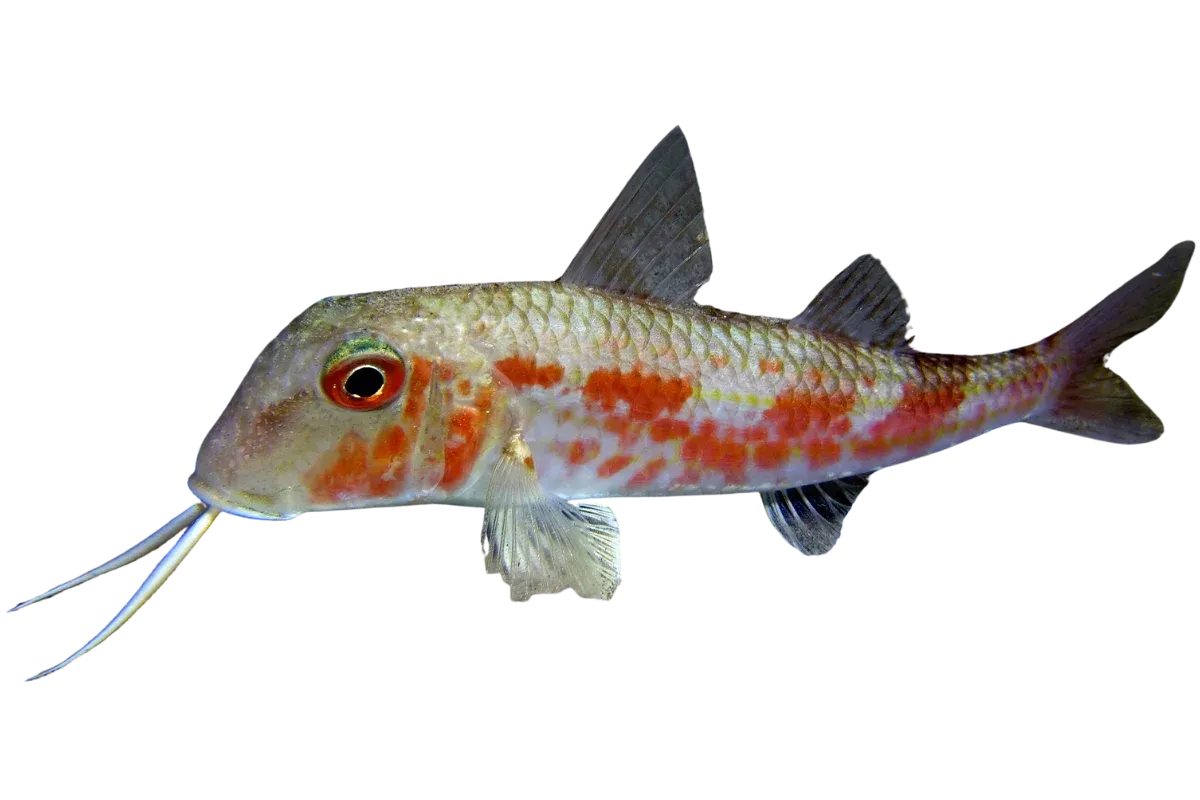
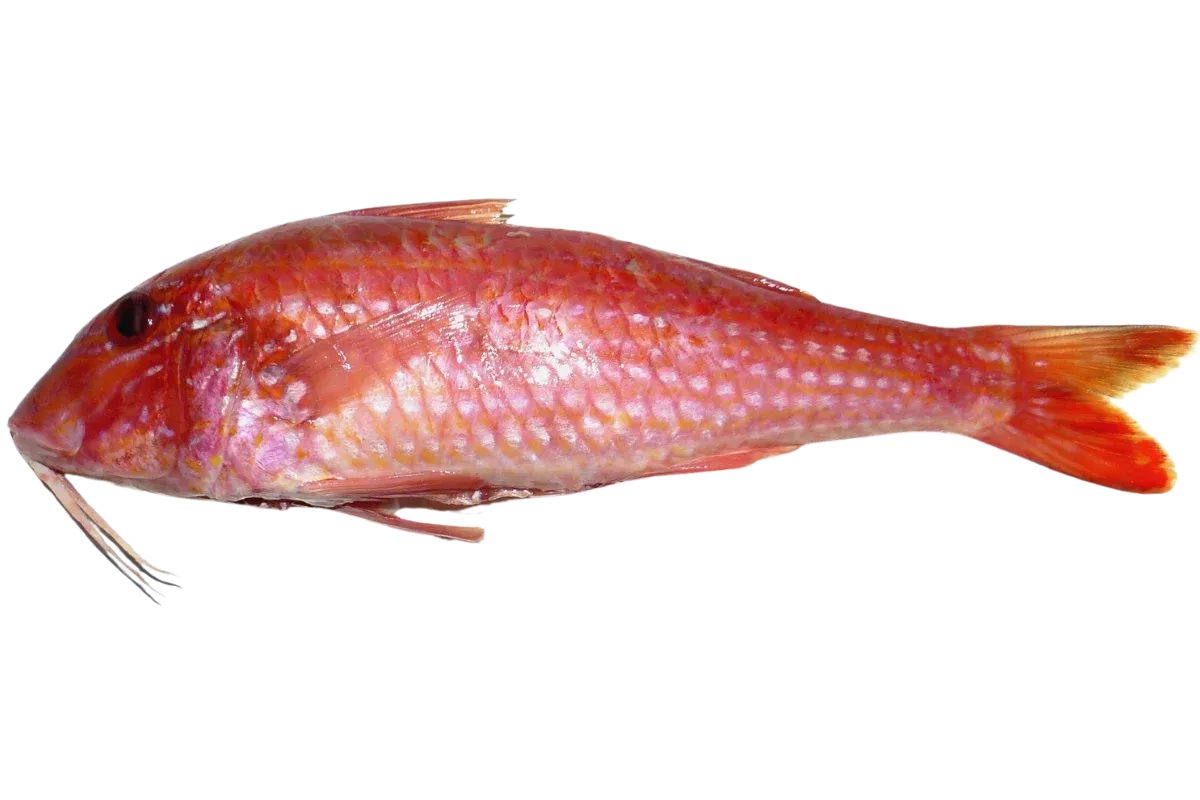
The Red Mullet is one of the most commercially significant and beloved fish of the Mullidae family. It is often confused with the Striped Red Mullet, but it possesses clear distinguishing features. The common name in various regions refers to the characteristic profile of the head, which is steep and almost vertical, and blunt, giving the impression that it is cut off. This is a major difference from the smooth and curved profile of the Striped Red Mullet.
The colour is usually a uniform red-pink without the bold yellow horizontal stripes found on its close relative. Furthermore, its first dorsal fin is colourless or uniformly pigmented without the dark markings or spots found on the fin of the Striped Red Mullet. Like all members of its family, it possesses two long barbels under the jaw, each filled with taste and touch sensors.
Habitat
This is a benthic species that lives exclusively on soft bottoms. Unlike the Striped Red Mullet which prefers a mix of stone and sand the Red Mullet lives almost exclusively on muddy or sandy muddy seabeds. It is encountered at greater depths than its relative, usually from 50 to 300 metres or even deeper, although young individuals may be found in shallower waters.
Diet
It feeds by constantly stirring the mud of the seabed with its barbels to locate hidden prey. Its diet consists mainly of small benthic invertebrates, such as shrimp, amphipods, and worms, along with small molluscs that live in the sediment.
Reproduction
Breeding in the Mediterranean takes place primarily during the spring and summer, usually from April or May to August. The females release pelagic eggs into the water. The small fish, or fry, initially live at the surface during a pelagic stage, and they have a bright blue colour for protection before descending to the seabed and acquiring the reddish colour of the adults.
Fisheries
The species is of great commercial importance and is caught in large quantities by bottom trawlers and trammel nets. It has a high market value because the meat is of exceptional quality, white and flavourful, and is considered by many to be equal to the Striped Red Mullet, especially when fried. According to European legislation, the minimum allowable catch size is 11 centimetres.
Research
The International Union for Conservation of Nature classifies the Red Mullet as a species of Least Concern because it has a wide distribution. However, scientific studies and fishery reports in the Mediterranean show that populations in many areas are overexploited mainly due to the capture of large quantities of young individuals by trawlers. Research has shown that females grow faster and become larger than males.