Seahorse
Hippocampus guttulatus / Hippocampus hippocampus
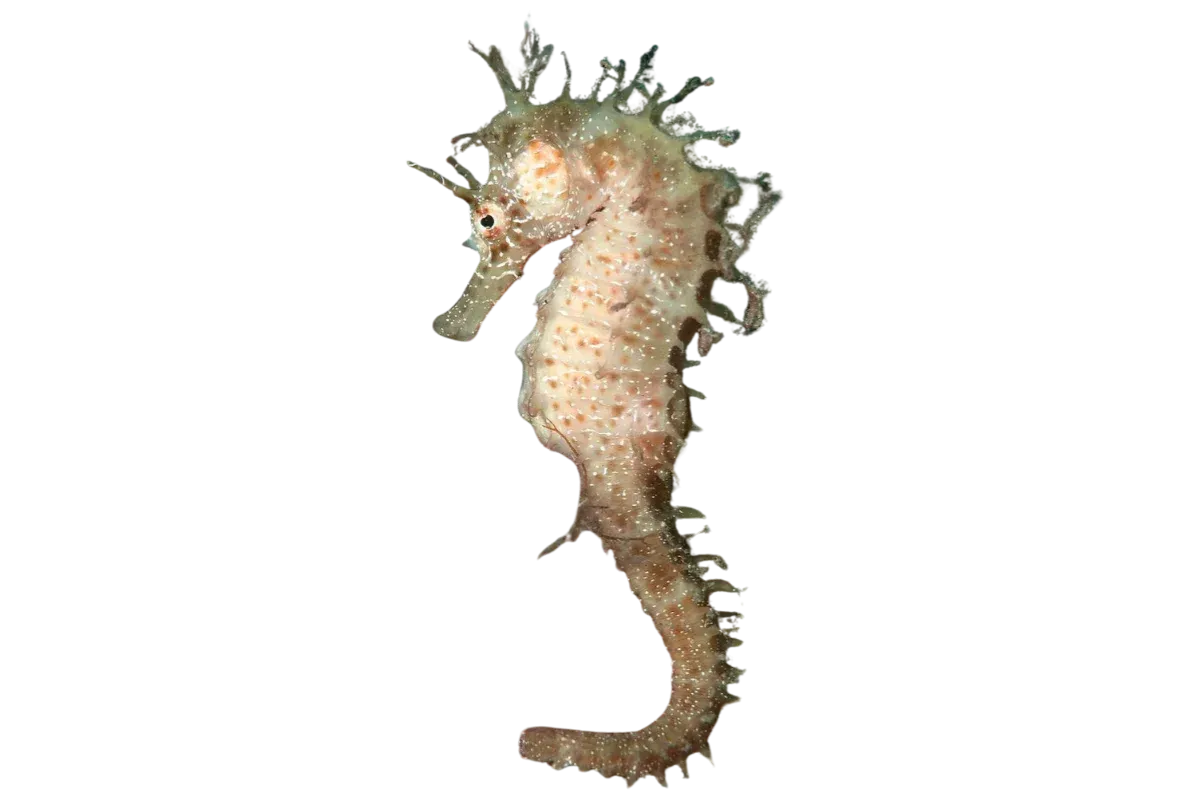
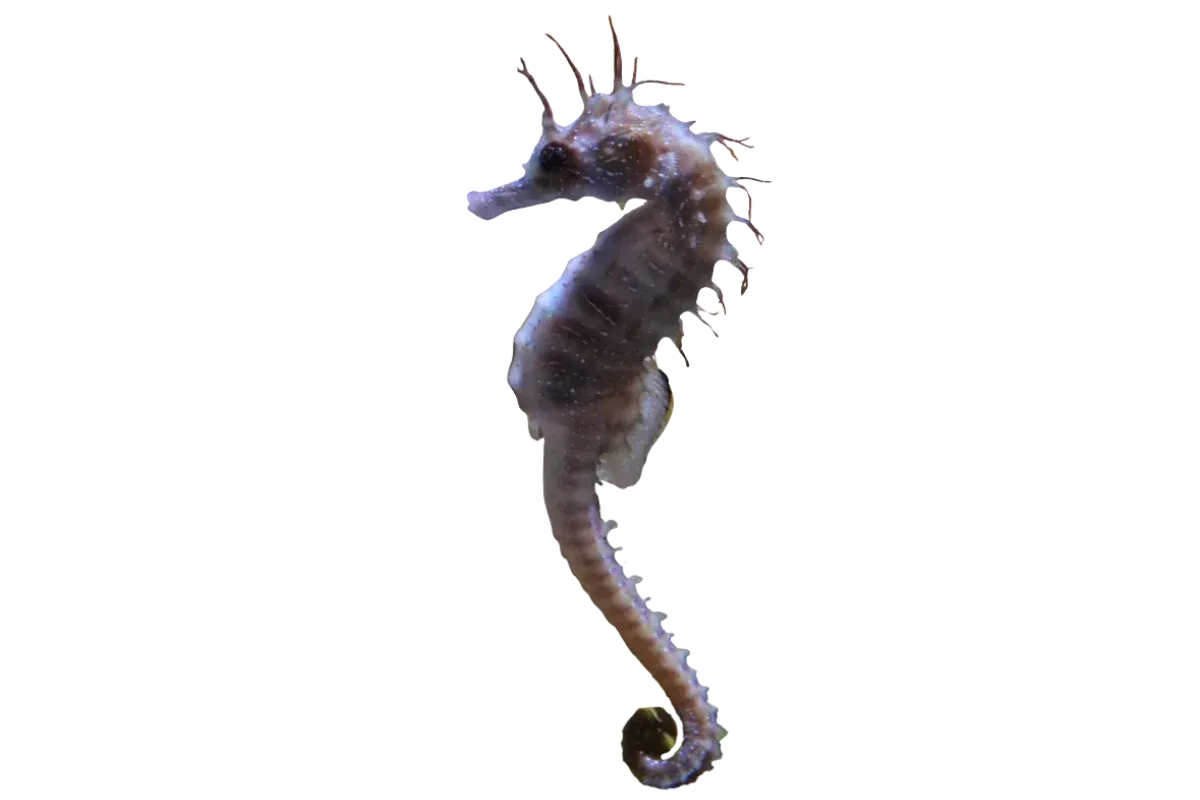
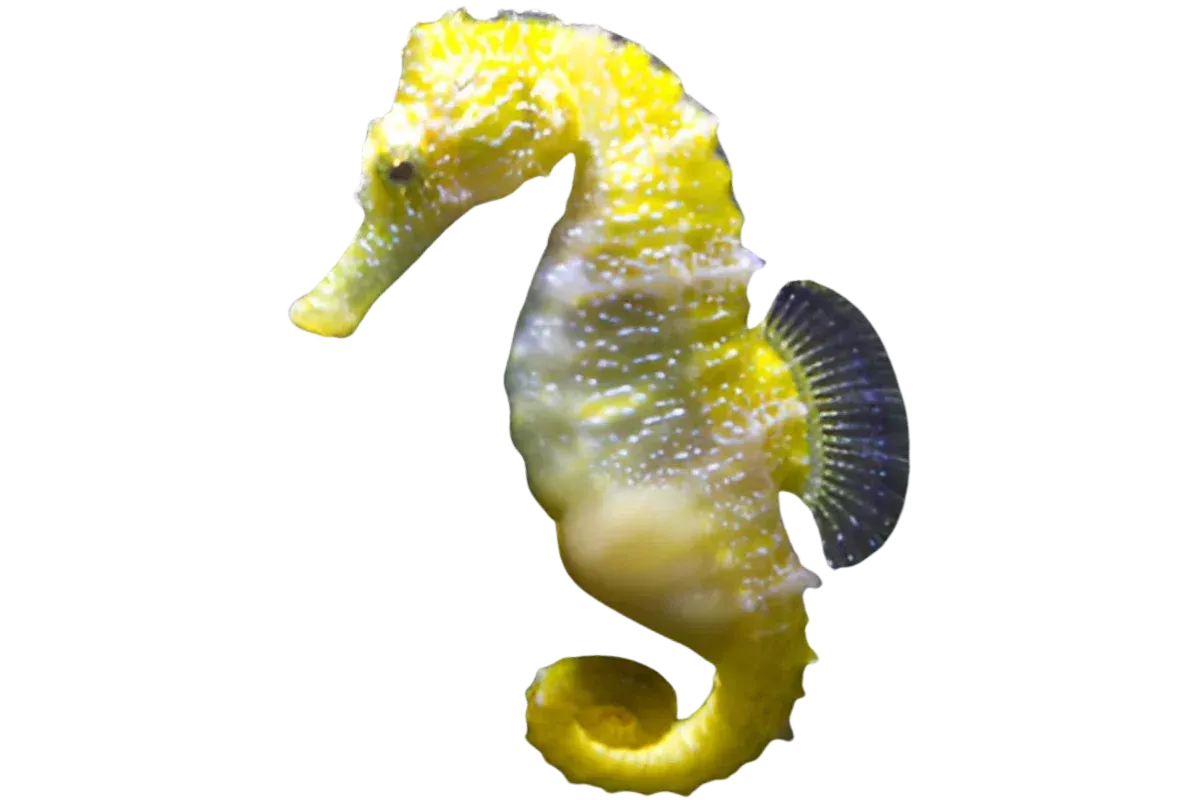
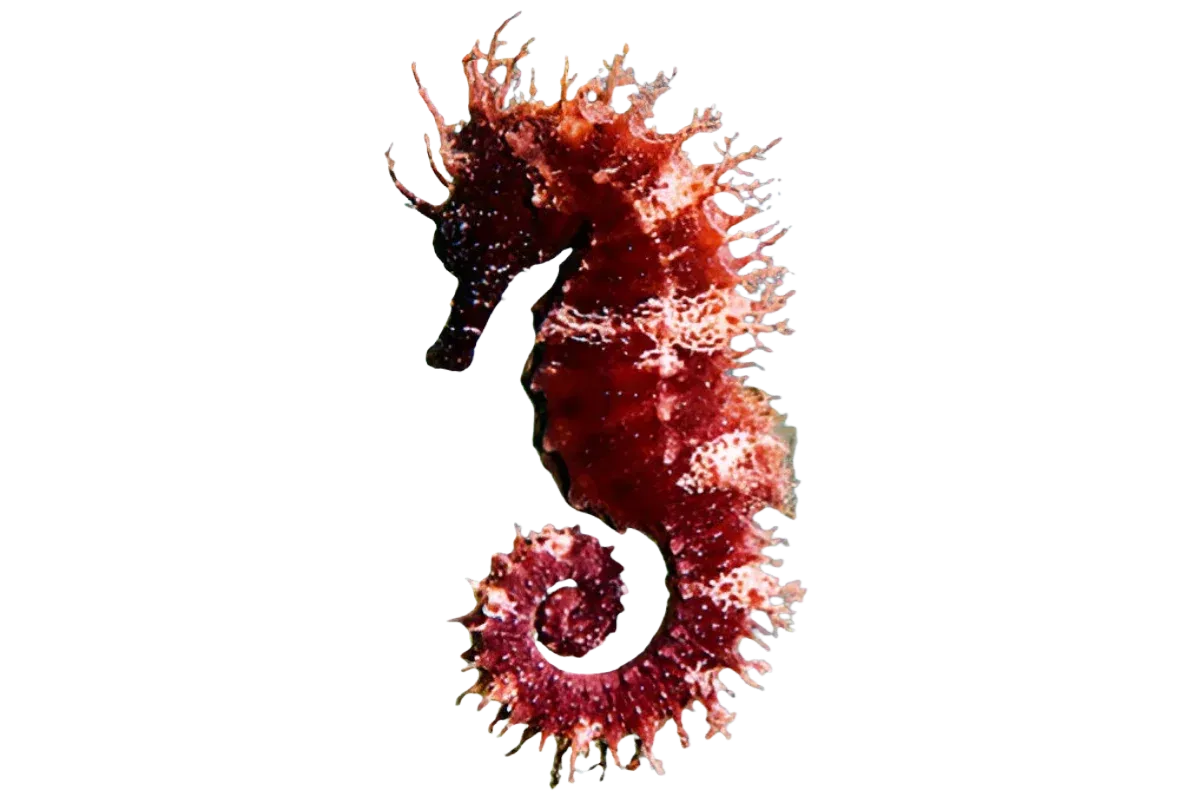
The Seahorse is perhaps the most recognisable and beloved fish of our seas, with an appearance reminiscent of a chess piece. The head is shaped like a horse's, and the body is covered by hard bony rings instead of scales, which function as armour. It is the only fish that swims upright while using a small dorsal fin for movement and two tiny fins on the cheeks for turning. Its eyes move independently, allowing it to monitor its surroundings without turning its head.
In the Mediterranean, two species are encountered. The Long snouted Seahorse is distinguished by its long snout and often features fleshy filaments on the head and back like a mane. The Short snouted Seahorse has a shorter snout and a smoother body without these characteristic filaments.
Habitat
It lives exclusively in shallow coastal waters, usually at depths from 1 to 30 metres. It depends entirely on its environment for cover and protection. You will find it mainly within dense Posidonia meadows and on rocky seabeds with rich vegetation or sponges. Its tail is prehensile, meaning it can wrap around and hook onto seaweed or other objects to resist marine currents, since it is a poor swimmer.
Diet
The animal is a voracious carnivore that ambushes its prey. It stands still and camouflages while waiting for its prey. It feeds on microscopic crustaceans such as small shrimp, amphipods, and zooplankton. Because it lacks teeth and a stomach, the food passes quickly through its digestive system, and therefore, it must eat almost continuously to survive by sucking its prey instantly with its tubular mouth.
Reproduction
The Seahorse holds a unique record in the animal kingdom because the male carries and gives birth to the young. After a complex mating dance, the female deposits her eggs in a special pouch located on the belly of the male. The male fertilises the eggs and carries them for 3 to 4 weeks while providing them with oxygen and nutrients. At the end of the pregnancy, the male has contractions and expels hundreds of tiny and fully formed seahorses into the water.
Fisheries
Protection Status & Threats
Both seahorse species in the Mediterranean are characterised as Near Threatened by the International Union for Conservation of Nature. The fishing, killing, possession, and sale of these animals is strictly prohibited by the international CITES convention and local legislation. The main threats include the destruction of Posidonia meadows, which serve as their habitat, and accidental capture by bottom trawlers that sweep the seabed.
Research
Scientific studies have shown that seahorses are monogamous and often form pairs that remain together throughout the breeding season. Genetic research has revealed that populations in the Mediterranean are fragmented due to limited mobility, making them even more vulnerable to local environmental disasters.