Sharpsnout Seabream
Diplodus puntazzo
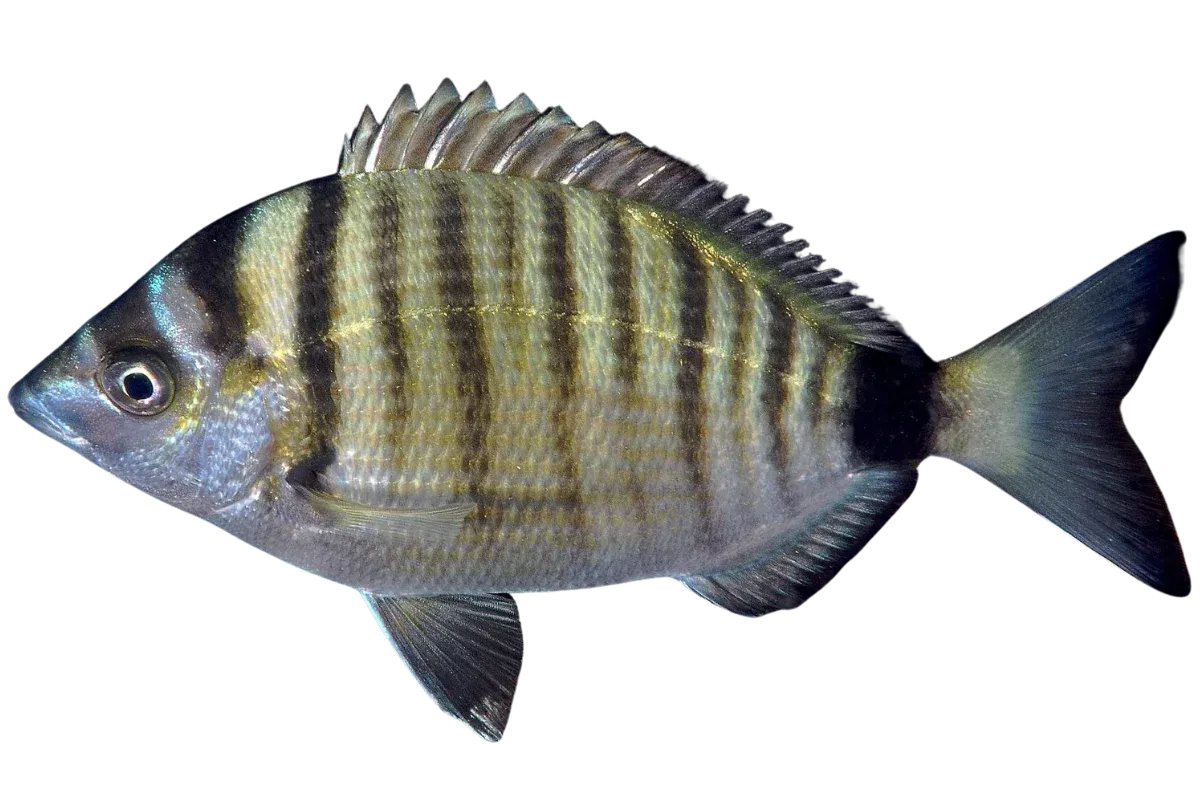
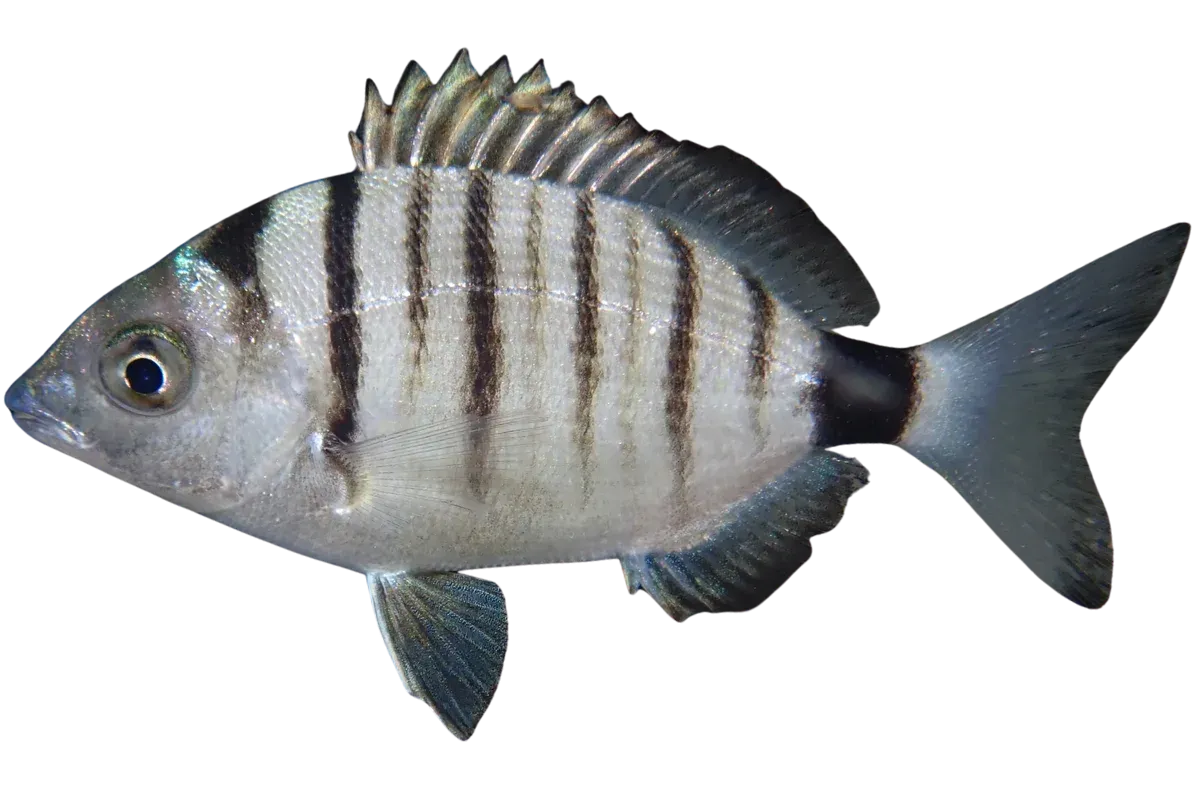
The Sharpsnout Seabream, which is also commonly referred to as the Sharpsnout or the Pointed-snout Seabream, is a very recognisable and unique fish of the Sparidae family. The body is tall and strongly compressed on the sides, silver in colour and dark on the back. What immediately sets it apart from relatives like the White Seabream is its head. The snout is long and extremely pointed, resembling a bird's beak, giving it a distinctive profile.
On its sides, it usually bears 7 to 11 thin and bold vertical black stripes, which remain visible even in adult individuals. It also possesses a large black spot at the base of the tail, which often joins to form a ring around the caudal peduncle. Its teeth are specially shaped and protrude slightly outwards to allow it to graze effectively.
Habitat
It is a coastal species that lives primarily on rocky bottoms with strong relief and rich vegetation. It is often found in areas where rocks alternate with sand and Posidonia seagrass meadows. The depth at which it moves usually ranges from the surface to 20 or 50 metres, although larger individuals have been spotted deeper, reaching 150 metres. It is a fish that likes to move between rock crevices, and it is often encountered in areas with intense wave action where the waves break.
Diet
This section highlights the most important difference between this fish and other members of its family. Although it is considered omnivorous, the Sharpsnout Seabream has a clear and strong preference for herbivory. It feeds primarily on seaweed and marine vegetation, detaching them from the rocks with its sharp teeth. It supplements its diet with small benthic invertebrates such as worms, molluscs, and shrimp found hidden within the algae.
Reproduction
The Sharpsnout Seabream is a protandrous hermaphrodite species. The fish reach sexual maturity first, usually males at 2 years of age, when they reach a length of about 22 centimetres. Later in their lives, many of them change sex and become female. Breeding takes place in the autumn, with the peak usually observed in September and October.
Fisheries
It is considered a high-quality catch and has great commercial value. It is caught professionally with nets and longlines. For recreational fishers, it poses a challenge due to its suspicious nature and the shape of its mouth, which makes hooking difficult. It is caught with a rod and line from the shore and with a handline, often using baits such as dough or seaweed. The meat is white, soft, and very delicious, while many consider it equal to, or even superior to, the White Seabream.
Research
The International Union for Conservation of Nature classifies the Sharpsnout Seabream as a species of Least Concern. Scientific studies have shown that it is one of the most promising species for aquaculture in the Mediterranean because of its rapid growth rate, which is faster than that of the Gilt-head Bream and the White Seabream. However, its sensitivity to certain diseases has limited mass production. Research on its physiology showed that its digestive system is specifically adapted for the digestion of plant matter, which is rare for fish of this family.