Stingray
Dasyatis pastinaca / Bathytoshia centroura
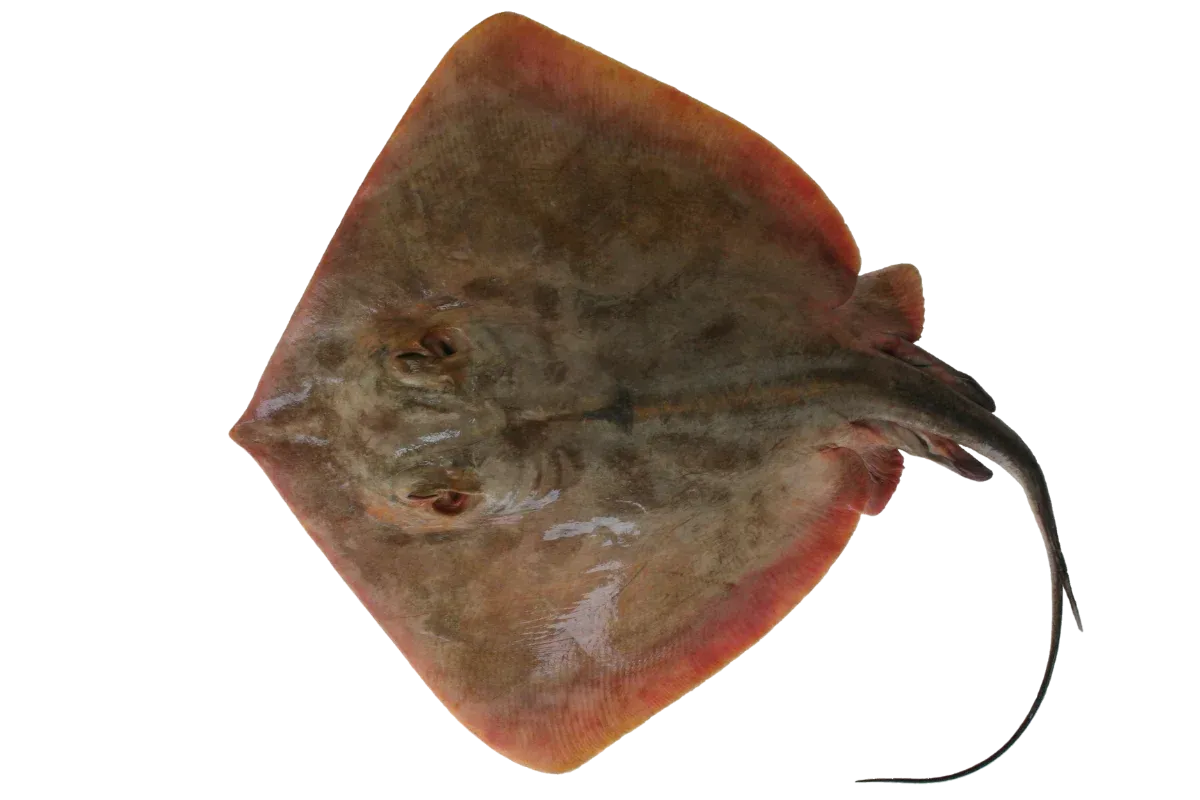
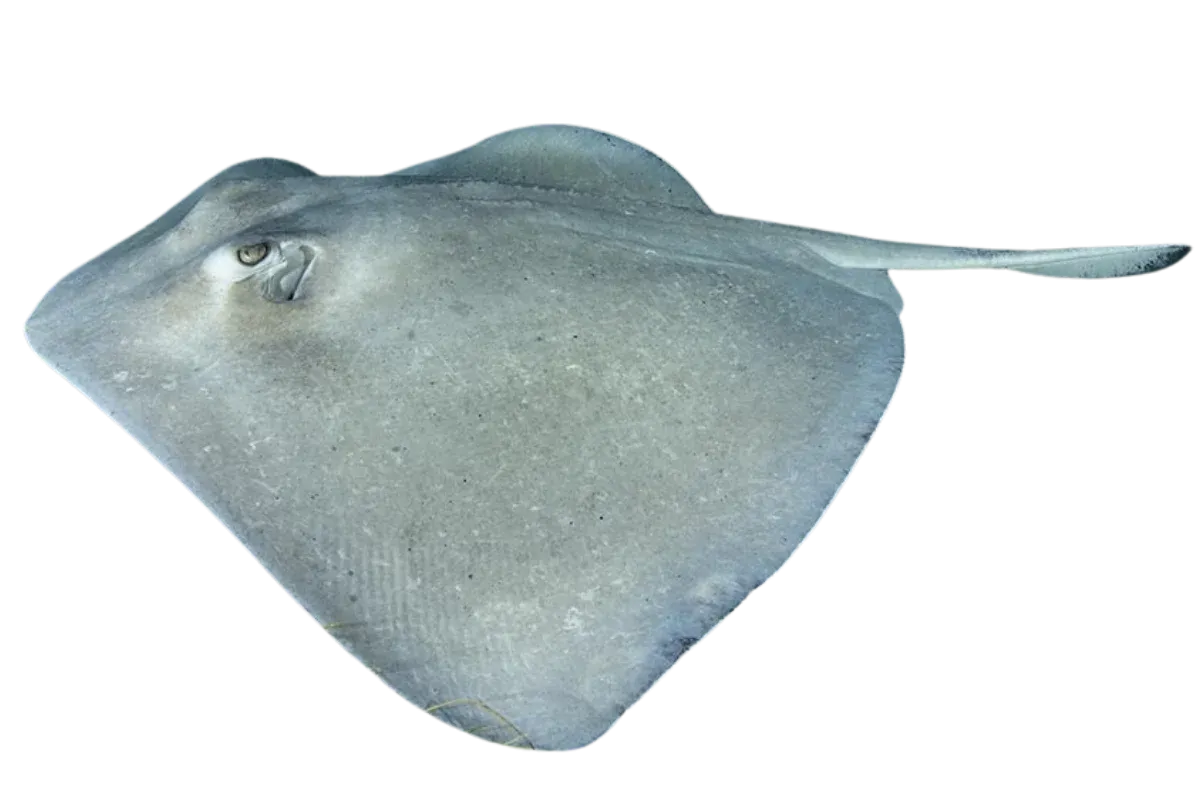
The Common Stingray is a well-known cartilaginous fish in the Mediterranean. It features a flat diamond-shaped body that allows it to remain perfectly concealed when buried in the sand. Its eyes are positioned on the upper side of the head to maintain visibility while hidden, while the mouth is on the underside. The tail is long and slender, resembling a whip.
In the Mediterranean, two main species are encountered. The Common Stingray is the most common species in shallow waters, and its skin is smooth and shiny, with no protrusions. The Roughtail Stingray is much larger and more imposing, and it is distinguished by its back and tail, which are covered in small thorns and hard stone-like tubercles that make the skin very rough.
⚠️ Safety warning
The Stingray is considered the most dangerous marine animal for swimmers and bathers in the Mediterranean. At the base of its tail, it possesses one or more large serrated spines containing potent venom. If accidentally stepped on, the fish lashes its tail like a whip. The sting is excruciatingly painful and requires immediate attention.
First aid
The venom of the fish is destroyed by heat. If you are stung, you should immediately submerge the area in very hot water at about 45°C to 50°C for 30 to 90 minutes. This relieves the pain and deactivates the venom. Care is needed because often pieces of the spine break and stay inside the wound, so medical help is essential.
Habitat
It lives strictly on the seabed, usually in sandy or muddy areas, where it can easily bury itself. It is found in very shallow coastal waters where people swim down to depths of 200 metres.
Diet
The fish is a carnivore that hunts primarily at night. It uses its pectoral fins to fan the sand and uncover prey. Its diet consists mainly of crabs, shrimp, and molluscs, but it also consumes small fish that live on the seabed.
Reproduction
This is an ovoviviparous species in which the young hatch within the mother. They are initially nourished by the egg yolk and then by a nutrient-rich fluid known as uterine milk produced by the mother. Gestation duration varies by species, it lasts about 4 months for the smaller variety, while for larger species it can extend to 10 months. Females give birth in shallow waters during the summer to between 2 and 9 young that are immediately capable of independent survival.
Fisheries
The fish is not a targeted species because of the danger involved in handling it and its low commercial value. It is frequently caught as bycatch in nets and longlines. While the wings are sometimes sold as skate or ray, most recreational fishermen avoid them.
Research
Scientists have classified the fish as a Vulnerable species in the Mediterranean. Research indicates that because they grow slowly and have few offspring, the populations cannot easily recover from the pressures of overfishing. Additionally, studies on their venom have confirmed it is a protein that is sensitive to heat, which explains why hot water is the only effective treatment.