Tope Shark
Galeorhinus galeus
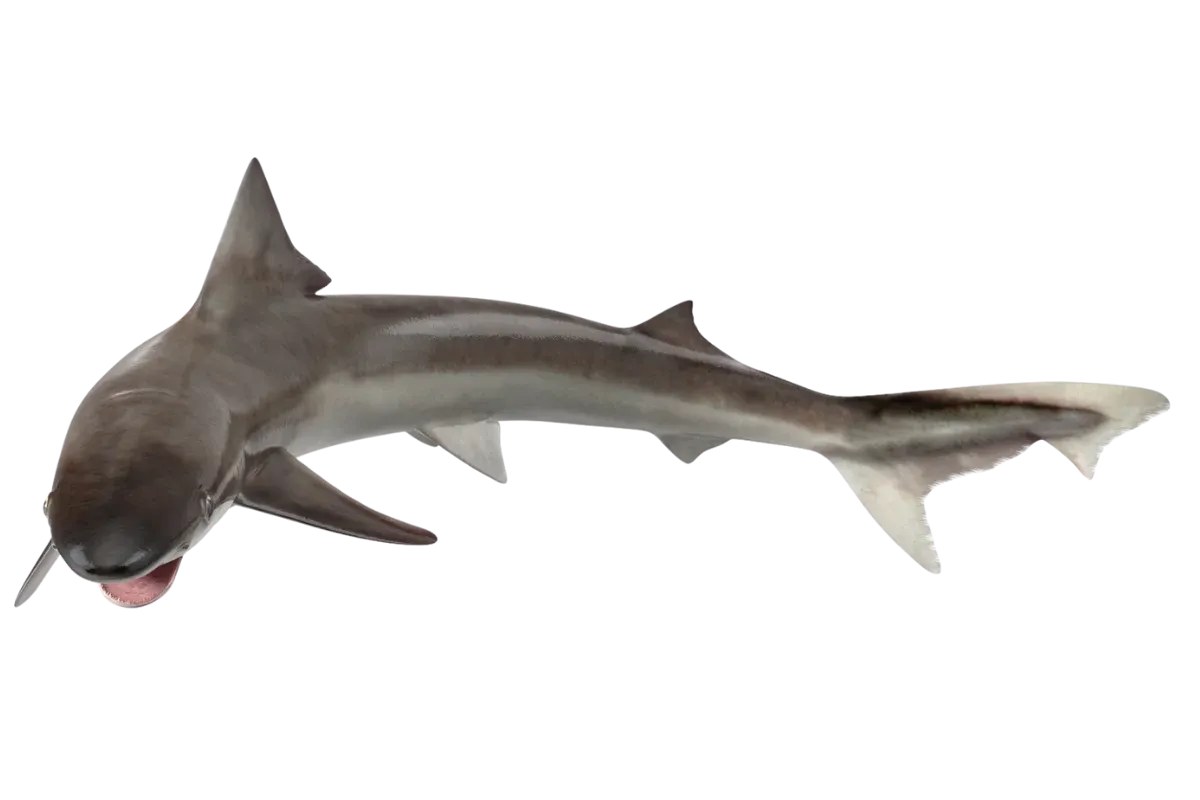
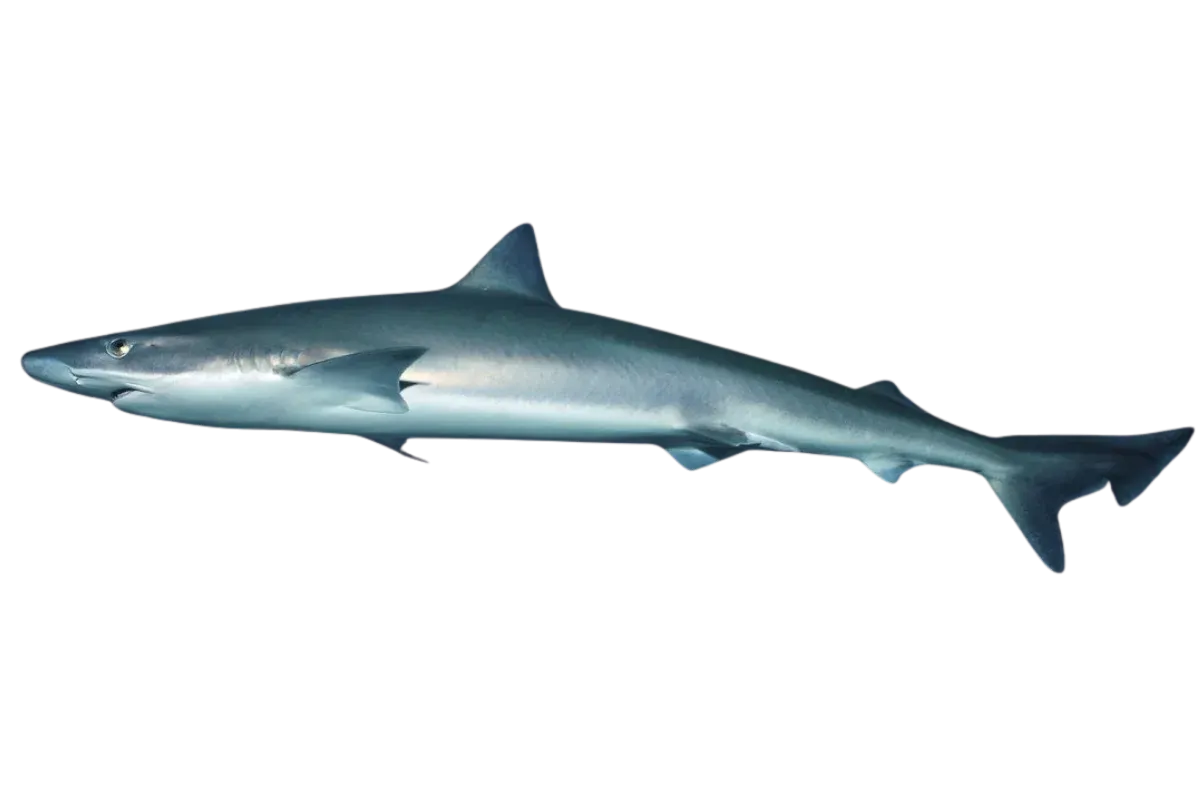
The Tope Shark is an elegant, medium-sized shark belonging to the family Triakidae. Its body is slender and highly hydrodynamic, which makes it an exceptional swimmer. Its most defining feature is its long, pointed snout, which appears somewhat translucent at the tip. It possesses large eyes with horizontal pupils, and the dorsal colouration is typically grey, ranging toward lead or olive hues, while the underside is stark white. Unlike its smoother relatives, the Tope Shark has small and sharp triangular teeth.
⚠️ Safety warning
There is significant confusion in the marketplace regarding the name of this fish. The true Tope Shark described here features a pointed snout and sharp teeth, and it is a Critically Endangered species that has nearly vanished from the Mediterranean. Most fish sold in markets under this name are actually Smooth hound, a different species with a rounded snout, pavement-like crushing teeth, and a population in much better biological condition.
Habitat
This is a highly migratory species that primarily inhabits the continental shelf. While it can occasionally be found in shallower areas, it prefers depths between 50 and 500 metres. It is known to cover vast distances, travelling thousands of kilometres to follow food sources or reach breeding grounds.
Diet
As an opportunistic and rapid hunter, the Tope Shark feeds primarily on bottom-dwelling or midwater fish such as hake, sardines, mackerel, and flatfish. It also has a strong preference for cephalopods like squid and cuttlefish and will occasionally consume various crustaceans.
Reproduction
The Tope Shark exhibits aplacental viviparity, in which eggs hatch in the uterus, and embryos are nourished by a yolk sac. The gestation period is remarkably long, lasting approximately one full year. A single female can give birth to a litter of 20 to 50 pups, which each measure about 30 to 35 centimetres at birth. These pups are very slender and flexible because they have cartilage rather than bones, which allows them to remain folded within the elastic uterus until birth.
Fisheries
Historically, this was a highly valued commercial species prized for its meat and fins. It is caught using longlines, gillnets, and trawls. However, decades of intensive fishing have driven the species to the brink of extinction in the Mediterranean.
Research
The International Union for Conservation of Nature has classified the Tope Shark as Critically Endangered, which is the final stage before extinction in the wild. Scientific research has identified the slow reproductive cycle as the primary reason for this population collapse. Females do not give birth every year, and they typically follow a three-year reproductive cycle. This means the population recovers far too slowly to withstand modern fishing pressure. Furthermore, research using satellite tags has shown that these sharks migrate from Northern Europe into the Mediterranean, underscoring the urgent need for international cooperation to protect the remaining individuals.