Zebra Seabream
Diplodus cervinus
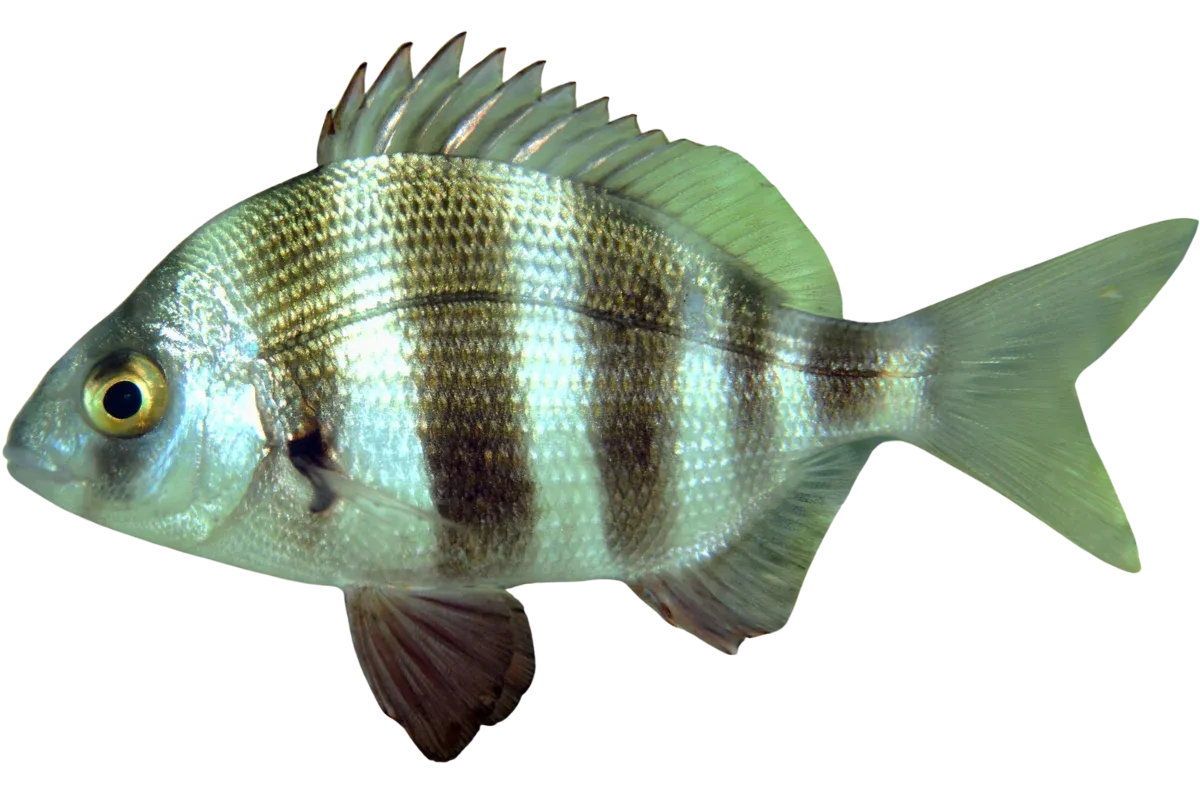
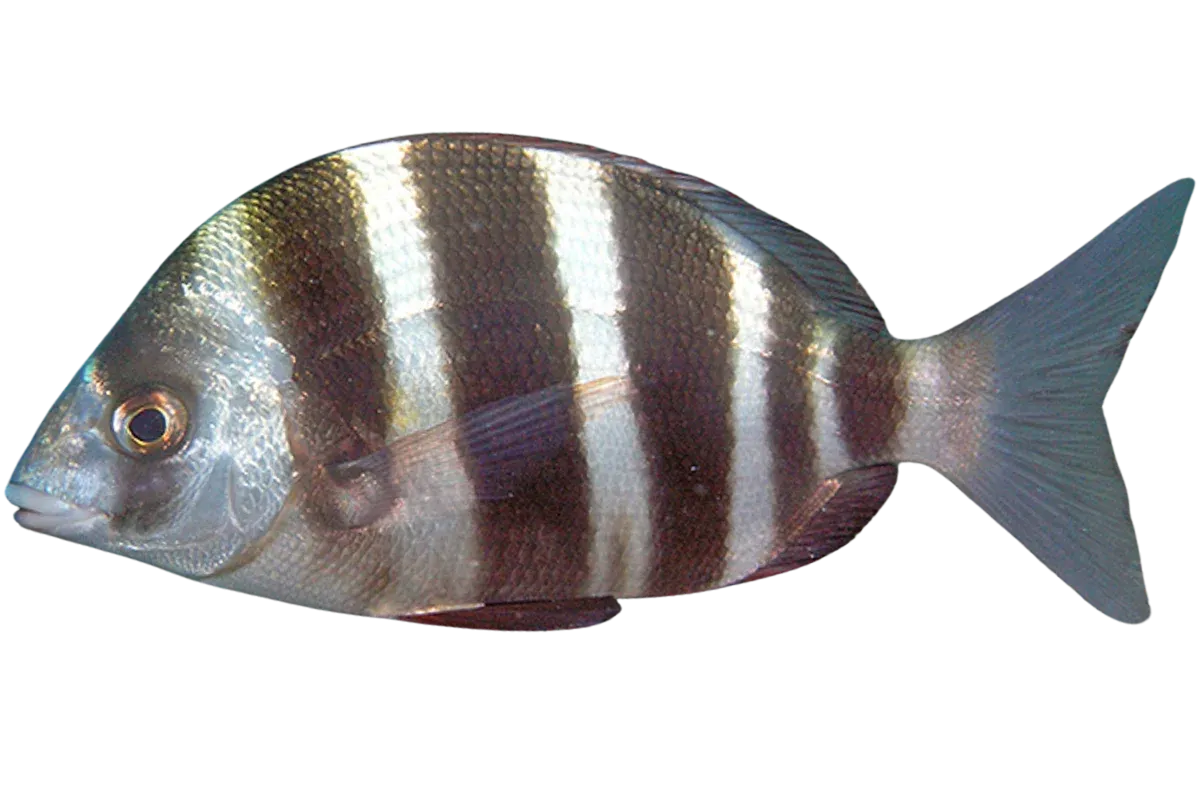
The Zebra Seabream, which is also commonly referred to as the Pharaoh Seabream or the Zebra Bream, is the undisputed giant of the Sparidae family and the largest species of its genus in the Mediterranean. The body is tall, bulky, and laterally compressed, with a colour that ranges from silver to gold or bronze depending on age and environment. The defining characteristic that sets it apart from other related species is the 5 or 6 very broad, dark vertical stripes running across its body. These stripes are much thicker and more intense than the thin lines of the White Seabream, and they resemble the markings of a zebra.
Additionally, its lips are thick and fleshy, indicating its feeding habits. In contrast to the Sharpsnout Seabream, which has a pointed snout, this species has a more rounded and robust head.
Habitat
This is a benthic species that thrives on rocky bottoms with pronounced relief, large stones, and steep slopes. It prefers areas with turbid water and strong currents or wave action. The fish is encountered at depths ranging from 10 metres to 80 metres, although large individuals have been recorded at 300 metres. It is a social fish that often forms small groups or pairs, while the very large individuals tend to become solitary and inhabit specific shelters and caves.
Diet
The Zebra Seabream is an omnivorous fish with a varied diet. It feeds mainly on benthic invertebrates such as sea urchins, worms, bivalve molluscs, and crustaceans, which it crushes with its powerful teeth. Unlike other seabreams, which are mainly carnivorous, the species also consumes significant amounts of plant matter, such as algae, which it scrapes from the rocks in a manner similar to the Salema Porgy.
Reproduction
It is a protandrous hermaphrodite species. The fish start their lives and mature sexually as males. Later in their lives, when they reach a larger size, they change sex and transform into females. Reproduction takes place during the winter months and early spring, usually from December until March or April, when the waters are cold.
Fisheries
It is a sought-after and valuable catch, though less common than the White Seabream. It is caught mainly with thick longlines, handlines, and set nets. For underwater spearfishers, it represents one of the greatest challenges because it is an extremely suspicious, clever, and strong fish that is difficult to approach. The meat is of exceptional quality, white, firm, and very delicious, with high commercial value.
Research
The International Union for Conservation of Nature classifies the Zebra Seabream as a species of Least Concern at a global level. However, scientific studies in the Mediterranean have shown that it is a species that grows relatively slowly and lives for many years, up to 17 years, which makes it vulnerable to overfishing. Furthermore, research has shown that its abundance increases significantly in protected marine areas where the fish become larger and bolder.