Anglerfish
Lophius piscatorius / Lophius budegassa
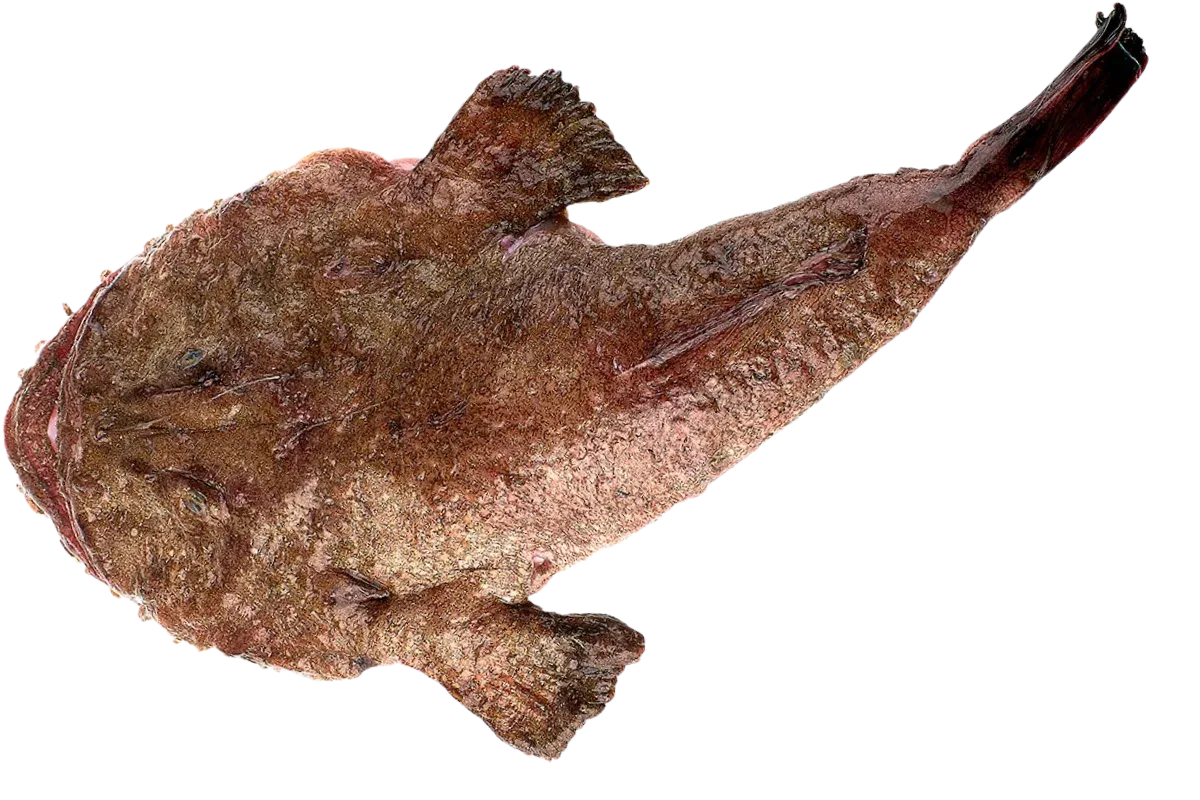
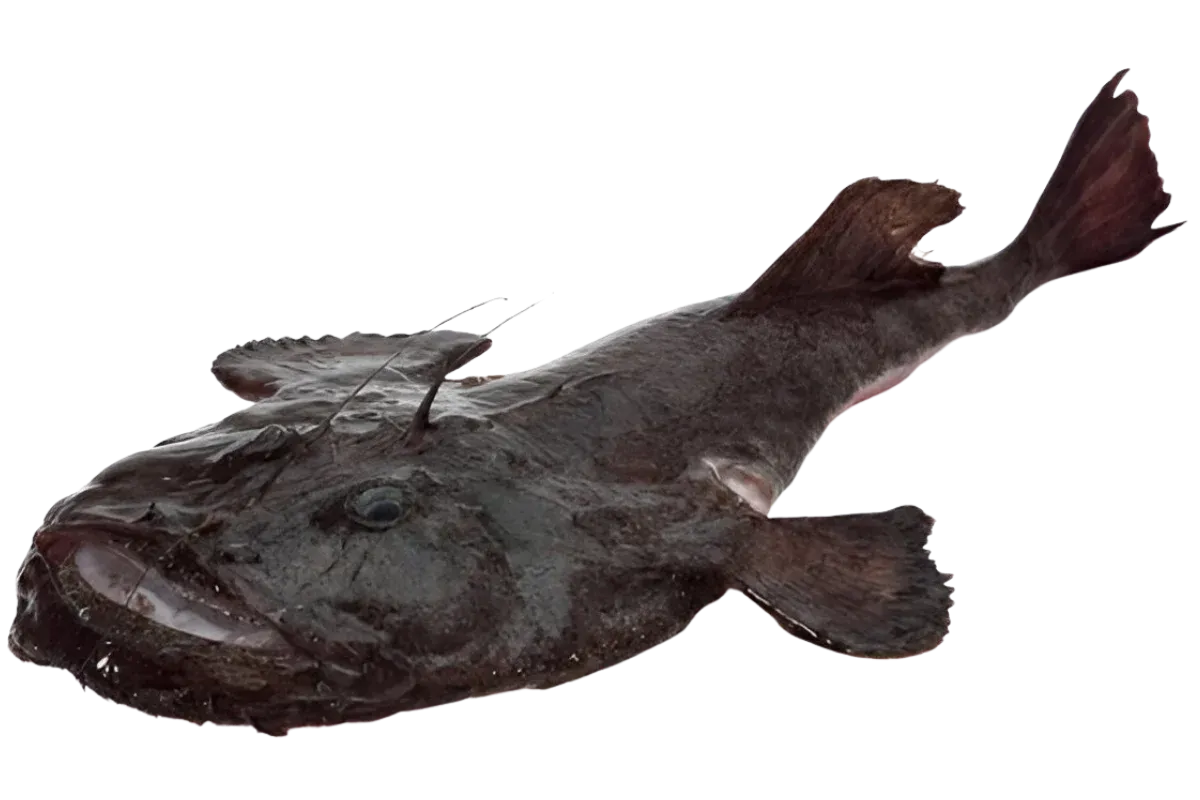
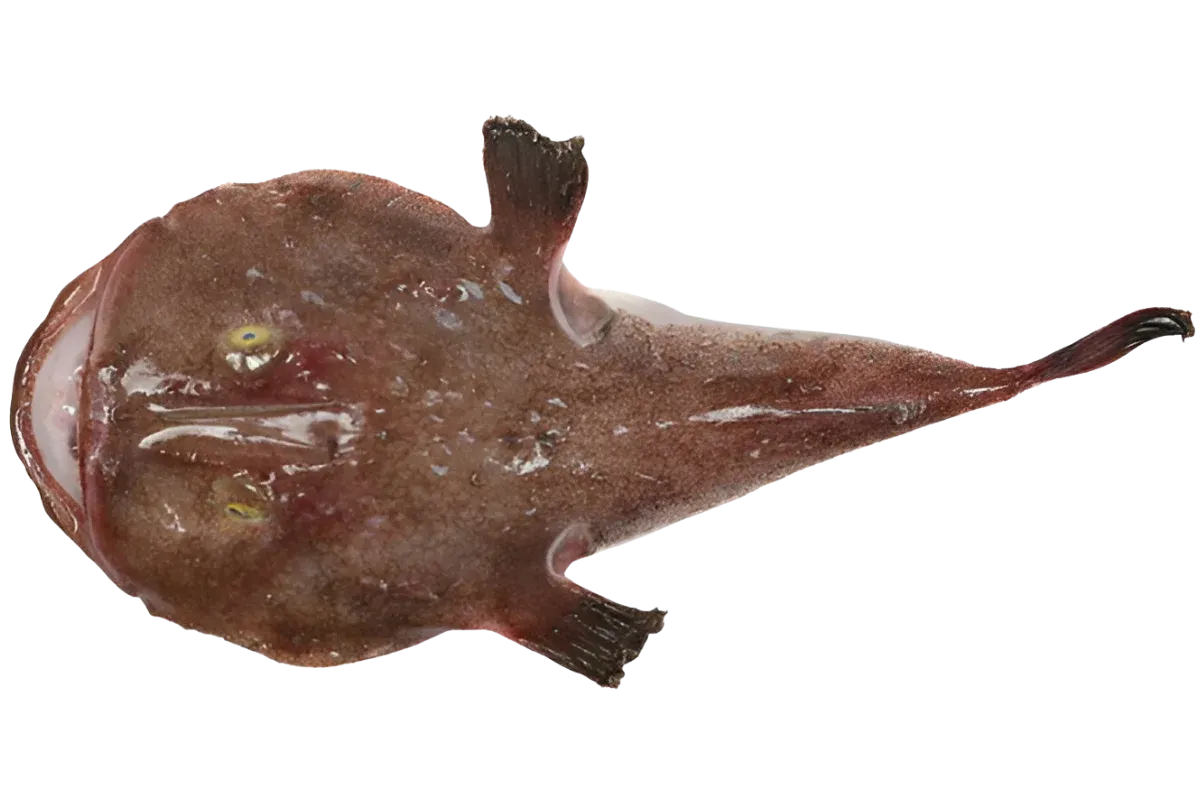
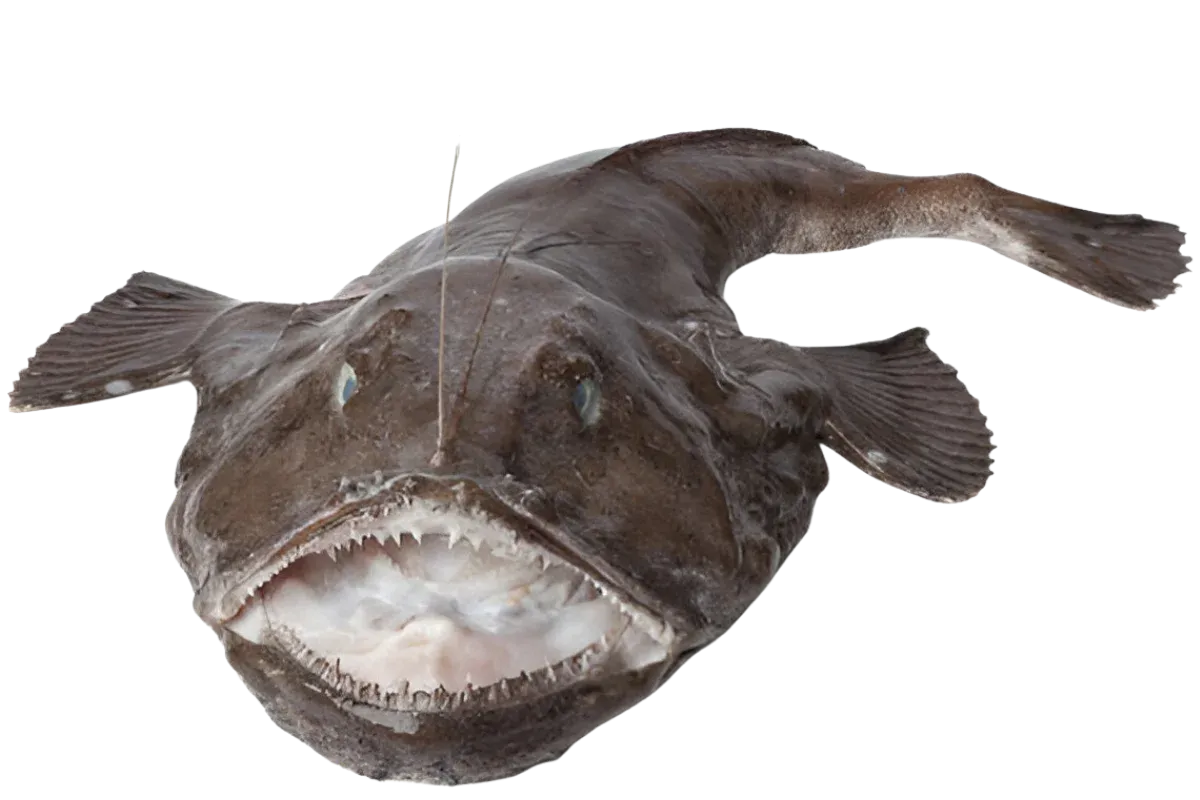
The Anglerfish, which is also widely known as the Monkfish, the Fishing frog, the Frog fish, or the Sea devil, is one of the most bizarre and recognisable fish of the Mediterranean depths. The body is extremely broad and compressed, with a massive flattened head that occupies most of its length. The mouth is enormous and semi-circular and armed with rows of long, pointed teeth that tilt backwards to prevent the escape of prey. It does not have scales, but its skin is covered by small, fleshy protrusions that resemble seaweed, providing perfect camouflage on the seabed.
In the Mediterranean, we encounter two species that are almost identical externally. The White Anglerfish is the larger species, and its primary distinguishing feature, visible only when the belly is opened, is a white internal membrane, or peritoneum. The Black Anglerfish is smaller, and its internal abdominal membrane is black.
The most famous characteristic of the Anglerfish is the fishing rod located on its head. The first ray of the dorsal fin has been transformed into a long filament known as the illicium, which ends in a fleshy lure called the esca. The fish moves this lure in front of its mouth to attract unsuspecting prey.
Habitat
This is a benthic species that lives half-buried in sandy, muddy, or even rocky bottoms. It is encountered across a wide range of depths, from shallow waters of 20 metres down to 1000 metres. The Black Anglerfish tends to live in shallower depths, usually between 100 and 500 metres, compared to the White Anglerfish, which descends deeper.
Diet
The animal is a voracious ambush predator. It remains motionless and camouflaged while waiting for prey to approach its lure. When a fish comes close enough, the Anglerfish suddenly opens its huge mouth to create a powerful negative pressure or suction that swallows the prey whole within a fraction of a second. It feeds mainly on other fish, such as hake, gurnards, and rays, as well as squid and crustaceans. Even seabirds have been found in the stomachs of large individuals.
Reproduction
Reproduction takes place from the end of winter until the summer. The female produces a massive gelatinous ribbon that can reach 10 metres in length and one metre in width. This ribbon floats in the water, containing millions of eggs protected by the jelly. Over time, the ribbon dissolves, releasing the eggs.
Fisheries
It represents one of the most valuable commercial species. It is caught primarily by bottom trawlers and special set nets. The meat, which is found mainly in the tail and often sold separately, is white, firm, and boneless because it has only a central cartilage. It is considered of exceptional quality while resembling lobster in both flavour and texture.
Research
The International Union for Conservation of Nature classifies the White Anglerfish as a species of Least Concern globally, but data for the Black Anglerfish in the Mediterranean are often limited. Scientific studies have shown that the two species often coexist in the same areas, but they might have different activity times or depth preferences to reduce competition. Furthermore, research has shown that males mature more quickly and reach a smaller size than females.