Atlantic Bonito
Sarda sarda
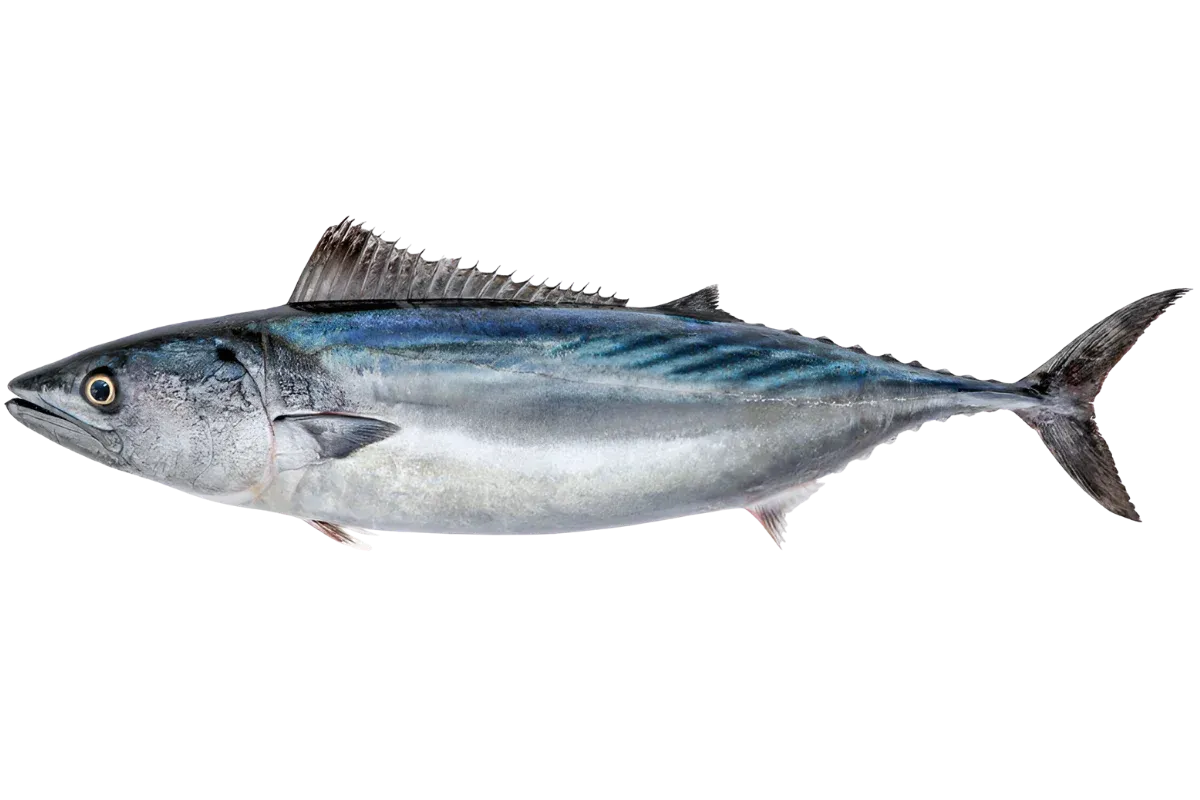
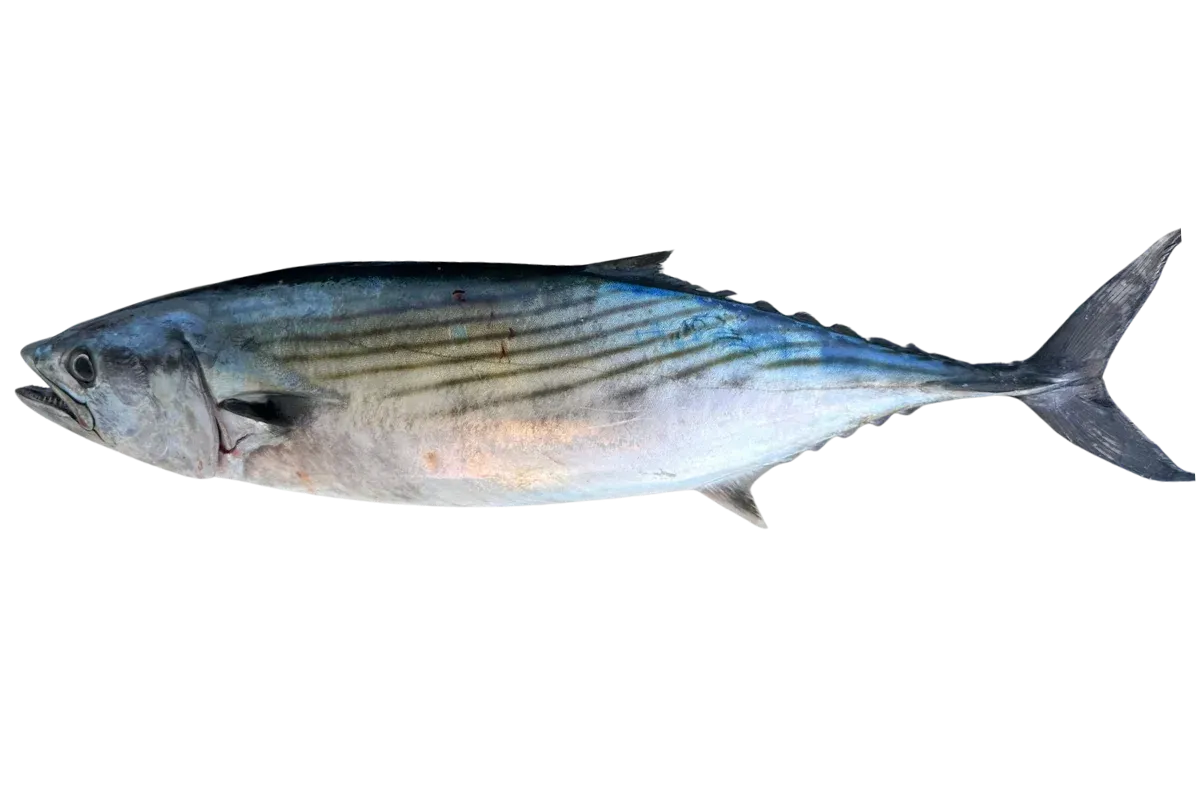
The Atlantic Bonito, which is also commonly referred to as the Common Bonito or the Sarda or simply the Bonito, is one of the most well-known, fastest, and commercially significant fish of the Scombridae family. This family also includes the tunas. The body is hydrodynamic and spindle-shaped, designed to cut through water at high speeds. The colour is metallic blue on the back and silver on the belly. The most characteristic feature that distinguishes it from related species is the 5 to 10 bold dark stripes on the back and sides, which are slanted and run downward towards the front.
Confusion often occurs with other small tunas, but the differences are clear. The Atlantic Bonito has slanted stripes, while the Little Tunny has maze-like patterns on its back and black spots on its belly. The Albacore lacks stripes and is identified by its massive pectoral fin.
Habitat
This is an epipelagic and migratory species that forms large, dense schools, often sorted by size. It lives in the open sea and also in coastal waters, usually at depths from the surface down to 200 metres. The fish travels constantly while searching for food and suitable temperatures, and it often approaches the coast very closely to chase schools of small fish into bays.
Diet
The animal is a greedy and ruthless hunter that relies on its vision and speed. It feeds mainly on schooling surface fish such as sardines and anchovies, as well as round sardinella and horse mackerel. It also eats squid and shrimp. It is known for its cannibalistic behaviour because larger individuals often eat smaller members of their own species.
Reproduction
Reproduction of the Atlantic Bonito in the Mediterranean takes place during the warm months, usually from May to July. The fish gather in specific areas to lay their pelagic eggs. The young fish grow at an amazing rate, reaching commercial size within a few months.
Fisheries
It has great commercial importance. The fish is caught in large numbers by professional vessels with purse seines and nets when the schools pass through specific routes. For recreational fishers, it is one of the most popular targets for surface trolling and spinning because of the fight it provides. The meat is dark red, firm, and very delicious. It is the ideal fish for preparing traditional lakerda in brine or oil, but it is also eaten grilled or baked.
Research
The International Union for Conservation of Nature classifies the Atlantic Bonito as a species of Least Concern globally. Scientific studies have shown that it performs long migrations between the Black Sea and the Aegean and the Mediterranean for breeding and feeding. Research on its development has shown that it is one of the fastest-growing scombroids, reaching sexual maturity in just the first year of life.