Blotched Picarel
Spicara maena
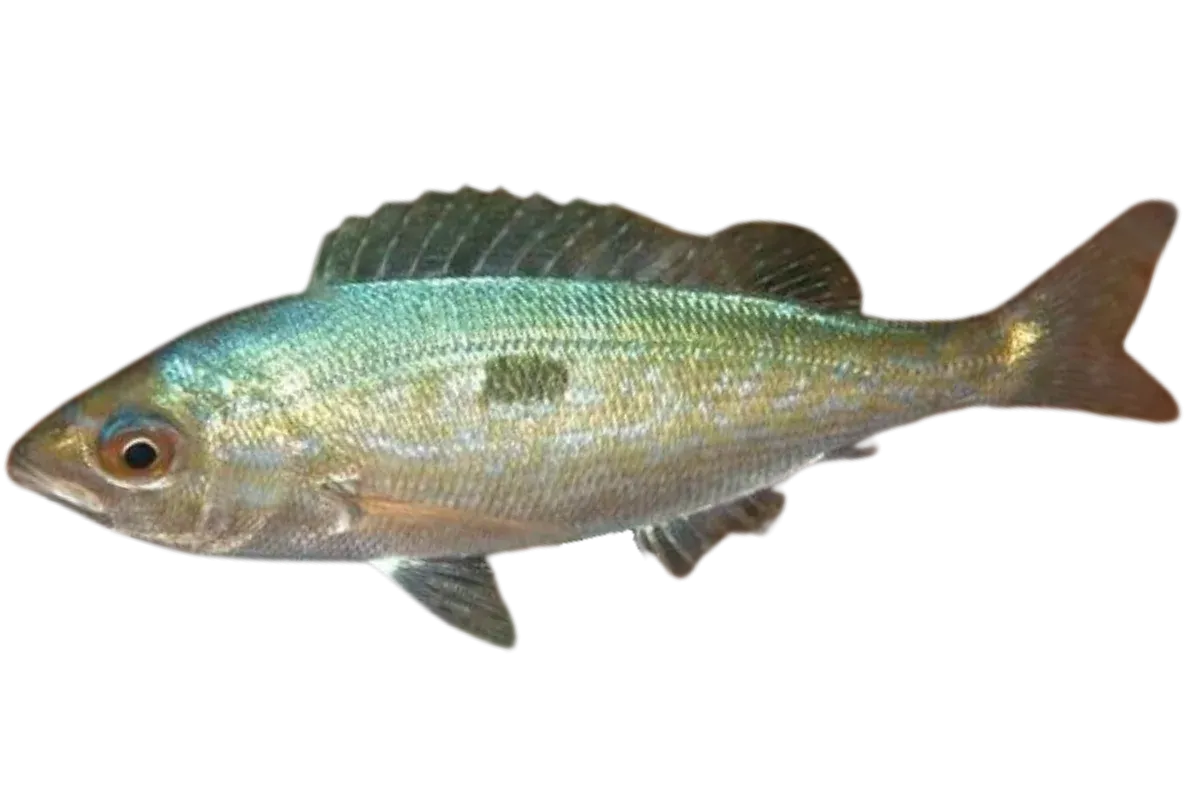
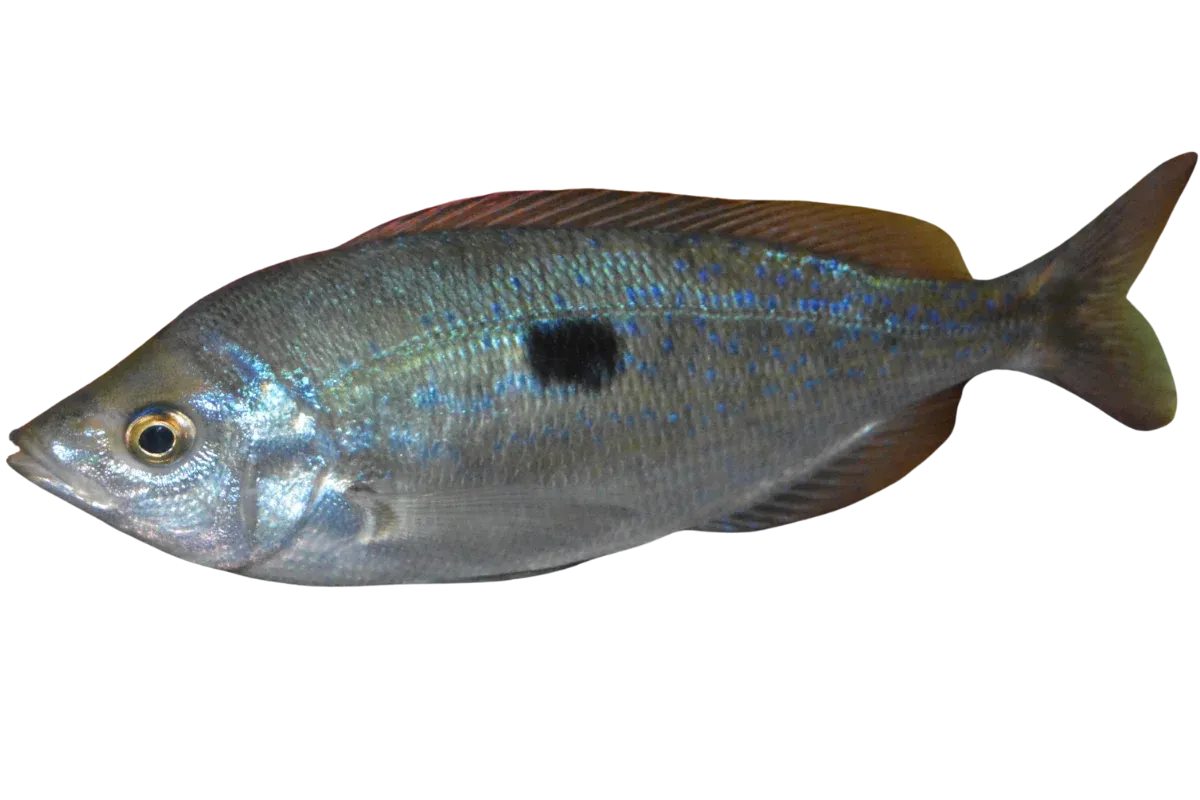
The Blotched Picarel is one of the most common fish of the Centracanthidae family and a close relative of the picarel. The body is taller, broader, and more robust than that of the picarel, with a colour that ranges from leaden blue on the back to silver on the sides. The most characteristic feature is the bold black spot on the side of the body, which in this species is usually square or rectangular, in contrast to the common picarel's rounder spot.
The species exhibits impressive sexual dimorphism. Females maintain a simpler appearance, while males undergo radical changes as they age. Their bodies become deeper, with a pronounced hump, and the black spot often fades or disappears as bright, electric-blue spots and lines cover the head and fins.
Habitat
This is a coastal semi-pelagic species that forms schools. It lives mainly over Posidonia seagrass meadows and sandy or muddy seabeds. It is encountered at depths ranging from 5 to 150 metres, with schools denser in the zone between 30 and 90 metres. It is active during the day, while it approaches the seabed at night to rest.
Diet
It is primarily a planktivorous fish. It feeds by filtering zooplankton such as copepods from the water column. However, its diet is more varied than that of the picarel and often includes small benthic invertebrates like worms, molluscs, and crustaceans found on the seabed.
Reproduction
The species is a protogynous hermaphrodite. All individuals are born female and reach sexual maturity at approximately 2 years of age. Later in their lives, usually after the age of 3, they change sex and become males. Reproduction takes place in the spring, usually from March to June.
During this period, the males become territorial and dig small nests or hollows in the sandy bottom. After attracting females to spawn, the males fertilise the eggs and take on their care by guarding the nest and aerating the eggs until they hatch.
Fisheries
The fish is caught in large quantities as a commercial catch with bottom trawls, purse seines, and set nets, particularly during the breeding season when the fish gather in shallow waters. Although it has a low commercial value due to its abundance, the meat is very tasty, especially when fried. In some regions, it is traditionally salted and is considered a select delicacy.
Research
The International Union for Conservation of Nature classifies the Blotched Picarel as a species of Least Concern. Scientific studies in the Aegean have shown that dominant males have a more diverse diet than the picarel, allowing them to better exploit environmental resources. Furthermore, research confirmed that the sex change is a critical process influenced by age and size, and it occurs when the fish reaches approximately 11 to 13 centimetres.