Curled Picarel
Centracanthus cirrus
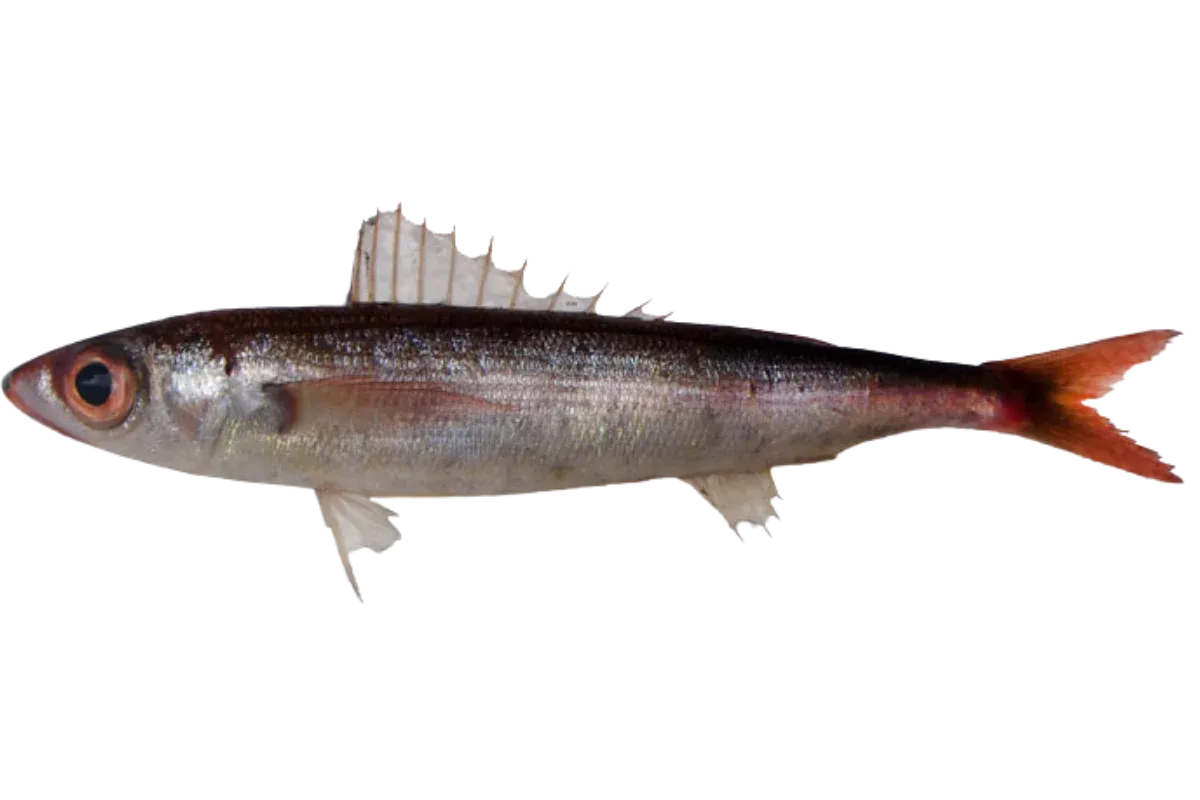
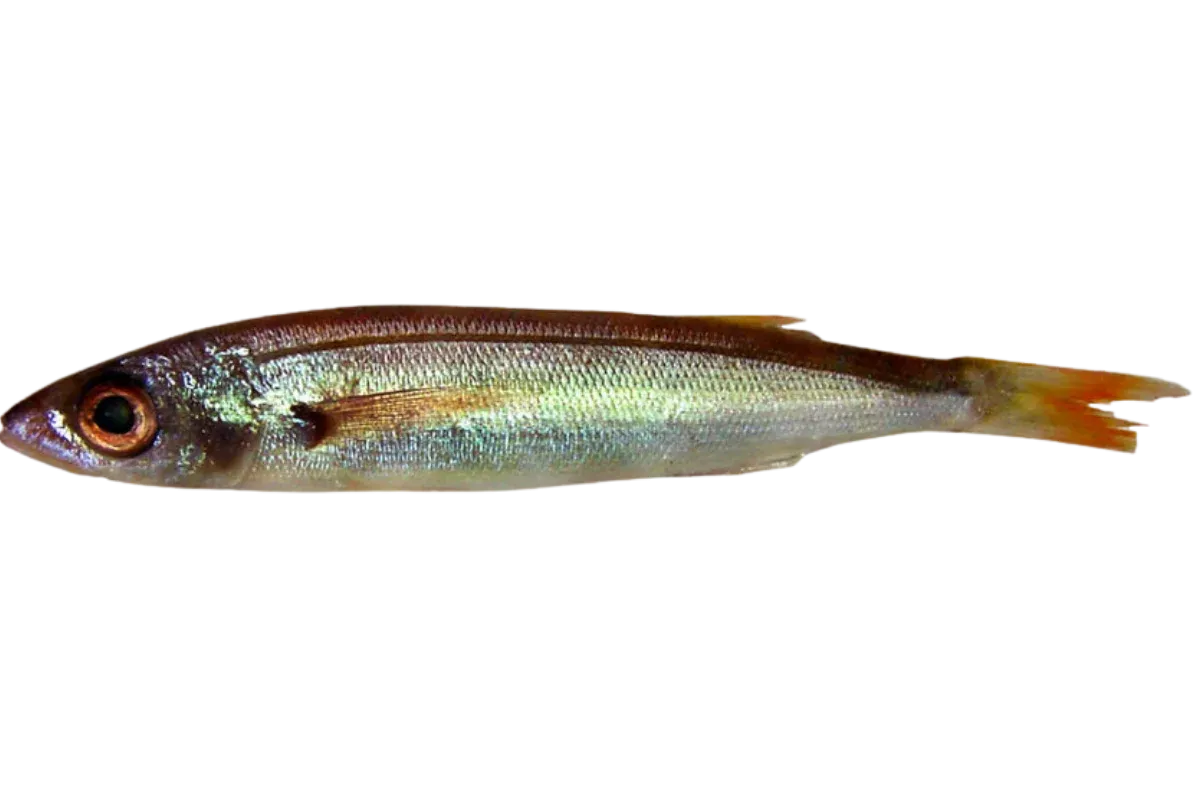
The Curled Picarel is a benthopelagic species belonging to the Sparidae family. While it is related to the native picarel, it has a very different appearance. The name probably refers to its more exotic or reddish appearance, as is the case with other red fish. The body is extremely thin and elongated and cylindrical, while resembling a cigar.
The colour is the main distinguishing feature. The back has an intense pink, red, or orange colour that fades to silver white on the belly. Unlike the native picarel, this fish lacks the characteristic black spot on its sides. Its mouth is protractile, meaning it can be stretched outward like a tube to grab its food.
Habitat
It is a fish of deep waters. It lives near the seabed, usually at the edge of the continental shelf. The depth at which it is encountered usually ranges from 50 to 400 or 500 metres. It prefers hard bottoms, such as stones, gravel, or coralligenous formations, where it forms large schools.
Diet
The Curled Picarel is a planktivorous species. It feeds mainly on zooplankton such as copepods and small shrimp, which it collects from the water column using its protractible mouth. It also feeds on small benthic invertebrates.
Reproduction
Reproduction takes place during the warm months. In the Mediterranean, this period extends mainly from June to September. During this time, the fish approach the coast, spawning at depths of 50 to 100 metres. Unlike many other species in its family that are hermaphroditic, this fish is gonochoristic, meaning that the sexes are separate from birth and do not change during its life.
Fisheries
It is not a primary target of commercial fisheries. It is caught almost exclusively as bycatch by bottom trawlers fishing in deep waters. It is often discarded, but when it reaches the market, it is usually sold with other small fish for frying or fish soup. The meat is tasty and similar to that of the native picarel, and it is pleasant when fried.
Research
The International Union for Conservation of Nature classifies the species as Least Concern. Scientific studies have shown that it plays an important ecological role in deep waters, serving as a primary food for larger bottom predators such as hake and John Dory. Research in the Aegean showed that it has a relatively short life cycle and rapid growth.