Flathead Grey Mullet
Mugil cephalus / Chelon labrosus / Chelon ramada
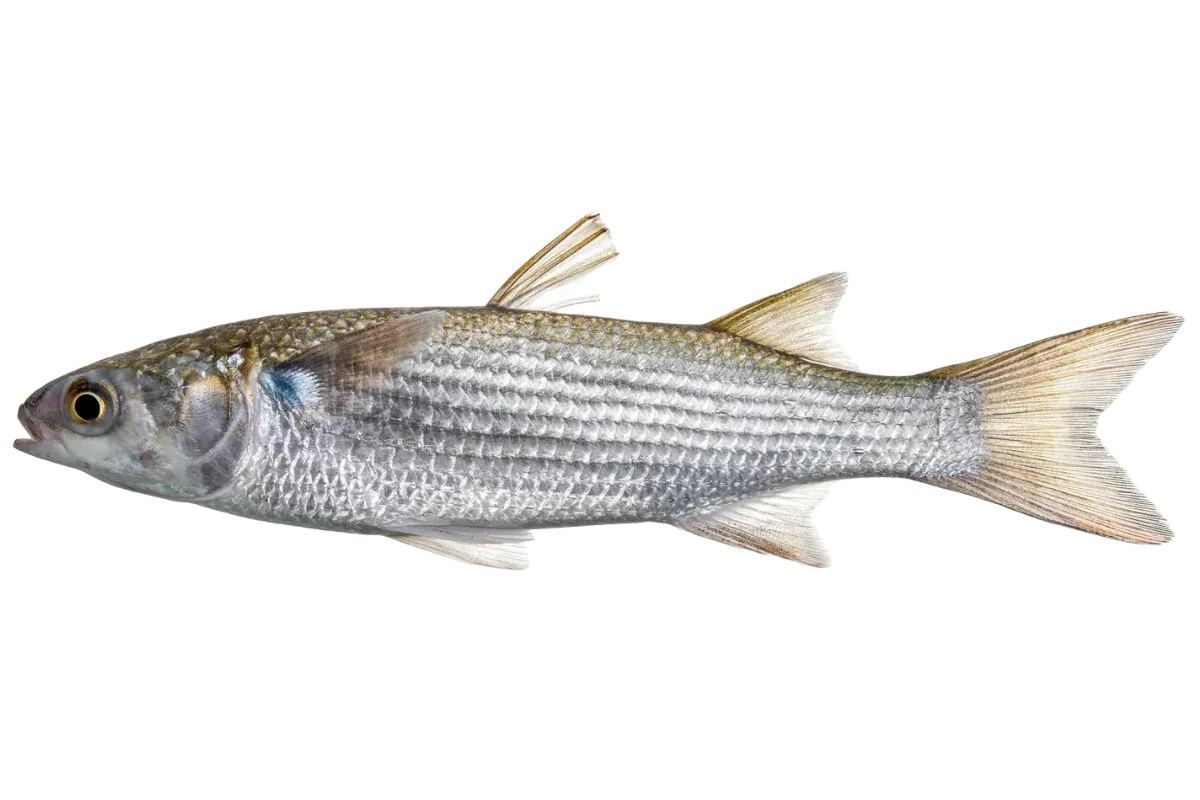
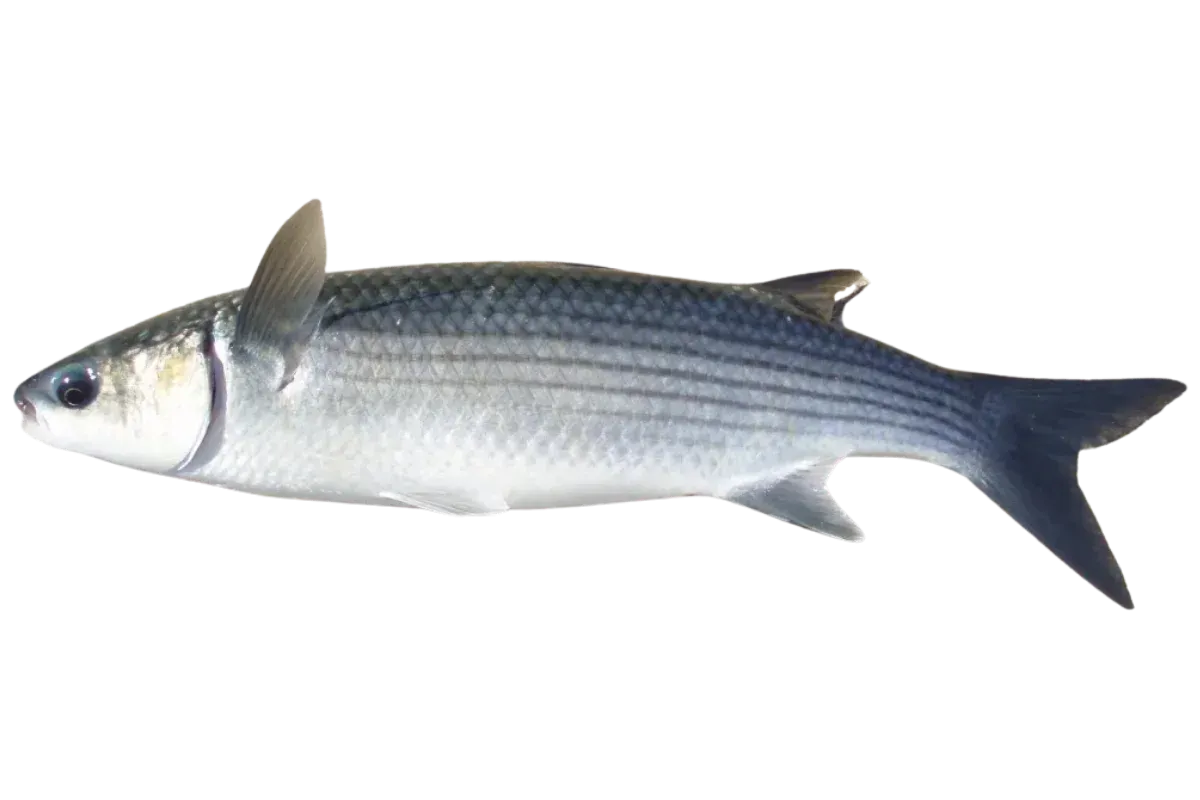
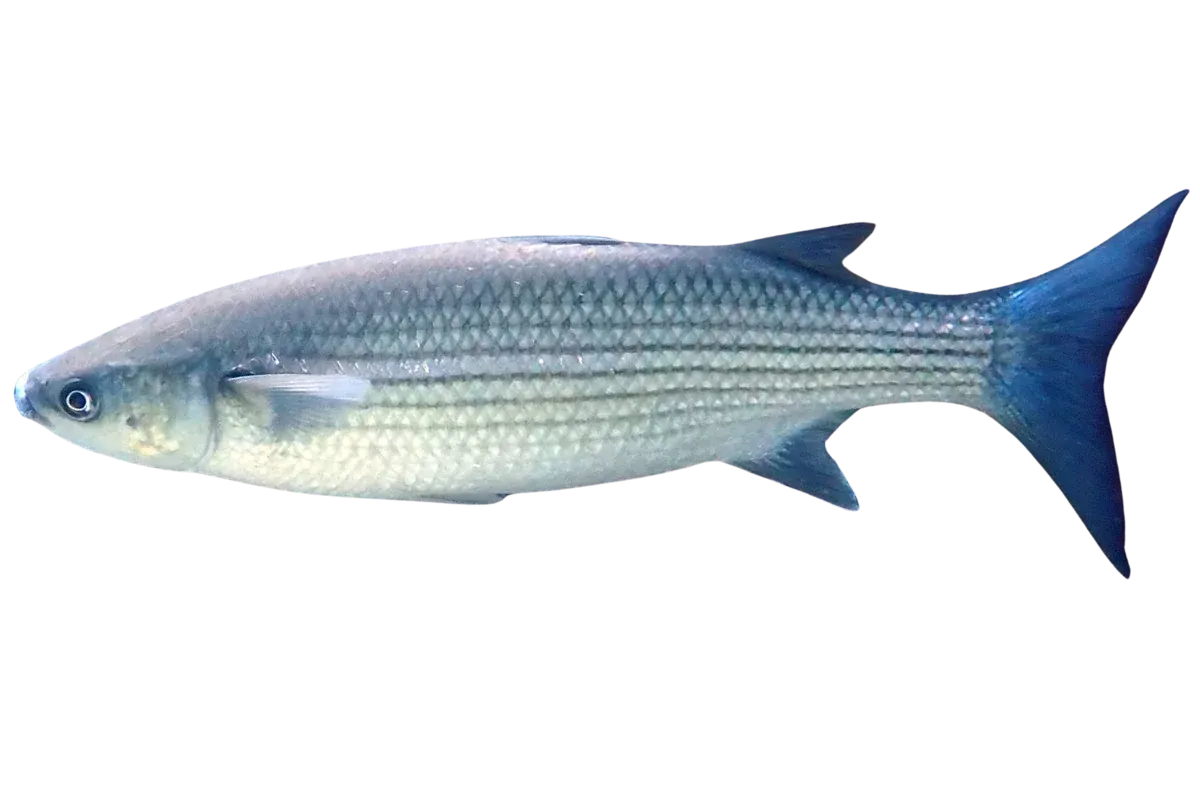
The Grey Mullet is one of the most common and easily recognised fish along the shorelines of the Mediterranean. It belongs to the Mugilidae family, which includes several species that appear very similar to one another. The body is elongated, cylindrical, and robust, featuring silvery sides and a dark grey or olive-coloured back. The head is broad and flattened on top, often likened to a snake's shape, which gave rise to its common name. Its eyes are frequently covered by a transparent, fatty membrane known as an adipose eyelid.
In the Mediterranean, three primary species are distinguished:
- Flathead Grey Mullet (Mugil cephalus): The largest and most famous species, with a very wide head and eyes almost entirely covered by the adipose eyelid. This is the species used to produce high-quality mullet roe.
- Thicklip Grey Mullet (Chelon labrosus): Identified by its very thick and fleshy upper lip, which bears small bumps or papillae.
- Thinlip Grey Mullet (Chelon ramada): Features thinner lips and a characteristic black spot at the base of the pectoral fin.
Habitat
This is an extremely adaptable and euryhaline species, meaning it can withstand significant fluctuations in salinity. It lives in shallow coastal waters, harbours, brackish lagoons, and frequently migrates into rivers. It prefers sandy or muddy seabeds with rich vegetation, where it can find abundant organic material.
Diet
The Grey Mullet is primarily a herbivore but also acts as a seabed cleaner. It feeds by "grazing" on the bottom, sucking up mud and sand rich in nutrients. Its diet consists of organic debris (dead plant and animal matter) and microscopic algae (diatoms) found on rocks and in silt. It possesses a specialised stomach, similar to a bird's gizzard, which grinds the food. Due to this feeding habit, the flavour of its meat depends directly on the cleanliness and quality of the water in which it lives.
Reproduction
Breeding for the Grey Mullet occurs at sea. Adults migrate from lagoons and rivers toward the open sea to spawn. The breeding season varies by species; the Flathead Grey Mullet spawns in the summer and autumn (July to October), while the Thinlip and Thicklip varieties usually spawn during the winter.
Fisheries
This fish holds great commercial value, particularly the species Mugil cephalus. It is caught professionally with nets and in lagoon enclosures known as "divaria." Recreational anglers fish for them using multi-hook rigs with dough or bread, especially in harbours. The meat is flavourful, but the highest value comes from the ovaries of the females, which are used to prepare the highly sought-after and expensive salt-cured roe known as bottarga.
Research
The IUCN classifies the Flathead Grey Mullet as a species of Least Concern, although populations in certain regions face pressure. Scientific studies have shown that these fish play a vital role in cleaning the seabed by recycling vast quantities of organic matter. Furthermore, genetic research has revealed that Mugil cephalus is actually a complex of several cryptic species that look morphologically identical but are genetically distinct.