Garfish
Belone belone
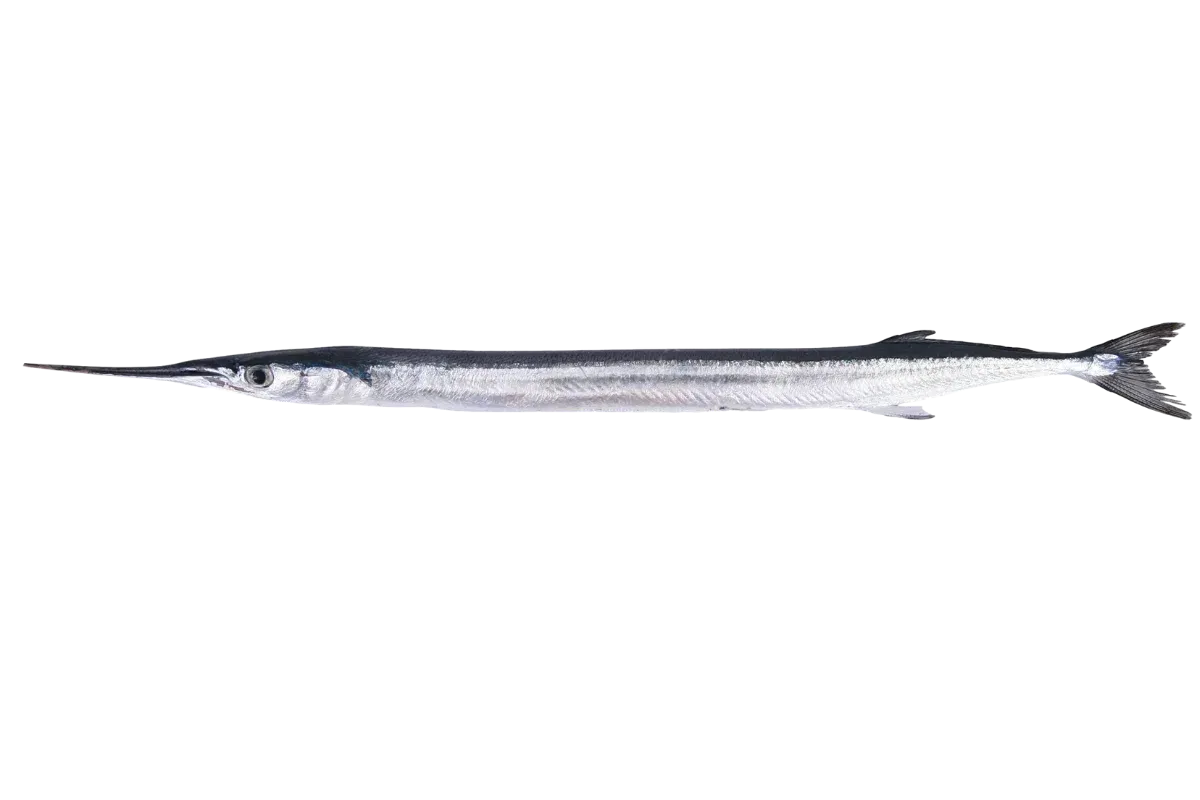
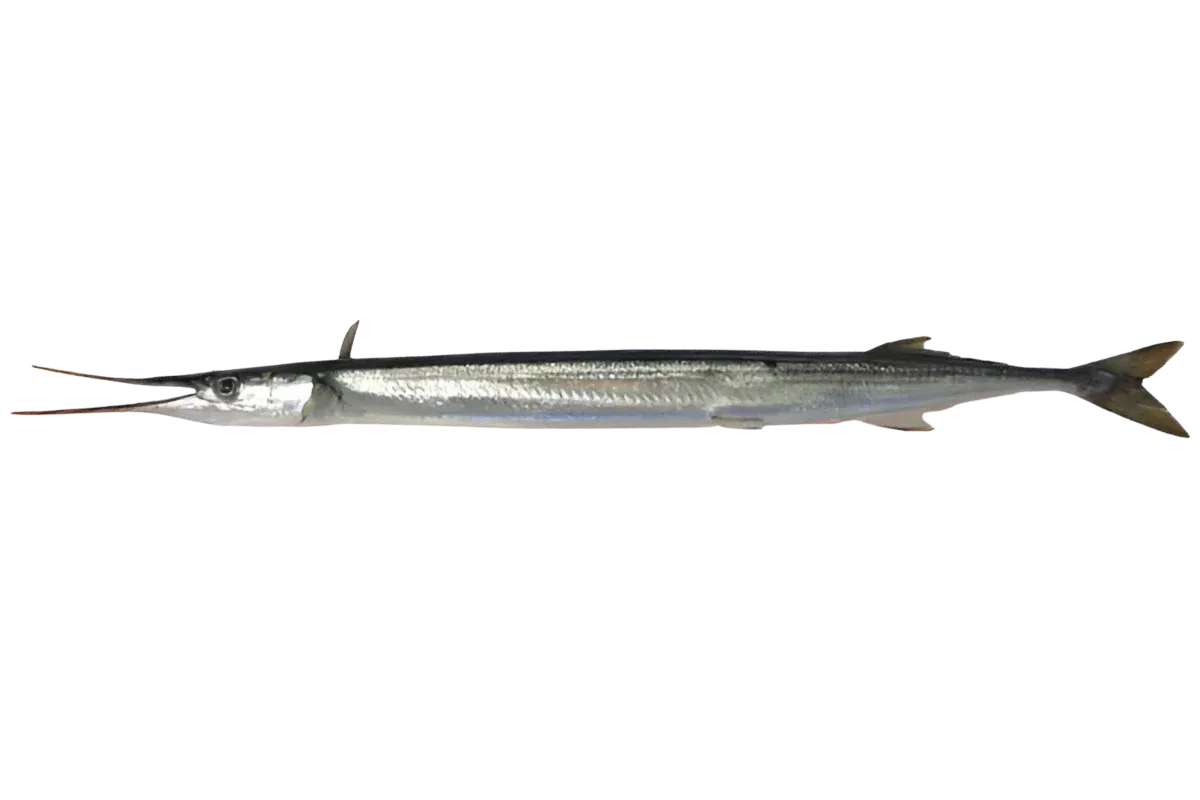
The Garfish is one of the most recognisable pelagic fish in the region. The body is extremely thin and elongated like an arrow, and it is designed for high speeds. Its beak is long and lined with countless tiny, sharp teeth that resemble needles. The back has a characteristic intense blue-green colour, while the sides and the belly are silvery. It is famous for the spectacular jumps it makes out of the water when hunting or attempting to escape.
The most unique feature involves the bones, which have an intense emerald green colour. This is caused by the pigment biliverdin, and it is entirely natural and harmless. It should not be confused with the Spearfish, which is a much larger pelagic fish that resembles a swordfish.
Habitat
This fish lives exclusively at the surface of the sea at depths from 0 to 10 metres. It moves in the open sea as well as very close to the coast, especially during the summer months. It prefers clean, well-flowing waters and often approaches river estuaries.
Diet
The fish is a fast and greedy hunter. It feeds primarily on small fish swimming at the surface, such as sand smelts, anchovies, and sardines. It hunts visually and attacks schools with great speed, using its long beak to injure or grab its prey.
Reproduction
Reproduction occurs in the spring and early summer, usually from May to June. The eggs are relatively large and stick to floating objects or seaweed due to the special sticky threads they possess. This keeps them near the surface where the water is warmer and rich in oxygen.
Fisheries
This is an extremely popular target for recreational fishers. It is caught using spinning techniques with small artificial lures or a special silk thread, where its teeth become entangled. Professionally, it is caught with surface nets and purse seines. The meat is very tasty, especially when fried, although some people avoid it because of the bone colour. It has moderate commercial value but is considered a fine delicacy in many coastal communities.
Research
The International Union for Conservation of Nature classifies the Garfish as a species of Least Concern, as the populations are large and healthy. Scientific studies have shown that it is a fast-growing species reaching sexual maturity by the second year of life. Research into its diet confirmed that it plays an important role in controlling the populations of small pelagic fish. It has also been established that the fish undergoes seasonal migrations, approaching the coast in the spring to spawn and moving to deeper waters during the winter.