Guitarfish
Rhinobatos rhinobatos / Glaucostegus cemiculus
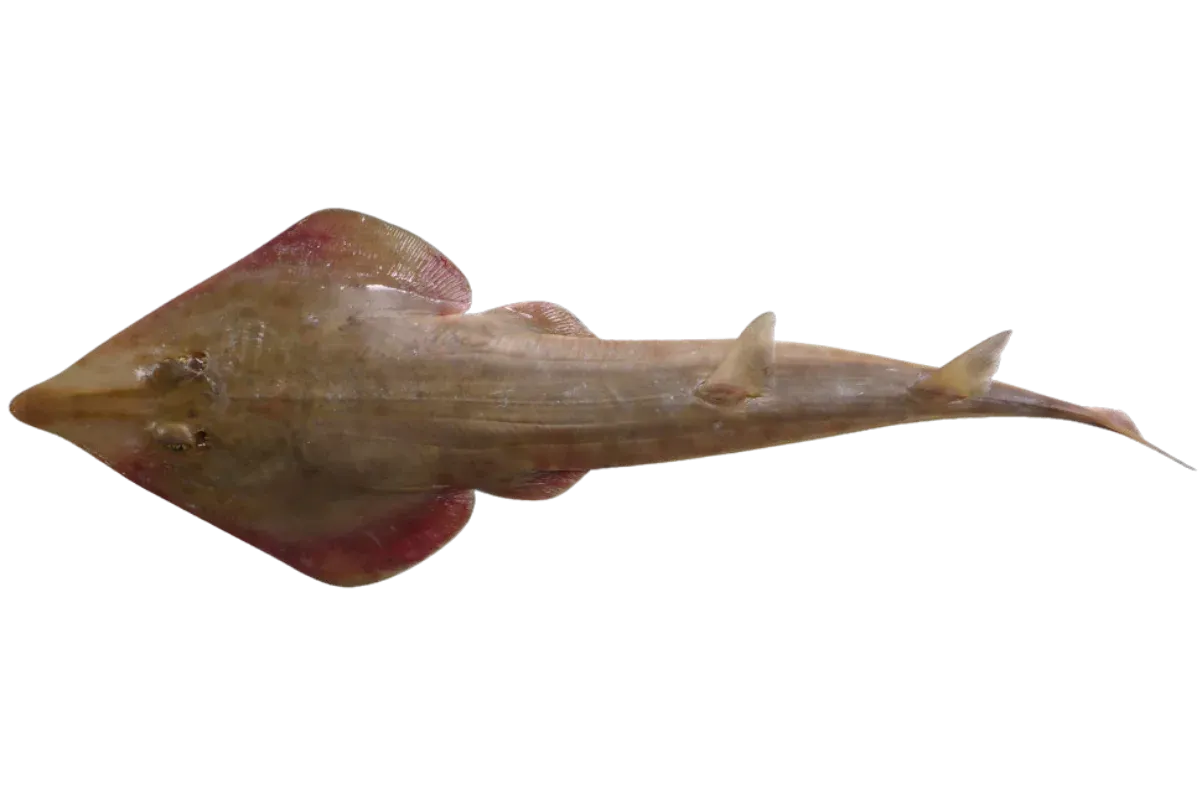
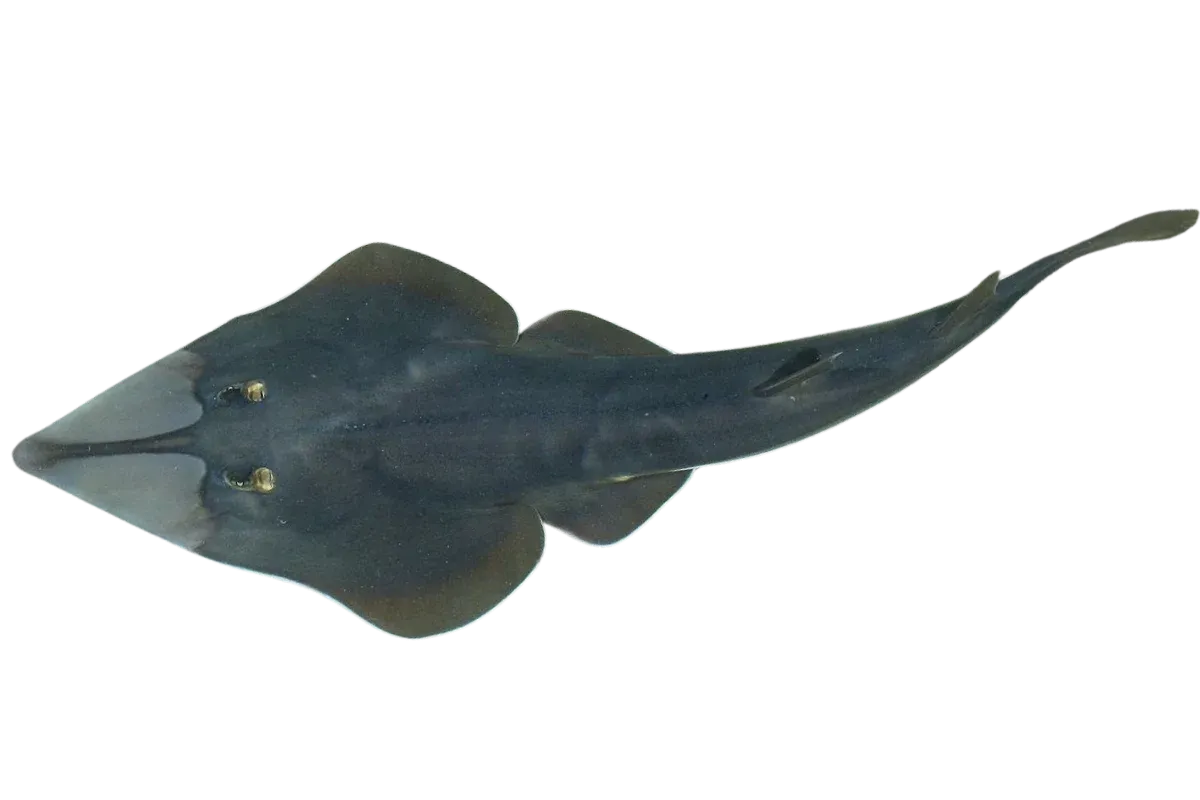
The Guitarfish, also known as the Common Guitarfish, Blackchin Guitarfish, or Violin Ray, is one of the most bizarre and primitive rays in the Mediterranean. It belongs to the Rhinopristiformes order, and its appearance resembles an intermediate link between a ray and a shark. The front part is flattened and shaped like a heart or a violin, while the back part is muscular and tapers to a strong tail with two dorsal fins like those of a shark.
Two species live in regional waters, and they are often confused. The Common Guitarfish has the same beige-brown colour all over its body, and its snout is light coloured. The Blackchin Guitarfish is larger and is distinguished by its snout, which has a characteristic black spot at the tip, which is especially visible from the underside.
Habitat
It represents an exclusively bottom-dwelling species. It lives on coastal sandy and muddy seabeds, usually in very shallow waters from 2 to 100 metres. It spends most of the day hidden and buried under the sand with only the eyes and respiratory holes or spiracles protruding while waiting for its prey.
Diet
The animal is a bottom predator that feeds by digging in the sand. Its diet consists mainly of benthic invertebrates such as crabs and shrimp, as well as other crustaceans, which it crushes with its powerful jaws. It also consumes molluscs and small bottom fish such as gobies.
Reproduction
The Guitarfish is an aplacental viviparous species. This means that the eggs hatch within the mother's body, and the embryos initially feed on the yolk sac and then on nutrient-rich fluids in the uterus. The mother gives birth to 4 to 10 fully developed young once or twice a year. Reproduction usually occurs in late summer or early autumn in very shallow waters that serve as nurseries.
Fisheries
Historically, it had little commercial value and was often discarded, but it is now caught as bycatch by bottom trawlers and nets. The fins of the Blackchin Guitarfish are in great demand in international markets for shark fin soup, which has increased the pressure on the species.
Research
The status of these fish is dramatic. The International Union for Conservation of Nature has classified both species as Critically Endangered in the Mediterranean. They have disappeared from much of the Northern Mediterranean, including many areas of Spain, France, and Italy, due to intensive trawling in the shallow waters where they live and reproduce. The fishing and sale of these species is strictly prohibited by regional and European legislation, and they must be released immediately if caught.