Mediterranean Damselfish
Scientific Name: Chromis chromis
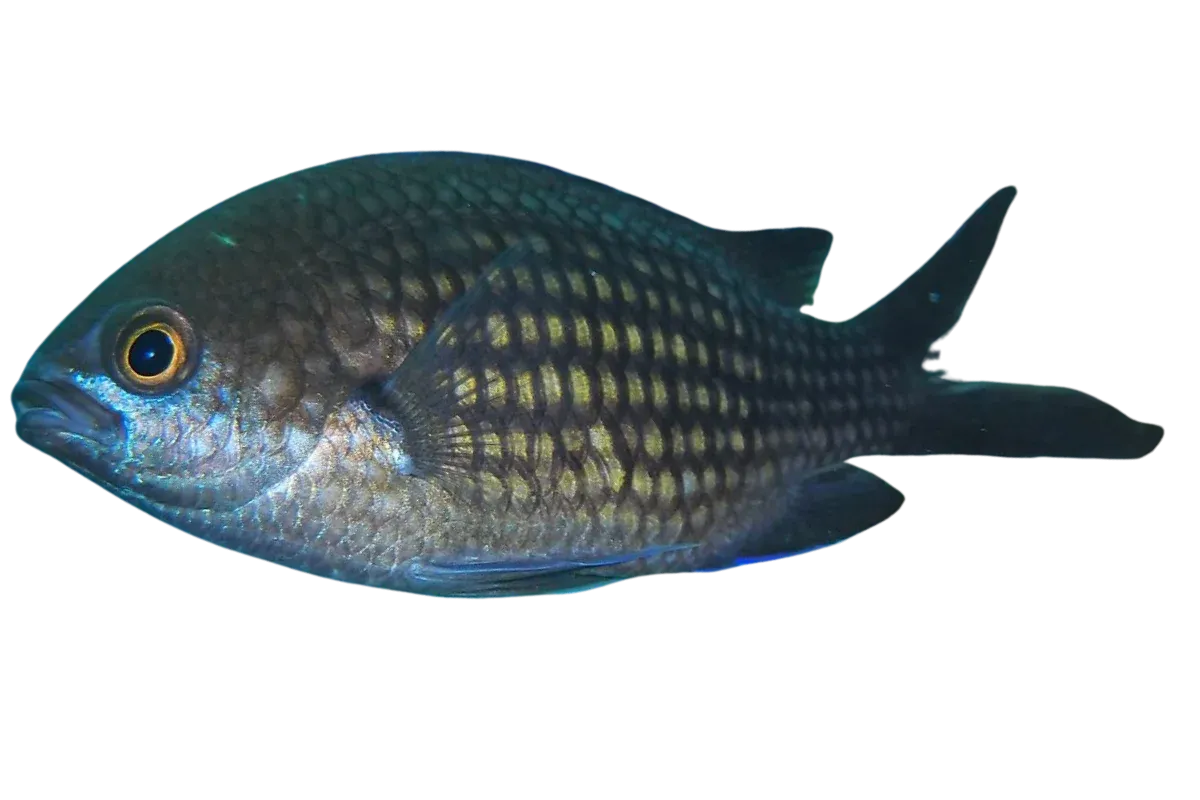
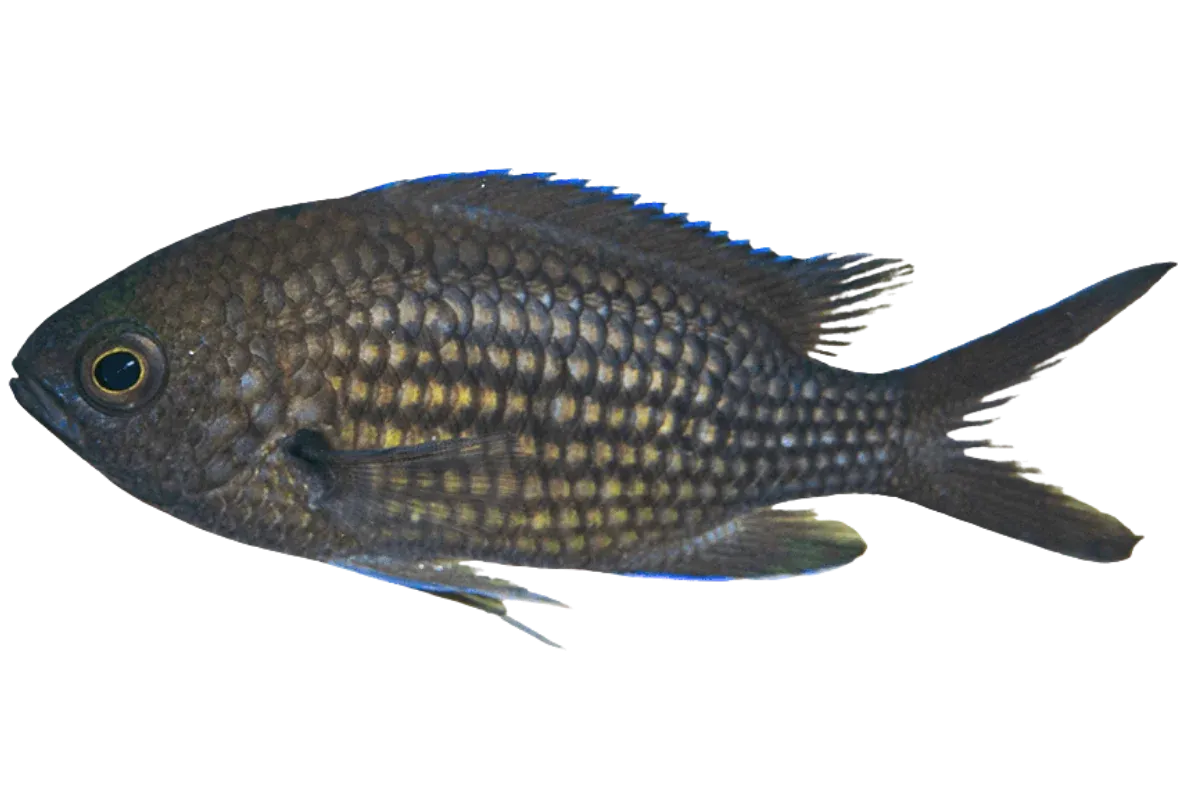
The Mediterranean Damselfish is one of the most common and recognisable fish along the region's rocky coasts. It is famous for the massive schools it forms and for the impressive colour change that occurs during its life. Young individuals possess a dazzling iridescent blue colour that makes them look like tropical neon fish. As they grow, the colour darkens, transforming into a deep brown or almost black hue that resembles the robes of monks. The body is oval and compressed laterally, with a characteristic forked tail resembling a pair of scissors.
Habitat
This is a semi-pelagic species that lives close to the shore. It prefers clear waters with rocky seabeds and steep reefs, as well as Posidonia seagrass meadows. It is found at depths of 2 to 40 metres, where it swims in large, dense schools in the midwater layers just above the bottom.
Diet
The Mediterranean Damselfish is a planktivorous fish. It feeds primarily on zooplankton such as microscopic copepods and the larvae of other organisms, which it collects from the water column. It also feeds on other fish's eggs, which can affect the populations of different species.
Reproduction
Reproduction is impressive and takes place during the summer, usually from June to August. The male cleans a small surface on a rock to serve as a nest and attracts females to spawn. Once the eggs are fertilised, the male takes over their exclusive care. He remains at the nest, guarding the eggs with self-sacrifice while chasing away every intruder and fanning them with his fins to provide oxygen until they hatch.
Fisheries
The fish has no commercial value as food due to its small size and numerous bones. However, it is valuable for recreational and professional fishers as bait. It is considered perhaps the top live bait for catching large, suspicious predators such as the common dentex and the dusky grouper using heavy longlines or jigs. It is usually caught with specific nets or traps.
Research
The International Union for Conservation of Nature classifies the species as Least Concern because it is extremely abundant. Scientific studies describe it as a keystone species for Mediterranean ecosystems. Due to its large population, it plays a decisive role in the transfer of nutrients from the open sea to the seabed through its droppings, which fertilise rocky ecosystems. Furthermore, it serves as a primary food source for many larger predatory fish and seabirds.