Pandora
Pagellus erythrinus
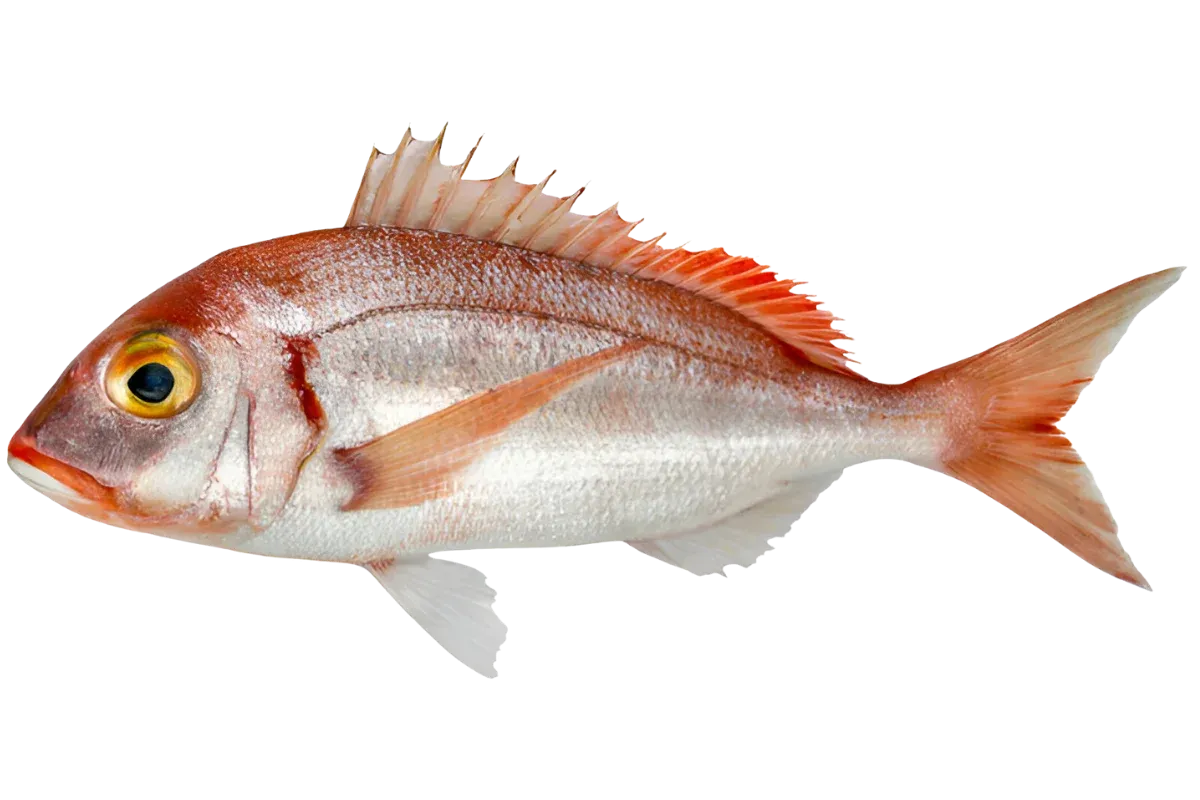
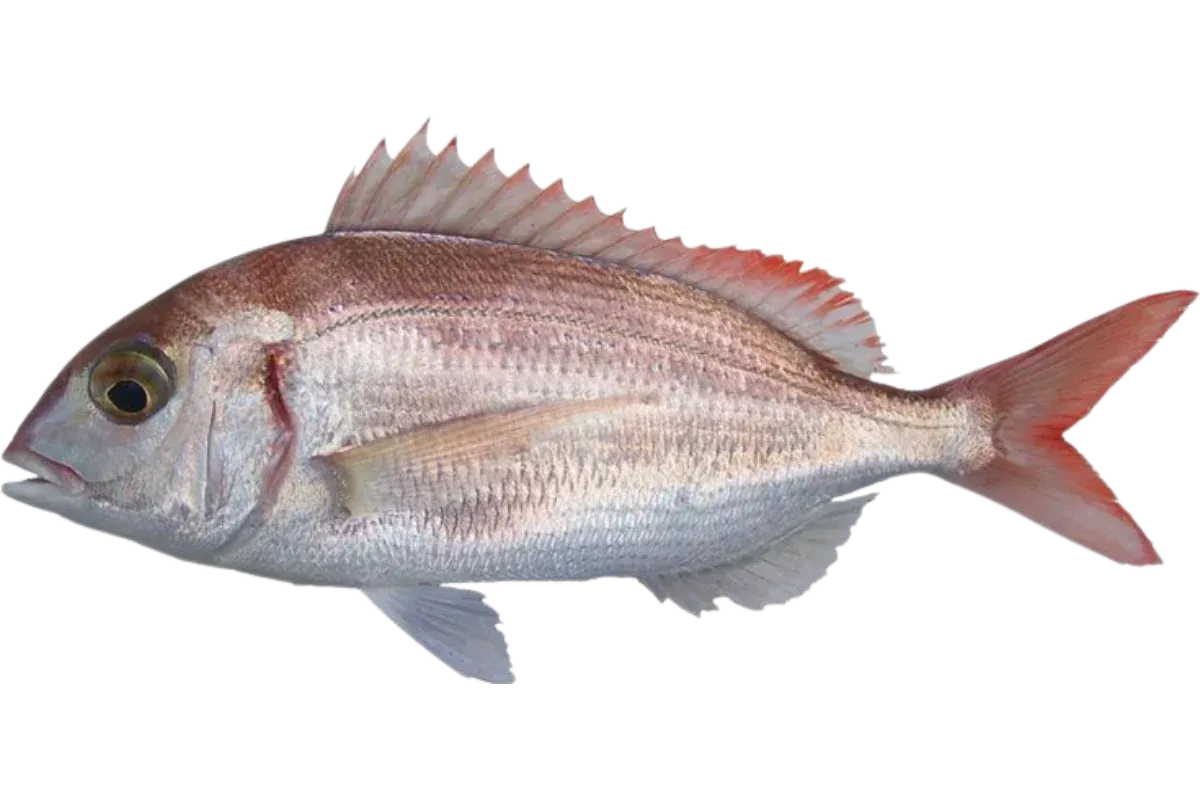
The Common Pandora is a classic and commercially significant fish species of the Mediterranean. It belongs to the family Sparidae and is famous for its beautiful pink-red colour and tender meat. The body is oval and compressed laterally, with a characteristic conical snout. The most important feature for identification is a bold iridescent blue spot on the upper part of the gill cover. It also frequently possesses small blue spots on its back. These characteristics distinguish it from related species like the Blackspot Seabream, which has disproportionately large eyes and a black spot behind the head. It also differs from the Axillary Seabream, which has a dark spot at the base of the pectoral fin and a duller colour.
Habitat
This is a benthopelagic species that lives near the seabed. It prefers sandy, muddy, or mixed bottoms, as well as gravel areas. The depth at which it is found varies with age. Young individuals form schools in shallow coastal waters, from 10 to 50 metres deep, and often remain near Posidonia seagrass meadows. Adult fish become more solitary and migrate to deeper waters, reaching depths of up to 200 or 300 metres.
Diet
It is a carnivorous fish with omnivorous tendencies. Its diet consists mainly of benthic invertebrates found in the sediment of the seabed. It feeds on small crabs, shrimp, polychaete worms, and molluscs, and larger individuals also hunt small fish.
Reproduction
The species exhibits protogynous hermaphroditism. This means that most fish are born female and reach sexual maturity in their first or second year of life. Later, during the third year, when they reach approximately 17 centimetres in size, many of them change sex and transform into males. The breeding period is prolonged, from spring through autumn, with a peak usually in May and June, followed by a smaller peak in the autumn.
Fisheries
It is one of the most important commercial fish in the Mediterranean with a very high market value. It is caught in large quantities by bottom trawlers as well as with set nets and longlines. For recreational fishers, it represents a favourite catch using handlines and longlines. The meat is white, firm, and flavourful with few bones. The European Union sets the minimum allowable catch size at 15 centimetres.
Research
The International Union for Conservation of Nature classifies the fish as a species of Least Concern due to its wide geographical distribution. However, scientific studies across the Mediterranean, including the Aegean and Adriatic, show that stocks are under significant pressure and are often overfished. This has resulted in a reduction in the average size of the fish. Furthermore, research has shown that the sex change is a flexible process influenced by population density. This allows the species to adjust the ratio of males to females to ensure successful reproduction.