Picarel
Spicara smaris
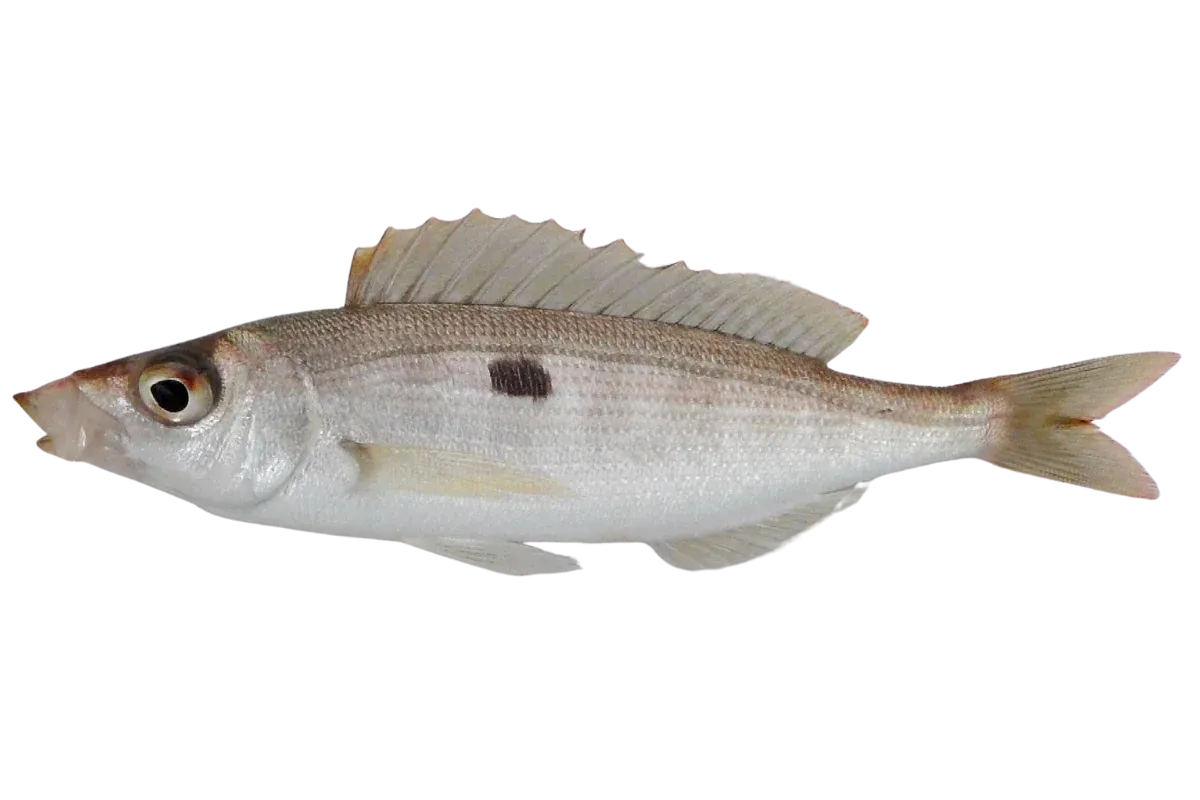
The Picarel is one of the most abundant and recognisable small fish of the region, and it belongs to the Centracanthidae family. The body is elongated and spindle-shaped with a silver colour that leans toward grey on the back and white on the belly. The most characteristic feature that makes it easy to identify is a bold black square or rectangular spot on the side of the body. This spot is found just below the beginning of the lateral line and above the pectoral fin, while fishers often refer to it as the mother spot.
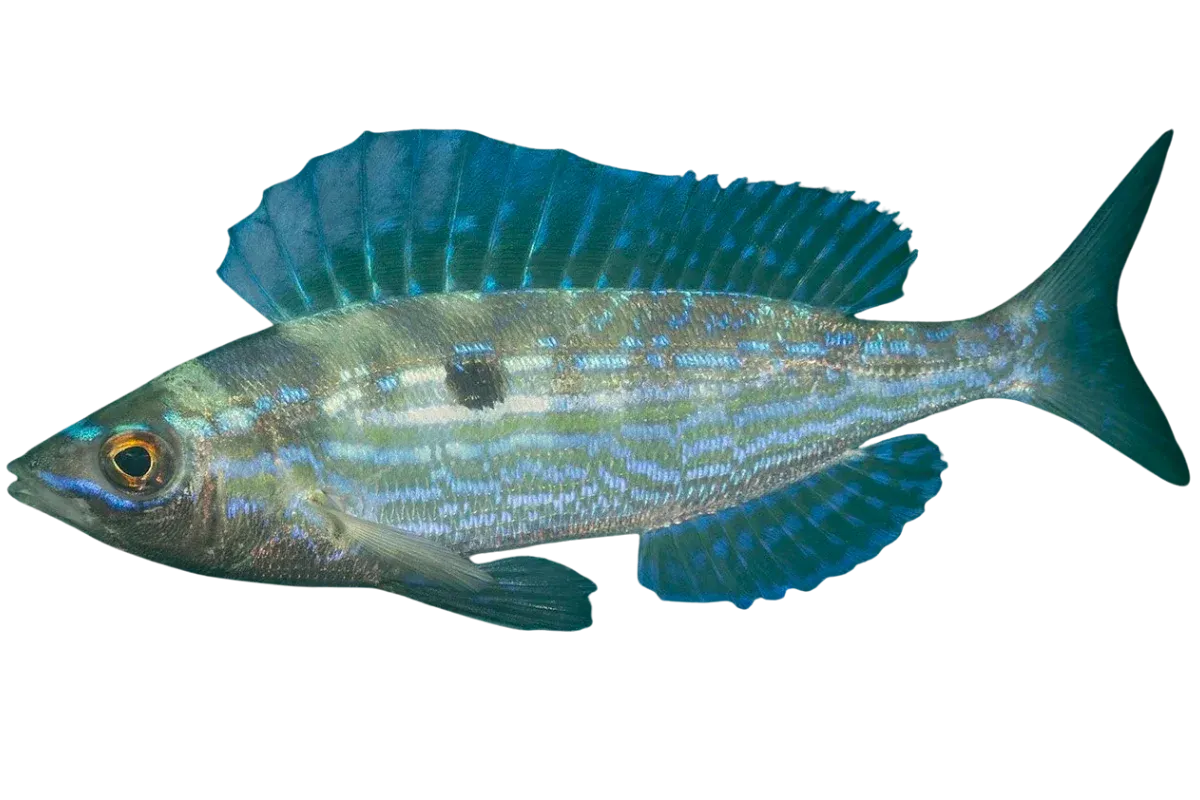
The species exhibits intense sexual dimorphism, especially during the breeding season. Females maintain their silver colour while the males transform by acquiring flamboyant colours with iridescent blue and green lines on the body and fins.
Habitat
This is a benthopelagic species that forms massive and dense schools. It lives mainly over Posidonia oceanica meadows and muddy seabeds at depths that usually range from 15 to 170 metres. During the day, the schools move actively near the bottom or in midwater while searching for food. At night, they disperse and remain inactive near the seabed to rest.
Diet
This species is a planktivorous fish. It feeds primarily on zooplankton such as microscopic copepods and cladocerans, which it collects from the water column. It supplements its diet with small benthic crustaceans and worms.
Reproduction
The reproduction of the picarel represents one of the most interesting phenomena of the sea. It is a protogynous hermaphrodite species. This means that all fish are born female and reach sexual maturity after their first year of life. After the age of two or three years, the females change sex and transform into males.
Breeding takes place from February to May. The males become territorial and dig small nests in the sand or mud using their tails. They attract the females to spawn in the nests, and then the males guard the eggs with self-sacrifice until they hatch.
Fisheries
It represents one of the most important catches in the Mediterranean in terms of quantity. It is caught in large numbers with bottom trawls, purse seines, and nets. Although its price is low due to its abundance and size, the Picarel has great nutritional value and is extremely popular in regional cuisine, especially when fried.
Research
The International Union for Conservation of Nature classifies the Picarel as a species of Least Concern. Scientific studies have shown that it plays a vital ecological role as a link for energy transfer from plankton to larger predators such as hake and John Dory. Furthermore, research indicated that the sex change is an energy-intensive process, and the fish are more vulnerable during this period.