Plain Bonito
Orcynopsis unicolor
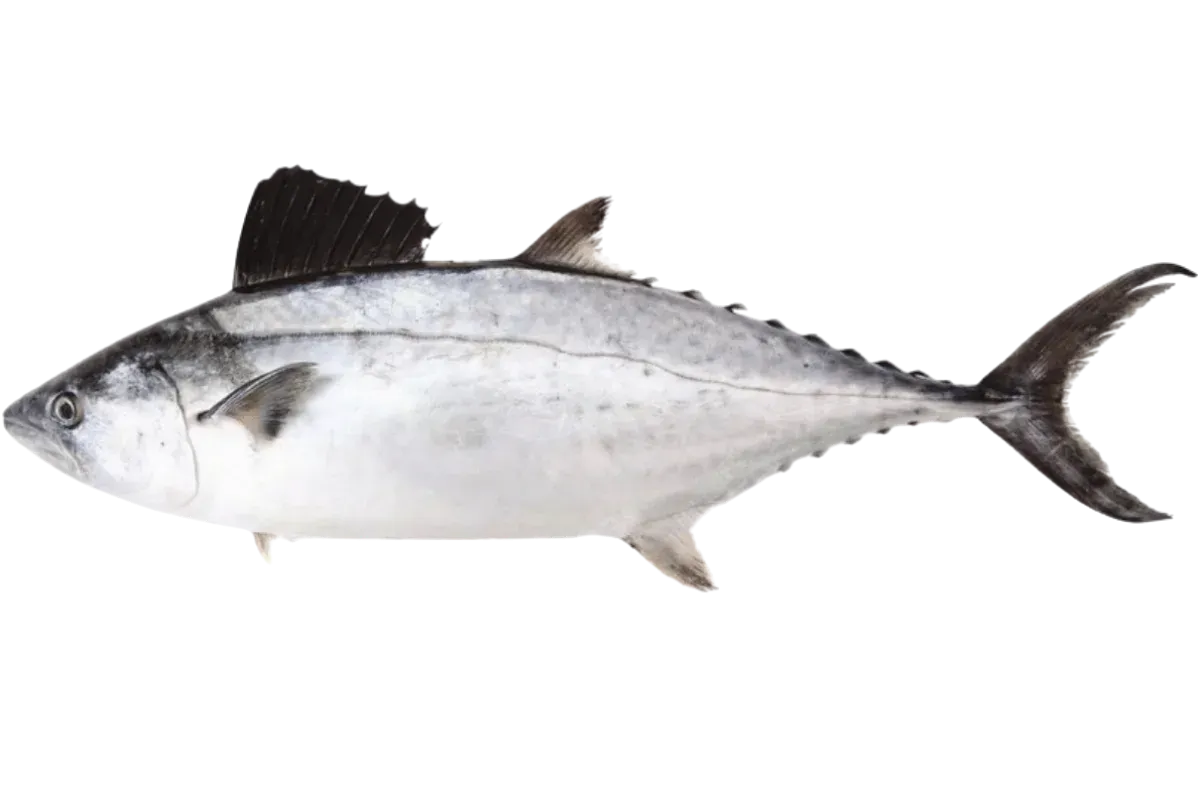
The Plain Bonito, which is also widely known as the Palometa or the Unicolour Bonito, is a medium-sized pelagic fish belonging to the Scombridae family. Although it resembles the Atlantic Bonito in shape, it possesses a unique characteristic that immediately distinguishes it from its relatives. This feature is on its back, a solid dark blue or black colour without any stripes or patterns.
While other bonito species have slanted lines or maze-like patterns on their backs, the Plain Bonito remains plain as its name suggests. The sides are silver and sometimes bear faint golden spots or blotches that are not always easy to see. The body is laterally compressed, but it is not as round as that of a tuna. The first dorsal fin is high and straight with prominent spines.
Habitat
This is an epipelagic and neritic species, meaning it lives near the coast and the surface. It prefers the shallow waters of the continental shelf and rarely ventures into the open sea, unlike many tuna species. It often moves very close to the surface while hunting in small schools near headlands and reefs. It is more common in the southern Mediterranean and along the North African coast, but it is also regularly encountered in regional waters.
Diet
The animal is a fast and aggressive predator. It feeds mainly on small surface fish that live in schools, such as sardines and anchovies, as well as round sardinella and horse mackerel. It also shows a strong preference for cephalopods and small mackerels. It usually hunts in small groups while trapping its prey at the surface.
Reproduction
Reproduction of the Plain Bonito in the Mediterranean takes place during the warm summer months. This period usually starts in July and peaks during August and September. The eggs and larvae are pelagic and drift in the water. Young individuals grow quickly and reach sexual maturity when they are approximately 50 to 60 centimetres in size.
Fisheries
It is not a primary target of industrial fisheries, but it is often caught as bycatch in nets, purse seines, and surface longlines. For recreational fishers, it represents a valuable catch for surface trolling and spinning because it is a strong fish that fights hard. The meat is red and delicious, although it is considered slightly lower in quality than that of the Atlantic Bonito or Tuna. It is ideal for grilling over charcoal, for making salt-cured lakerda, or for canning.
Research
The International Union for Conservation of Nature classifies the Plain Bonito as a species of Least Concern. Scientific studies have shown that, unlike other scombroids that migrate over long distances, this fish tends to be more sedentary and remains in specific coastal areas. Furthermore, research into its biology showed that its teeth are particularly large and conical in relation to its body size, which helps it catch larger prey than would be expected for a fish of its dimensions.