Shortnose Greeneye
Chlorophthalmus agassizi
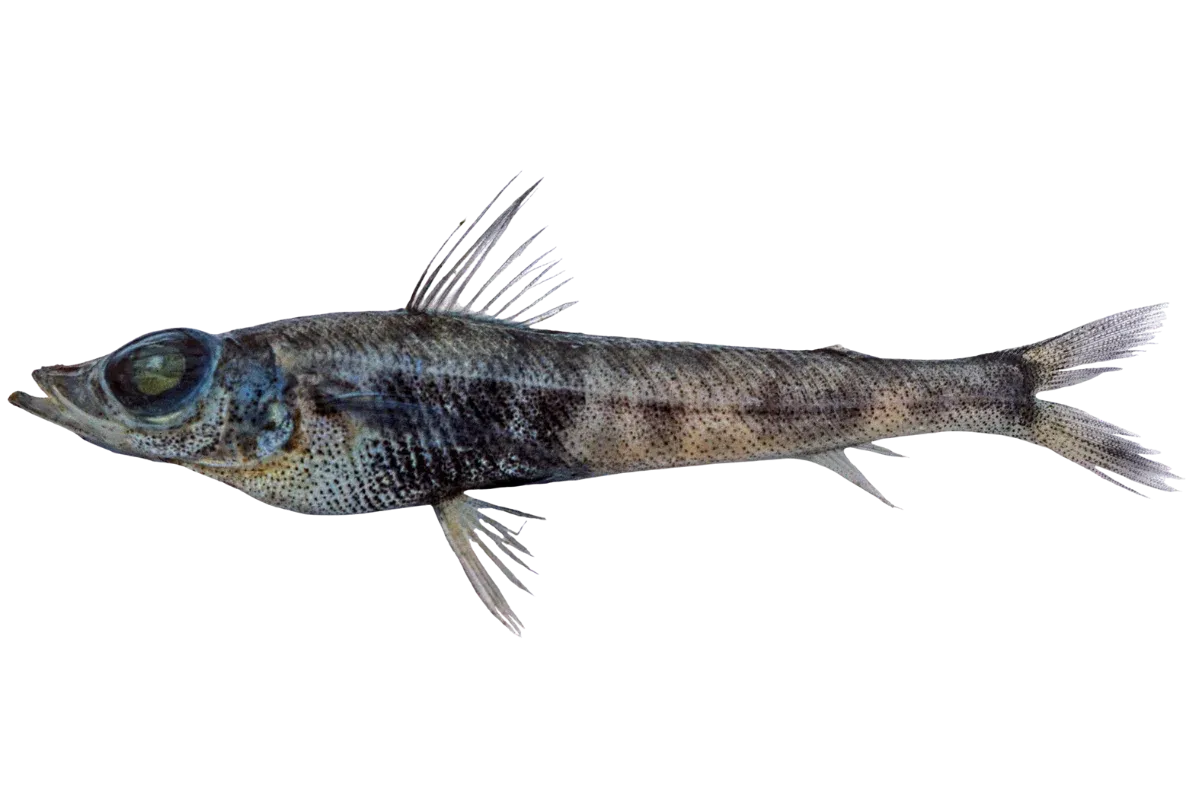
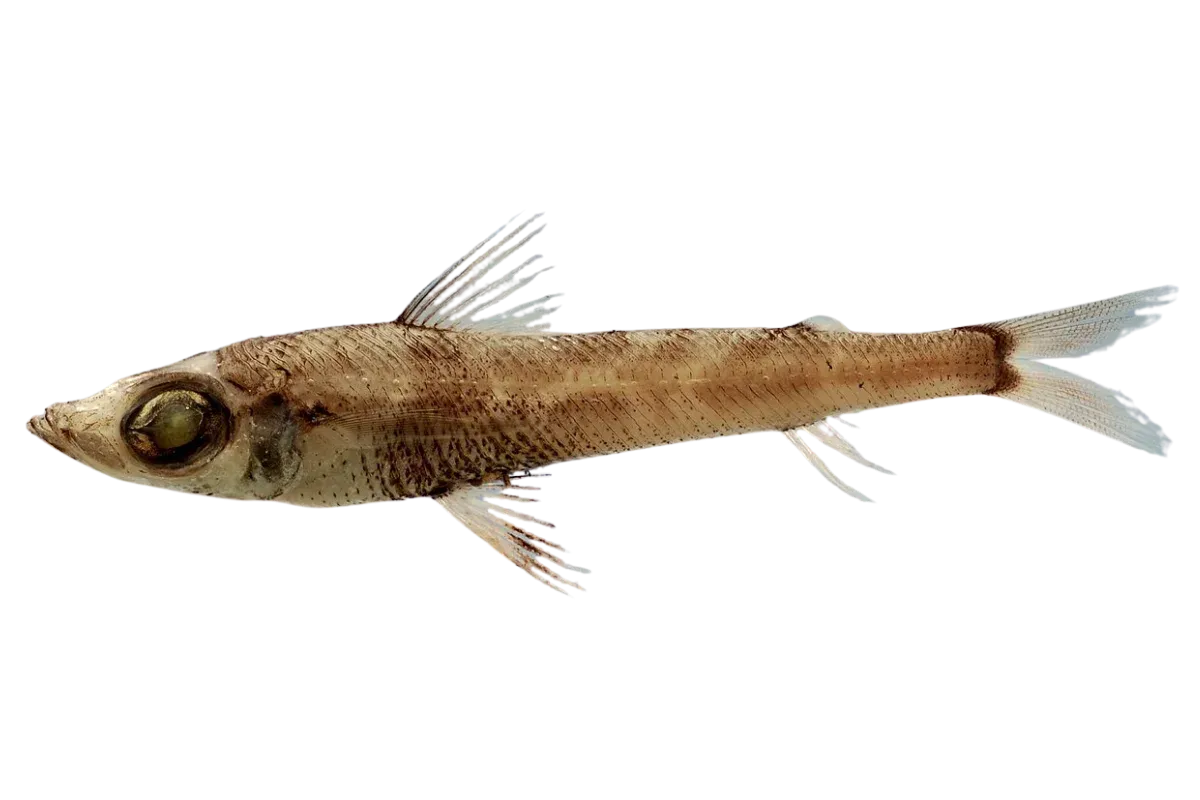
The Shortnose Greeneye is a small fish that inhabits the deep waters of the Mediterranean and is completely adapted to the darkness of the seabed. The body is elongated and slender, with a brownish-to-yellow colour on the back and silver on the sides, and often features dark spots. Its most striking feature is the massive eyes, which turn bright emerald green when light falls on them. These eyes work as mirrors to make use of the very little light found in the abyss. Contrary to earlier beliefs, the fish does not produce its own light through bioluminescence; rather, its eyes reflect light intensely due to a specific internal structure.
Habitat
This species lives exclusively on the seabed, usually in areas with mud or sand. It is found at great depths, starting from 50 metres and reaching down to 1000 metres, although most fish are found between 200 and 600 metres at the edge of the continental shelf.
Diet
The fish is a carnivore that hunts on the seabed. It feeds primarily on small shrimp, crustaceans, and other small invertebrates that live in the mud, along with small squid or tiny fish.
Reproduction
The reproduction of this species is of great interest because it is a simultaneous hermaphrodite. This means that every individual has active male and female reproductive organs at the same time. This adaptation is vital in the deep, dark waters, as it ensures that any two fish that meet can mate regardless of sex. Breeding usually happens from spring until summer, and the eggs rise to the surface where they hatch before the young fish descend back to the seabed.
Fisheries
It is not a target of commercial fisheries, but it is caught in massive quantities as bycatch by bottom trawlers that fish for red shrimp and hake in deep waters. It has very low commercial value and is often thrown back into the sea or used for fishmeal, although the meat is edible and quite tasty when fried.
Research
According to the International Union for Conservation of Nature, the fish is classified as Least Concern due to its wide distribution in deep waters. Scientific studies in the Ionian Sea showed that larger fish tend to live at greater depths. Furthermore, research has confirmed that in cases where there is no mate, the fish has the rare ability to fertilise its eggs with its own sperm. This self-fertilisation is a survival strategy for isolated populations in the abyss. Recent studies have also discovered symbiotic bacteria on its body that are related to light, although the mechanism remains under investigation.