Silver cheeked Toadfish
Lagocephalus sceleratus
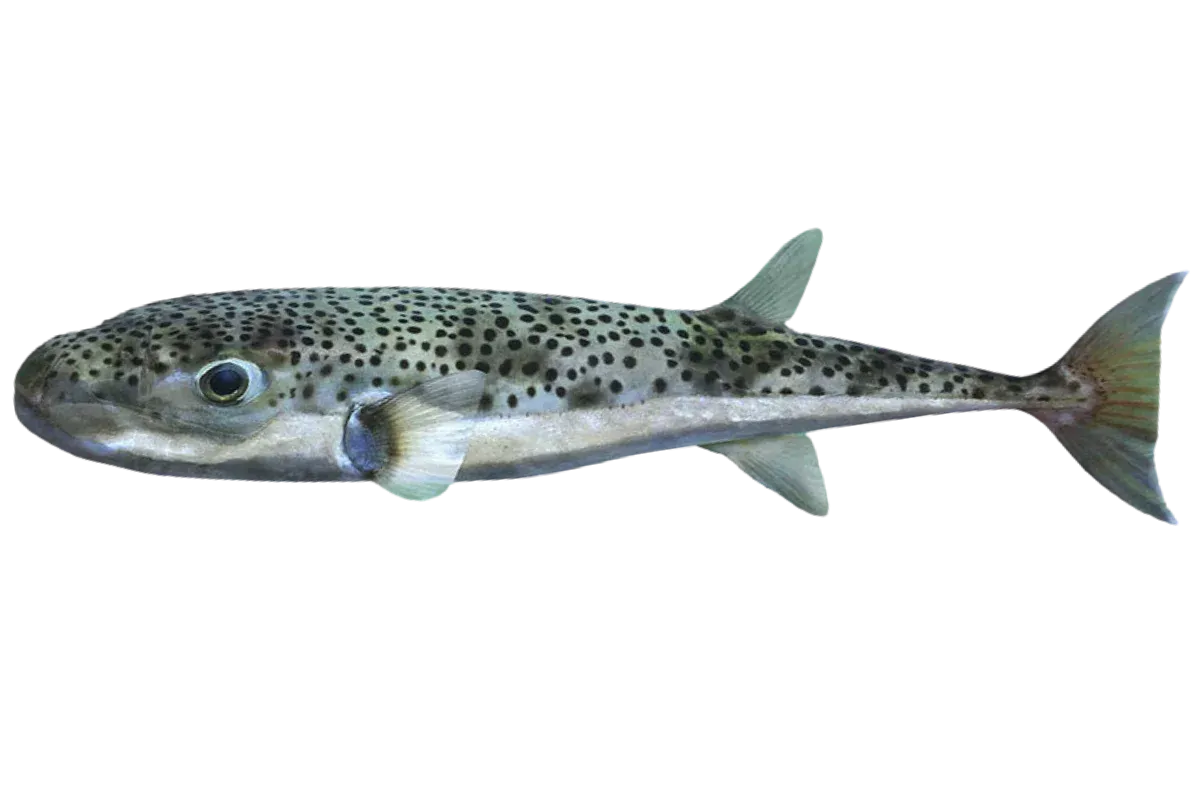
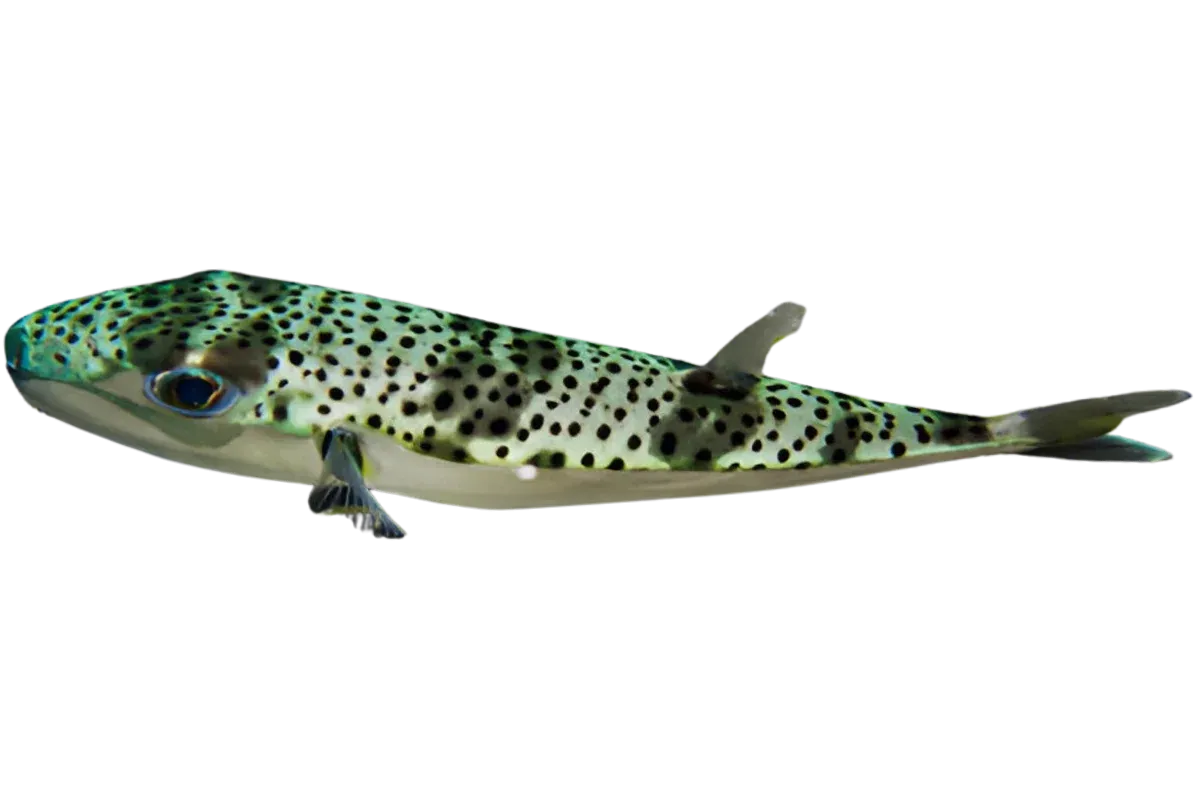
The Silver-cheeked Toadfish is one of the most dangerous invasive species in the Mediterranean. It belongs to the family Tetraodontidae, commonly known as pufferfish. The body is elongated and torpedo-shaped without scales, while the skin is smooth. The back is grey-brown with characteristic dark spots, and there are two silver stripes on the sides, with a white belly.
Its name comes from the shape of its head and teeth: it has four very strong teeth, two on top and two on the bottom. These teeth are fused and resemble a beak or rabbit teeth. When it feels threatened, it can suck in water or air and inflate its belly like a balloon to appear larger and deter predators.
⚠️ Safety warning
The toadfish contains the potent neurotoxin tetrodotoxin, which is fatal to humans and lacks an antidote. This toxin is not destroyed by cooking processes such as grilling, frying, or boiling. Consumption of this fish is strictly prohibited.
Habitat
It is a Lessepsian migrant that arrived from the Red Sea and has spread rapidly throughout the Eastern Mediterranean. The toadfish lives mainly in coastal waters at depths from 10 to 100 metres, but it can also be found in very shallow areas. It prefers sandy seabeds and Posidonia meadows where it can hide and hunt.
Diet
The fish is an extremely voracious and aggressive predator. It feeds on squid, octopus, and cuttlefish, as well as crabs and fish. Due to its powerful teeth, it causes enormous damage to fishers by cutting nets and longlines, eating the caught fish while leaving only the heads behind.
Reproduction
Reproduction occurs in the summer and mainly from June to August. It is an extremely fertile species, which explains its population explosion. The eggs and larvae are pelagic.
Fisheries
The trade and consumption of the toadfish are prohibited by law in the European Union. It contains tetrodotoxin in the ovaries, liver, skin, and muscles. Ingestion causes paralysis of the muscular system, respiratory failure, and death. Despite the ban, it is caught as bycatch in large quantities and is often killed by fishers to reduce the population.
Research
The International Union for Conservation of Nature and local authorities classify the toadfish as a high-risk species for public health and the economy. Research showed that its toxicity depends on size (larger fish are more toxic), sex (females are more toxic, especially in the ovaries), and season (toxicity increases during the breeding period). Studies confirmed that it has no natural enemies in the Mediterranean except perhaps for large loggerhead sea turtles and some large groupers that can eat it without being poisoned.