Toothcarp
Aphanius fasciatus
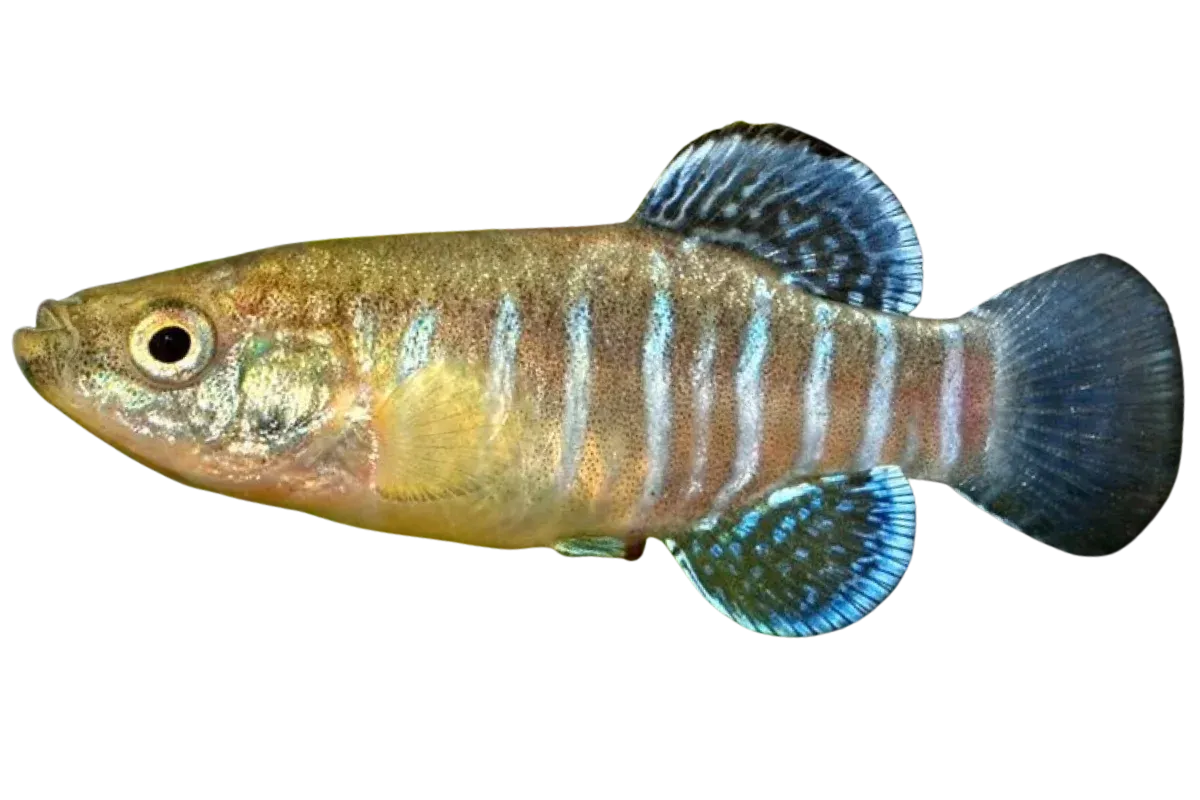
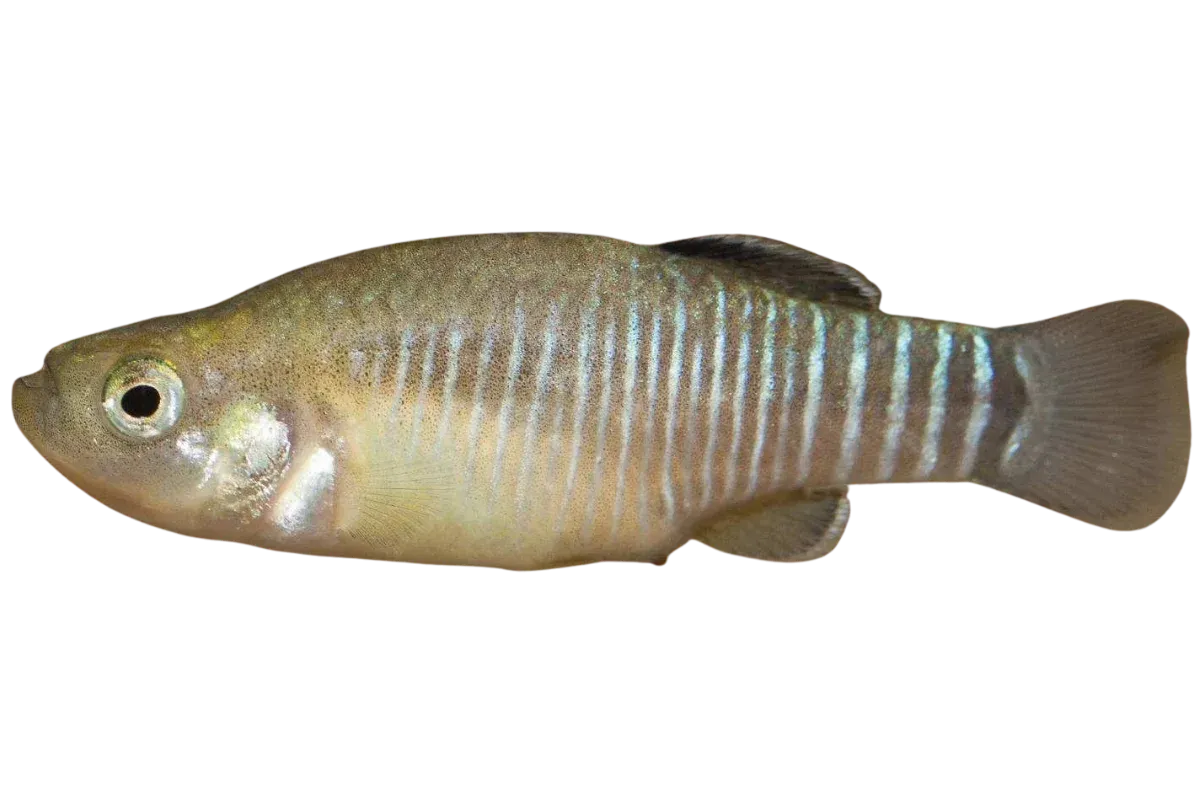
The South European Toothcarp is a small, endemic fish of the Mediterranean Sea belonging to the family Cyprinodontidae. Its most prominent feature is the intense difference in appearance between the two sexes. The males are smaller and have bold, dark vertical stripes on a silver or light-blue background, while their fins are often yellow. The females are larger and have a simpler greyish colour with irregular dark spots on their sides instead of stripes. The body is short and thick with a mouth that points upwards for surface feeding.
Habitat
It is the absolute master of difficult environments because it lives primarily in shallow coastal waters like lagoons, river estuaries, and salt pans. It is an extremely resilient species that can survive in conditions that would be fatal to other fish. It withstands massive fluctuations in temperature and salinity because it can live in nearly fresh water as well as in hypersaline water where salt begins to crystallise.
Diet
The species is omnivorous and feeds mainly on microscopic invertebrates. Its preferred food consists of mosquito larvae, which it hunts in shallow waters and among vegetation. In salt pans, it also feeds on small crustaceans such as brine shrimp, along with various algae and plant debris.
Reproduction
Breeding lasts throughout the summer and usually from April to September. The males become aggressive and claim a small territory to attract the females. The females lay a few eggs at a time, which stick to aquatic plants with the help of fine fibres.
Fisheries
It has no commercial value as a catch and is not fished for food due to its very small size. However, it has enormous ecological value. It is used as a natural means of mosquito control in marshes and lagoons because it consumes large numbers of larvae and helps control insect populations without the use of chemicals.
Research
The International Union for Conservation of Nature classifies the South European Toothcarp as a species of Least Concern, although local populations are declining. Scientific studies have highlighted that the greatest threat to the species is not pollution but competition with the invasive Mosquitofish, which was introduced for the same purpose of mosquito control. Research shows that the invasive species displaces the native toothcarp from fresh and brackish waters, but the native fish manages to survive and dominate in the highly saline waters of salt pans, where the invasive competitor cannot live.