Thresher Shark
Alopias vulpinus / Alopias superciliosus / Alopias pelagicus
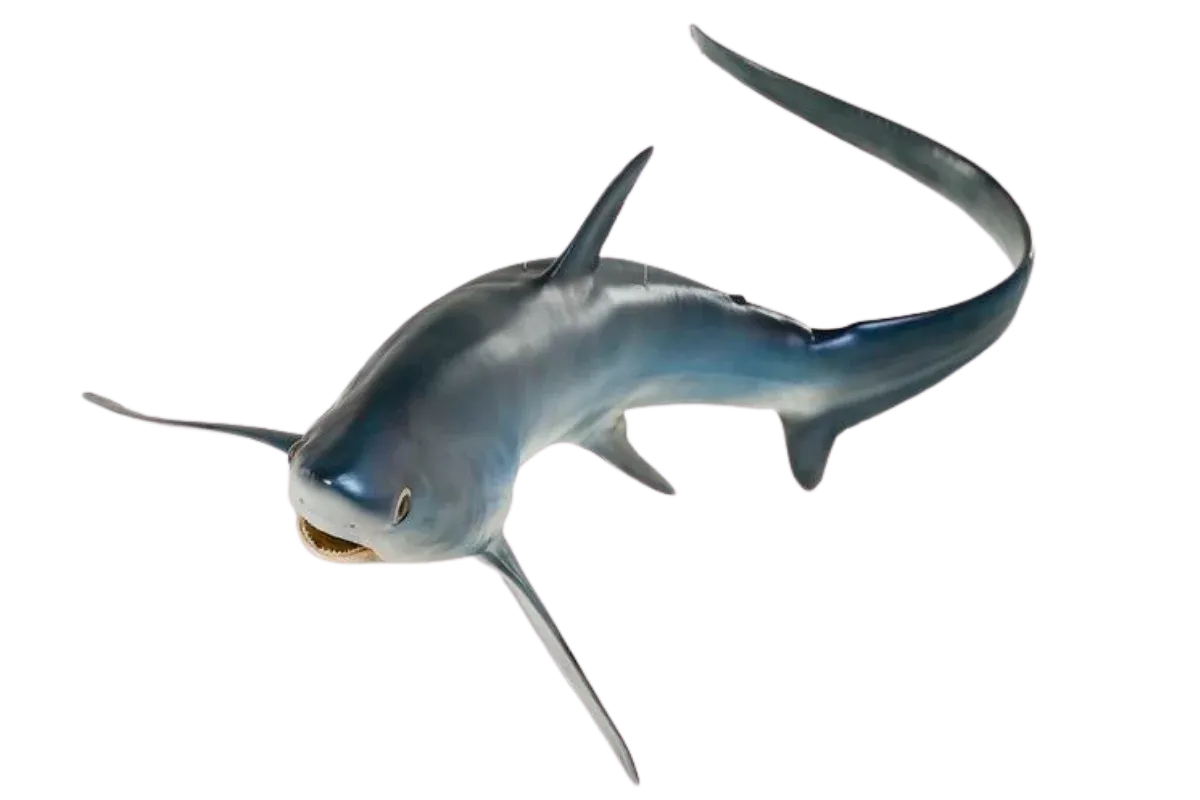
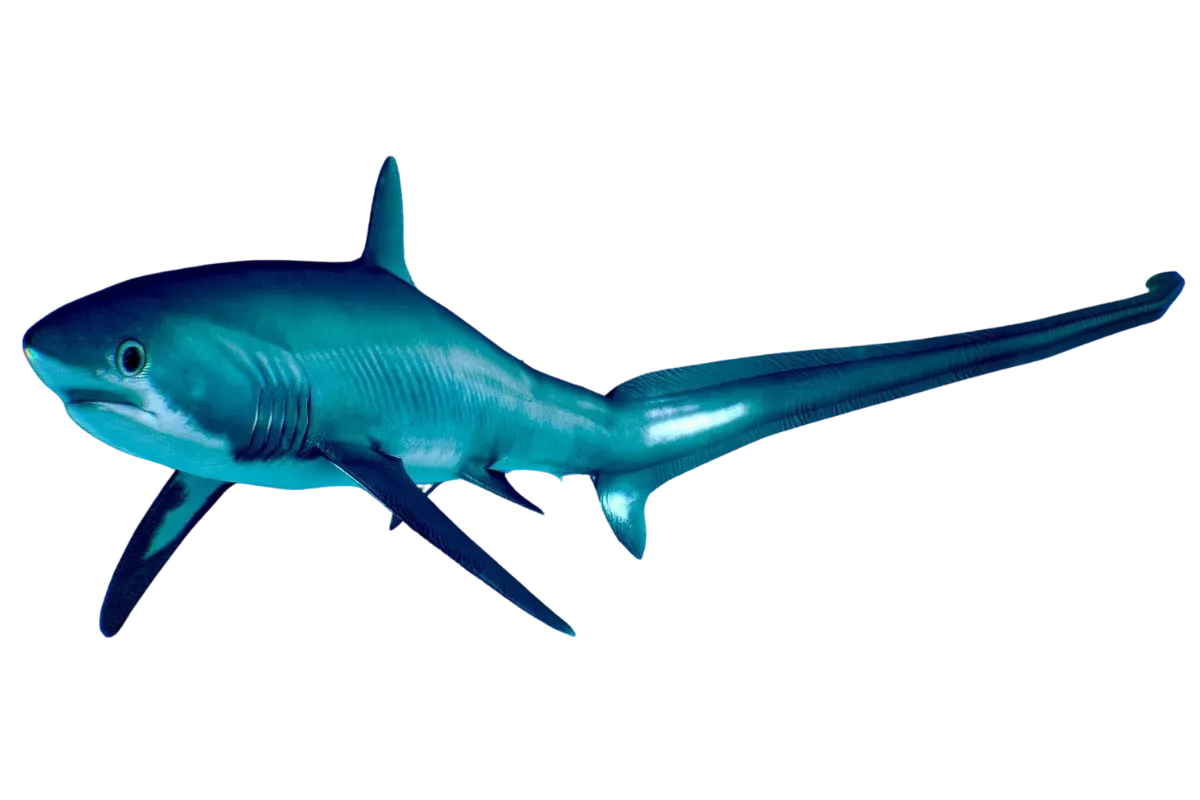
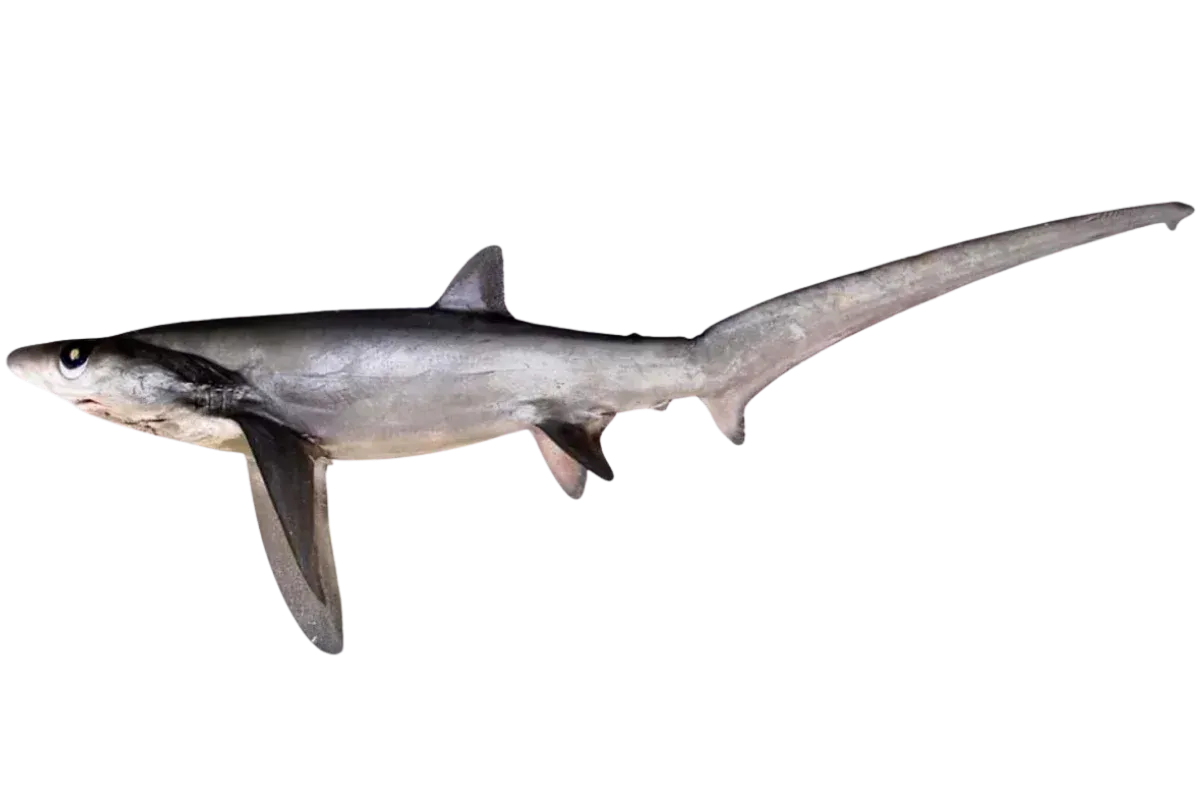
The Thresher Shark is one of the most visually stunning sharks in the Mediterranean. It is easily identified by its exceptionally long tail, which resembles a scythe and often accounts for half of the total length of the animal. The body is robust and torpedo-shaped with a short snout and large pectoral fins. The dorsal colouration is typically a metallic grey or leaden hue, while the underside is stark white.
In the Mediterranean, three species are primarily encountered. The Common Thresher is the most frequent species and is known for its large size and characteristic grey colour. The Bigeye Thresher is instantly recognisable by its massive eyes that extend to the top of its head, which allow it to see in the dim light of deep waters. The Pelagic Thresher is the smallest of the three, with a more intense blue colour, although it is rarely seen in these waters because it prefers the open ocean.
Habitat
This is a fish of the open sea. It lives and moves in the open ocean from the surface down to depths of 500 metres. In the Mediterranean, it generally stays away from the coast in deep waters, although it occasionally approaches land while following schools of prey fish.
Diet
The shark is an intelligent hunter. It feeds primarily on schooling fish such as sardines, herring, and mackerel, as well as squid. Its hunting technique is unique among fish, as it approaches a school and uses its long tail like a whip. With a powerful and rapid strike, it stuns or kills multiple fish at once before consuming them at its leisure.
Reproduction
The female gives birth to young that have already hatched inside the mother's body. A remarkable aspect of their development is that the unborn pups feed on unfertilised eggs in the womb. Gestation lasts 9 months, and the female gives birth to a small number of pups, usually 2 to 4. However, these newborns are giants because they are born measuring over one metre.
Fisheries
It is usually caught in the open sea by professional vessels targeting tuna and swordfish using either surface longlines or nets. While the meat is edible, the fins are the most sought-after part of the fish. Due to its relative rarity, it is not a primary commercial target in many regions.
Research
Scientists have discovered that the Thresher Shark is an endothermic fish similar to the Great White Shark. This means it can maintain its body, eyes, and brain at a higher temperature than the surrounding water. This provides the shark with immense energy and speed during hunts. Unfortunately, research indicates that the Mediterranean population has declined dramatically, and it is currently classified as an Endangered species in the region. This status is primarily due to the shark giving birth to very few young and being unable to easily replace losses caused by fishing.