Two banded Seabream
Diplodus vulgaris
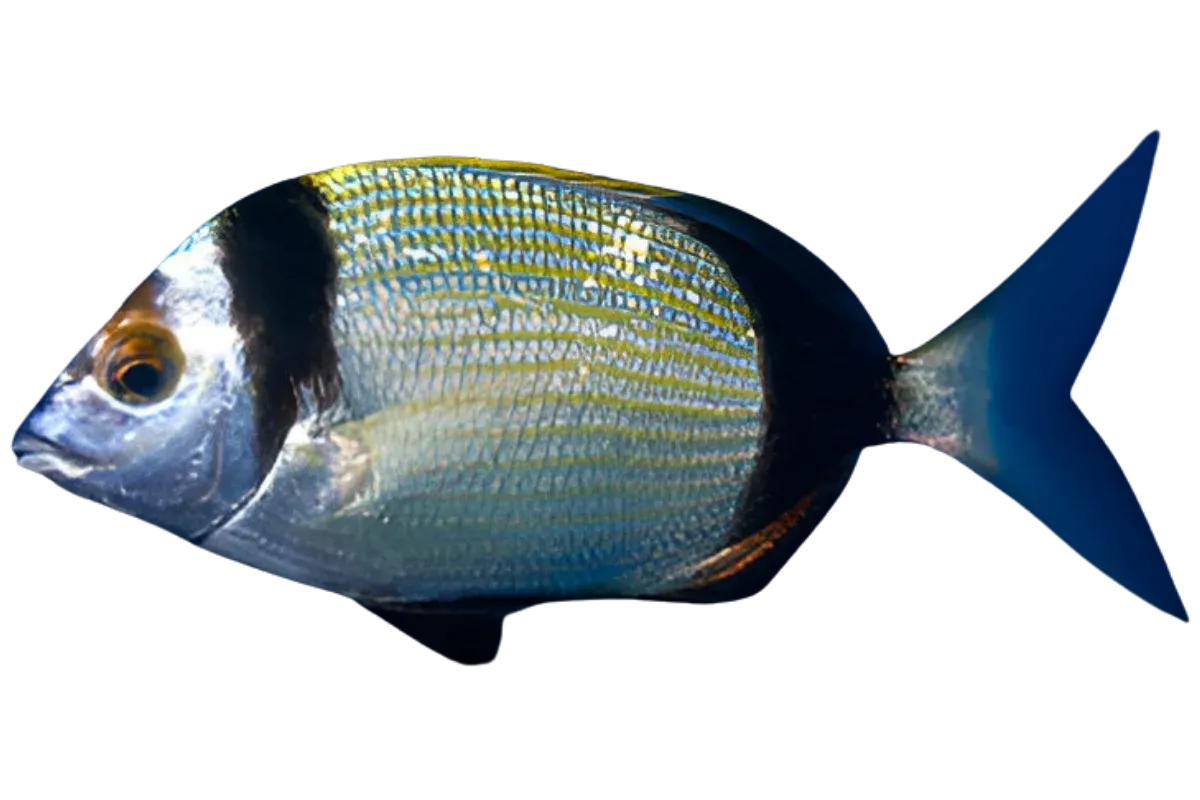
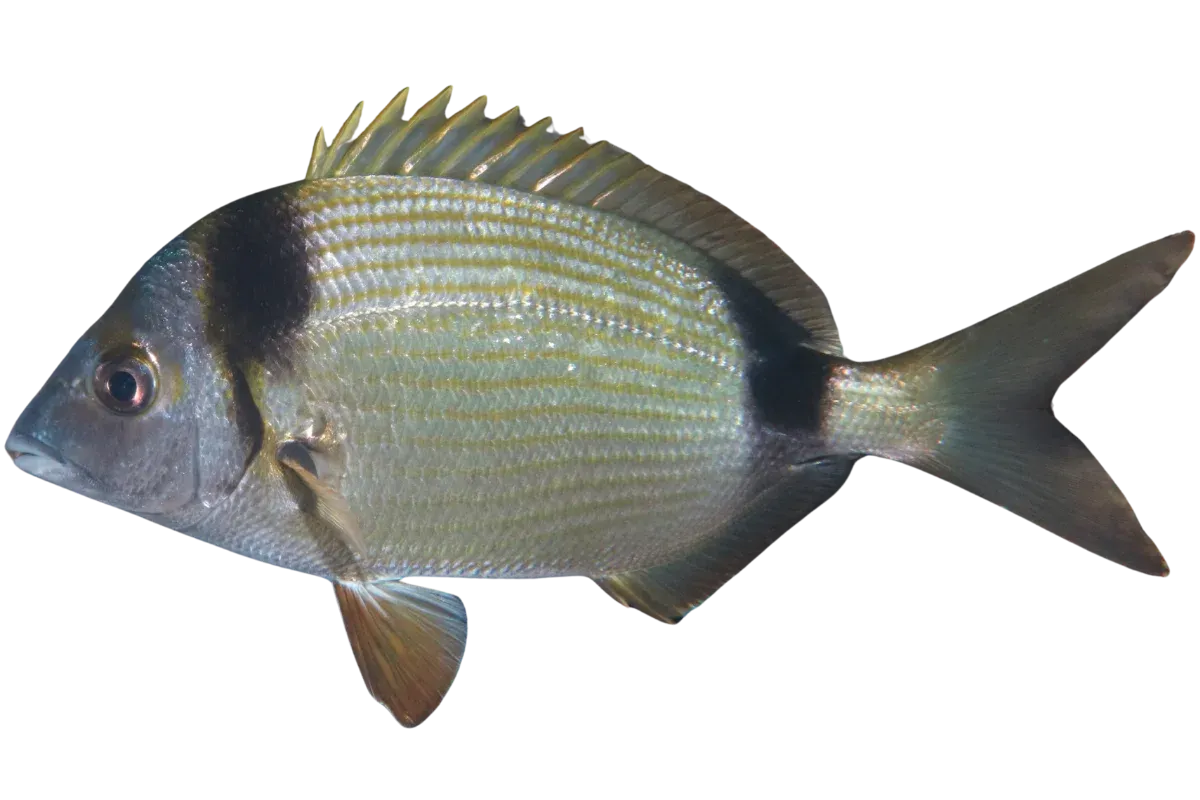
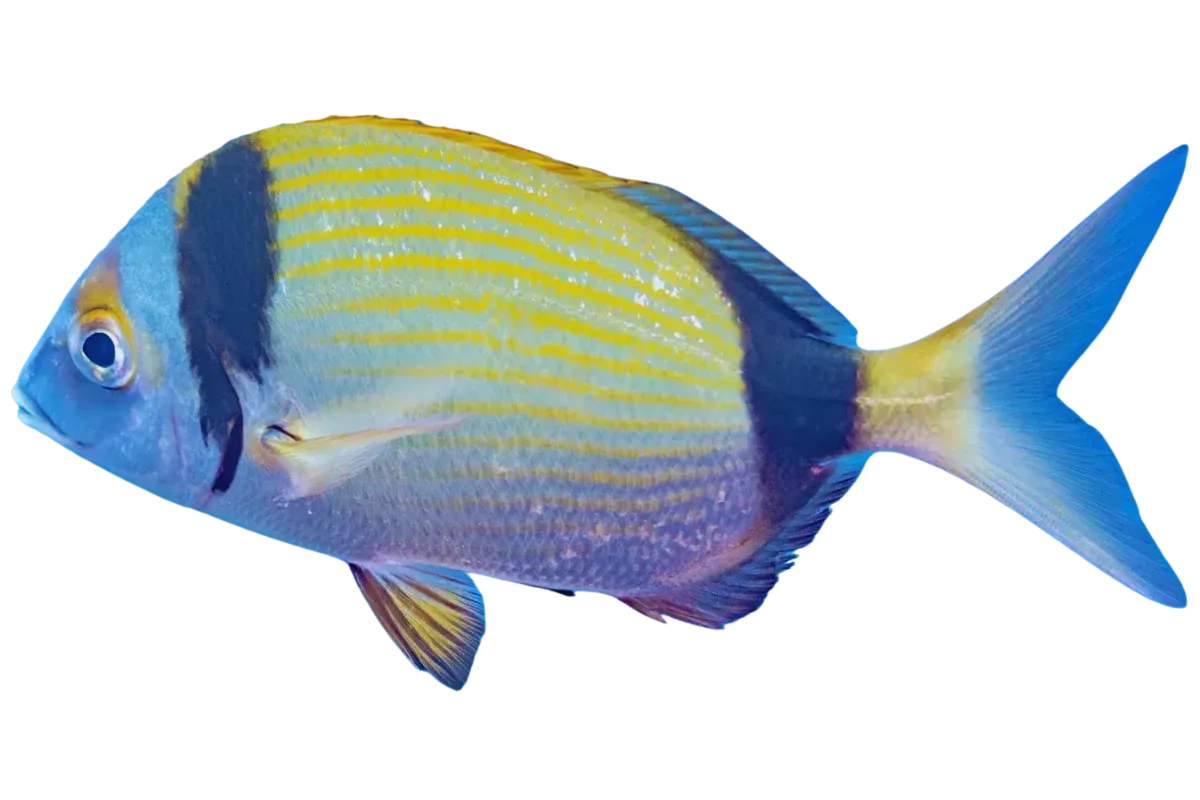
The Two banded Seabream is one of the most common fish of the family Sparidae in the Mediterranean. The body is oval and compressed at the sides with a silvery colour and golden horizontal lines. It is easily distinguished from its relatives thanks to two prominent black bands on the body, where one is located exactly behind the head, and the other is at the base of the tail. This feature distinguishes the fish from the White Seabream, which has only one black band on the tail and none behind the head. It also possesses a pointed snout and characteristic golden eyebrows between the eyes.
Habitat
This is a coastal species that lives in small schools. It is found on a variety of seabeds, including rocky shores and reefs, as well as sandy expanses near rocks. It is very common within Posidonia seagrass meadows, which it uses as a refuge, especially during the juvenile stages of its life. It usually moves at depths from the surface down to 50 metres, although it can descend to 150 metres.
Diet
The fish is an omnivorous species with a preference for animal prey. Its diet consists mainly of benthic invertebrates such as worms, small shrimp, and crabs, along with molluscs. It frequently supplements its diet with algae.
Reproduction
The Two banded Seabream exhibits an interesting phenomenon called protandrous hermaphroditism. All individuals begin their lives and reach sexual maturity as males. Later in life, usually after the age of 2 to 4 years, many of them change sex and become females. Breeding takes place in the autumn and winter, and mainly from December to January when the waters begin to cool.
Fisheries
It is a very popular catch for both professional and recreational fishermen. It is caught with nets, longlines, and handlines from the shore. The meat is delicious, although it is considered slightly inferior to that of the White Seabream or the Gilthead Bream, and it maintains a good commercial value.
Research
The International Union for Conservation of Nature classifies the fish as a species of Least Concern because its populations remain stable and it is abundant throughout the Mediterranean. Scientific studies have shown that Posidonia meadows are vital for the survival of young fish as they function as nurseries that protect them from predators. Furthermore, research has indicated that sex change does not occur in all individuals but depends on the school's social structure to maximise reproductive success.