White Seabream
Diplodus sargus
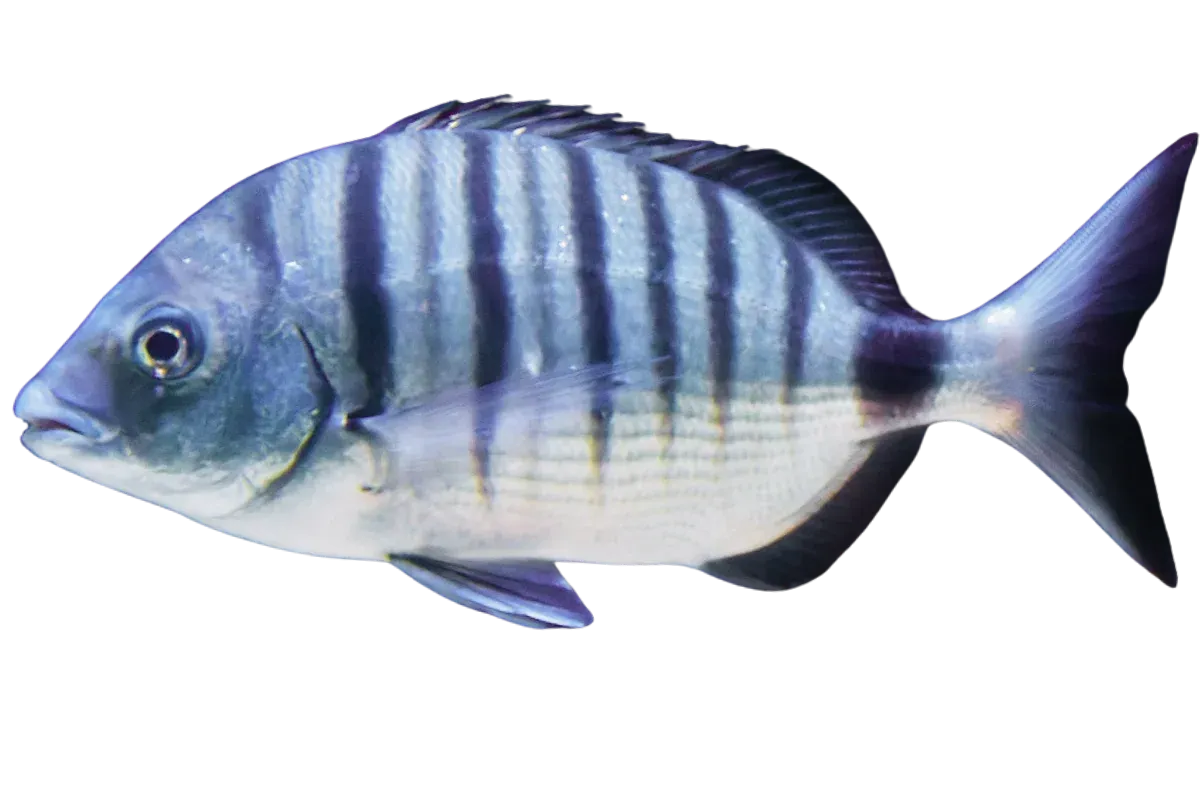
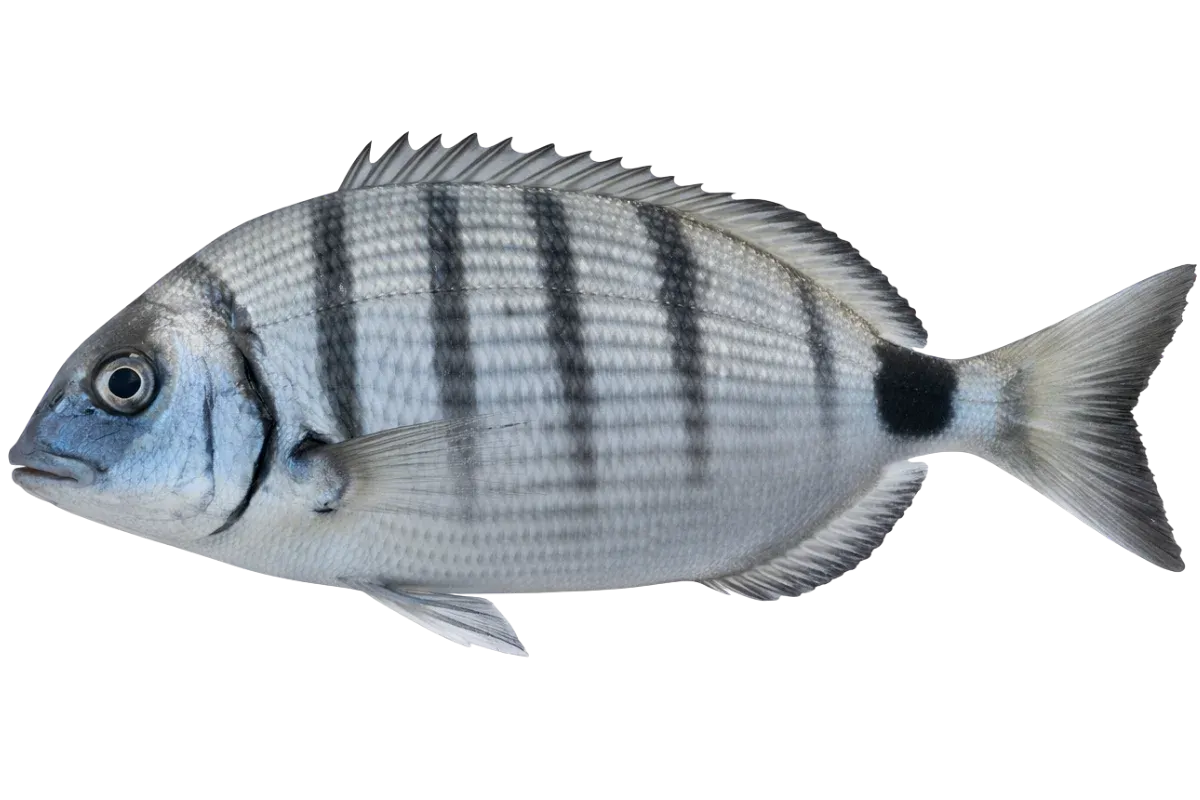
The White Seabream, which is also commonly referred to as the Sargo or the Round Seabream, is perhaps the most common, recognisable, and beloved fish of the Sparidae family in the Mediterranean. It is famous for its intelligence, adaptability, and extremely delicious white meat, which makes it a top target for every fisher. The body is tall, oval, and laterally compressed, with a silver colour that can darken depending on the environment.
Its most characteristic feature consists of 8 to 9 thin, faint vertical stripes running across its sides, though these can fade in large individuals. The absolute sign for identification is the bold, black, saddle-shaped spot at the base of the tail. This spot never extends to the bottom part of the caudal peduncle, which is a detail that distinguishes it from the Saddled Seabream.
Habitat
This is a bottom-dwelling species that inhabits a wide range of habitats, with a clear preference for rocky substrates and coralligenous ground. It likes to hide in dark holes, rock crevices, and under ledges, often staying with other species such as groupers or saddled seabreams. Young individuals find shelter and food within Posidonia seagrass meadows. The fish is encountered at depths ranging from the surface within the waves down to 50 metres, even though it rarely descends deeper.
Diet
The animal is an omnivorous fish with a clear preference for carnivory. It feeds on whatever it finds on the bottom, such as worms and crustaceans like shrimp and crabs, along with molluscs like limpets and mussels, which it detaches and crushes with its powerful teeth. Occasionally, it consumes seaweed. It is more active during the evening and morning hours, as well as when the sea is rough, when it comes out of its nest to hunt in the foam.
Reproduction
The White Seabream is a protandrous hermaphrodite species. All fish mature sexually first as males, usually at the age of 2 to 3 years. For a period, they may function as both sexes, but if they live long enough, they transform completely into females. The breeding season occurs during the winter months, primarily from December through February or March, when the fish gather in schools to spawn.
Fisheries
It is one of the most popular catches in the Mediterranean. It is caught with all coastal methods, including set nets, fine longlines, handlines, and rods from the shore or boat, and it represents a top target for spearfishing. It has extremely tasty white meat and a very high commercial value. According to European legislation, the minimum permitted catch size in the Mediterranean is 23 centimetres.
Research
The International Union for Conservation of Nature classifies the White Seabream as a species of Least Concern. Scientific studies have shown that it is a species with high genetic connectivity in the Aegean, meaning that populations move and mix between islands. Furthermore, research in marine parks has shown that protection from fishing leads to a rapid increase in the size and abundance of White Seabreams, which become bolder and less wary. Finally, it has been observed that in areas where animal food is scarce, the White Seabream can increase its seaweed consumption to survive.