Wreckfish
Polyprion americanus
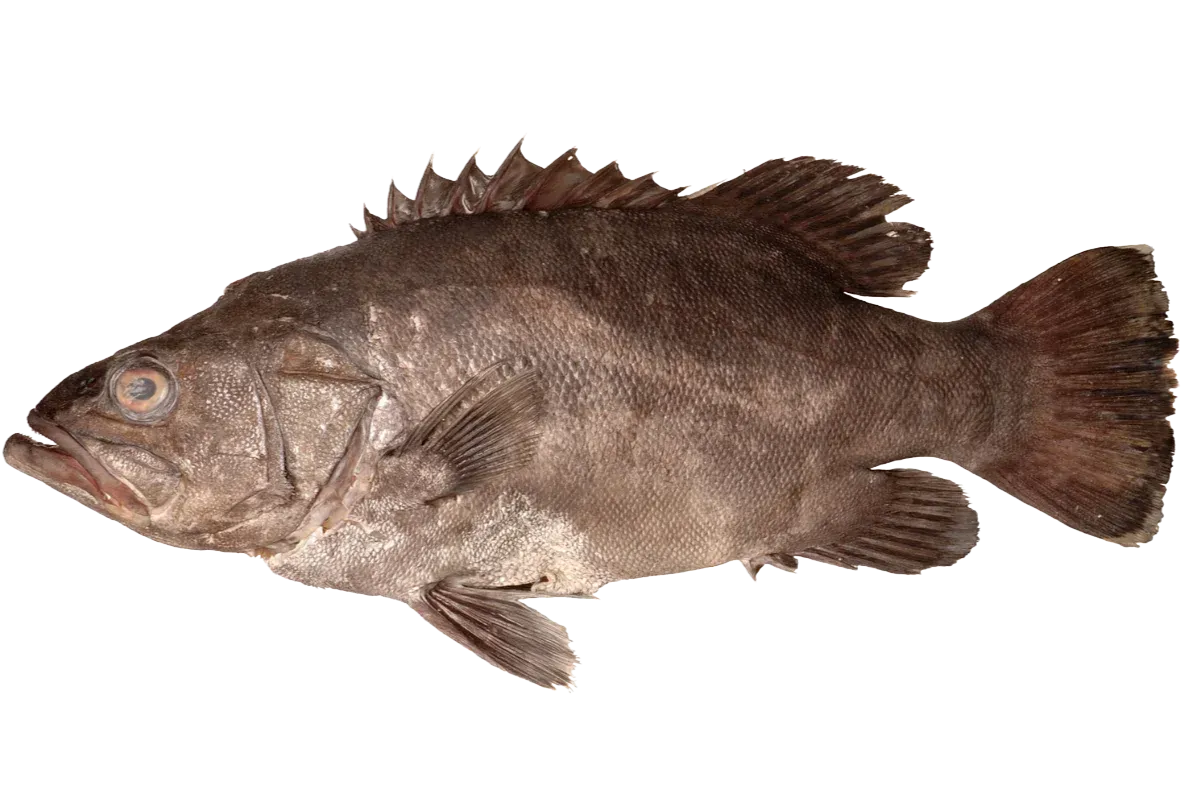
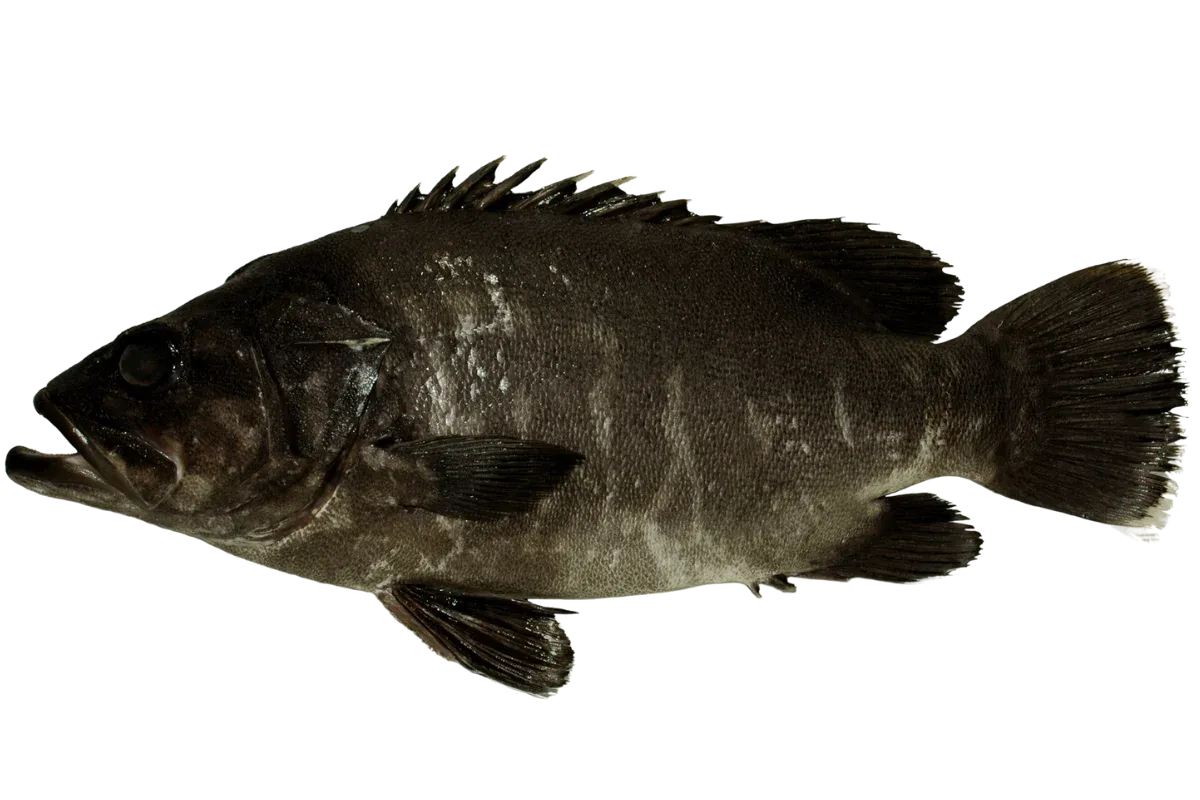
The Wreckfish is a giant, impressive deep-water predator belonging to the family Polyprionidae. It is often confused with the grey grouper, but it is a different species with distinct features. The body is high, bulky, and robust, with a very distinctive head bearing a bony ridge on the upper part of the gills that resembles a saw. The colour in adults is dark grey to brown or almost black, while the belly is slightly lighter.
A significant difference from groupers is that the dorsal fin of the Wreckfish is single and continuous without the deep notch that groupers have between the hard and soft parts of the fin. Furthermore, its eyes are relatively small for its size, and its mouth is massive, with the lower jaw protruding strongly.
Habitat
The life cycle of the Wreckfish is divided into two completely different phases. Young individuals are pelagic and live near the surface of the open sea. They have a habit of following floating objects, such as wood, boxes, and even turtles and sharks, in search of protection and food. As they mature, they leave the surface and move to the seabed at great depths ranging from 100 to 1000 metres. They prefer rocky bottoms with intense relief, caves, and especially shipwrecks.
Diet
It is an apex predator of deep waters. It feeds mainly on large fish, cephalopods such as squid, and benthic crustaceans such as lobsters and crabs. It uses its massive mouth to create strong suction and swallow its prey whole.
Reproduction
Reproduction takes place during the winter months and early spring, usually from December to March. It is a gonochoristic species with separate males and females, and it does not change sex like groupers. The eggs and larvae are pelagic and travel with marine currents for long periods, which explains the species' wide geographical distribution.
Fisheries
It is caught almost exclusively by professionals with heavy deep-sea longlines and special deep handlines. The meat is considered exceptional quality, as it is white, fatty, and very delicious, with high commercial value. Due to its habit of living in shipwrecks and caves, fishing for it is difficult and often results in gear loss.
Research
The International Union for Conservation of Nature has not evaluated the species in the Mediterranean separately, but global populations are considered to be declining. Scientific studies have shown that it is a long-lived species that can exceed 60 or even 80 years. Slow growth and late sexual maturity, where females mature around 10 to 12 years, make it extremely vulnerable to overfishing. Furthermore, research has shown that young individuals can travel long distances by following ocean currents before settling on a reef.